The Best Fluffy Pancakes recipe you will fall in love with. Full of tips and tricks to help you make the best pancakes.


The kitchen brigade system turns chaos into order by giving everyone a clear job and a direct boss. Created by Auguste Escoffier, it assigns specific roles, like the sous chef handling ticket surges and the saucier owning all sauces.
This military-style chain of command ensures each dish component has one accountable person. You’ll see less bumping elbows and more efficient execution, even during the busiest rushes.
Stick around to see how it works in your kitchen.
What Actually Is the Kitchen Brigade System?
Because the kitchen brigade system turned chaotic cooking into a well-oiled machine, it’s basically the original recipe for teamwork in a pro kitchen. Its formal name is the *brigade de cuisine*, and Auguste Escoffier dreamed it up in the late 1800s. You get a clear chain of command, so everyone knows their exact job.
The top dog is the Chef or Executive Chef, who oversees everything. Right under them, the Chef de cuisine handles daily operations, and the Sous chef acts as second-in-command. Then you’ve got station leads, the Chef de Partie, each owning a specific duty — like sauces or veggies.
No more bumping elbows; every plate component has an owner. That’s the core: maximum accountability during peak service, making your whole team move like clockwork. Within this structure, the cook to sous chef progression follows a clear internal pathway — from line cook to lead cook to sous chef to executive chef — with each step carrying increased pay and management responsibility.
How a French Chef’s Army Days Created the Modern Kitchen
When French chef Auguste Escoffier swapped his army uniform for an apron, he didn’t leave his military training behind: he packed it straight into the kitchen.
His time in the French army taught him that a clear hierarchy kills chaos.
So, he built the Kitchen brigade system to establish order. You’ve got the sous chef de cuisine second-in-command, then specialist chefs like the Chef de Partie running specific stations.
Each station owns its part of the food—sauces, fish, or roasting.
This structure turns high-pressure service into a predictable flow, just like a battle plan.
Commands move from top to bottom without confusion.
By borrowing military precision, Escoffier created the modern kitchen’s backbone, making it efficient even when team sizes shrink.
Now, every chef knows exactly where they fit.
Much like a renovation designer coordinating contractors, the brigade system relies on a single chain of command to keep complex, multi-part operations running on time and within a structured plan.
Executive Chef vs. Chef De Cuisine: Where They Fit in the Kitchen Brigade
While the Executive Chef is busy outlining the big-picture course for the kitchen—handling budgets, menus, and multi-restaurant strategy, the Chef de Cuisine is the one actually directing the ship day-to-day.
You’ll find the Executive (often called Chef Exécutif) at the top of the kitchen brigade, focusing on the business.
But the Chef de Cuisine? That’s your real hands-on leader.
He oversees kitchen execution, translating the Executive’s vision into reality.
He’s the one managing the Sous Chef and station chefs, ensuring every plate meets standards.
There’s a clear hierarchy here: the Executive sets the vision, while the Chef de Cuisine owns daily operations.
Think of the Executive as the architect and the Chef de Cuisine as the foreman.
It’s a partnership, not a competition.
In the brigade, the Chef de Cuisine is the chef you’ll actually see running service.
Just as a well-run kitchen relies on clearly defined workflow zones to maintain efficiency, the brigade system assigns each leader a distinct domain to keep operations running without overlap.
Why the Sous Chef Is the Kitchen Brigade’s Most Important Link

If the Chef de Cuisine is the foreman of the kitchen, then the Sous Chef is the crew chief who keeps everything from falling apart. You’ll find this role is the vital link within the Kitchen brigade, turning the head chef’s plans into real action.
The Sous Chef is the vital link, turning the head chef’s plans into real action.
The sous chef directly manages kitchen management, taking orders from the chef de cuisine and passing them clearly to each chef de partie.
When tickets surge, you can count on the sous chef to monitor station chefs, fix timing issues, and reassign work on the fly.
Since they know every station, they guarantee order and efficiency without breaking a sweat. It’s a demanding gig, but without this link, the whole brigade would stumble.
During peak service, the sous chef also enforces one voice decides changes, ensuring a single authority calls pickups and prevents the kind of shouted, cross-station confusion that stalls even a well-equipped kitchen.
How an Order Moves From Ticket to Plate Through the Brigade
You’re watching the ticket printer, and the moment it spits out an order, the brigade springs into action. That ticket gets read aloud by the expediter, who immediately forwards it to the correct station—maybe the Saucier for that steak sauce or the Poissonnier for the fish dish.
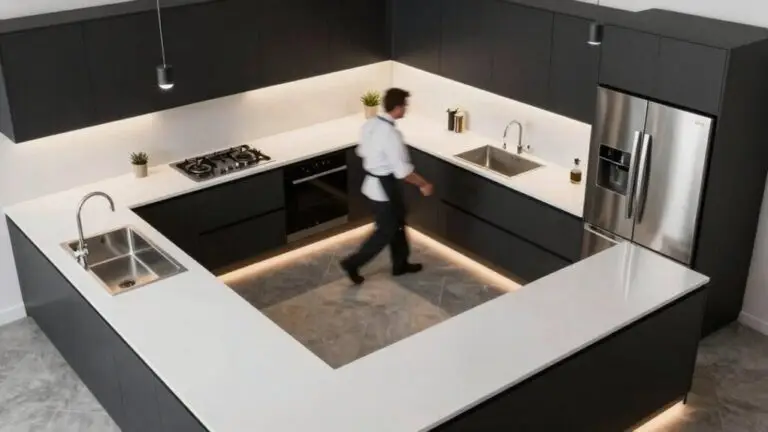
Each station’s chef de partie then grabs their mise en place and works alongside their commis, ensuring every component comes together exactly on time. Just as kitchen designers rely on a sink, stove, and refrigerator triangle to minimize unnecessary movement, the brigade system organizes stations to keep workflow efficient and steps to a minimum.
Ticket Reception Protocol
When a ticket prints in the kitchen, your first job is to figure out which station owns each item. That’s where the Kitchen Brigade system ticket reception protocol kicks in. Every menu category links to a specific station in the kitchen. Your saucier handles sauces and sauté, while your entremétier owns hot veg and starches.
As a Chef de Partie, you immediately claim your components, breaking that ticket into station-level tasks: prep, cook, garnish, plate. Your commis handles tool prep and mise en place, keeping you focused on execution. This isn’t guesswork; it’s a chain of command.
If something’s wrong, say, a sauce is off, the de chef route sends it right back to you, not “whoever’s free.” That’s how you keep your pass meeting spec every time. Just as kitchen efficiency experts recommend keeping your primary work zones free from traffic interference so movement stays uninterrupted, the brigade model keeps each station’s workflow isolated from outside disruption.
Station Execution Coordination
Once a ticket hits a station, the execution shifts from reading to doing, and that’s where every chef de partie locks into their specific role. You’re now following kitchen hierarchy, as each station in the kitchen owns its part. A rôtisseur handles the protein while the saucier nails the sauce.
Communication is key; you call out “ticket pending sauce” so kitchen teams stay in sync.
A structured approach means no single cook assembles everything without its prep owners. Your chef de cuisine or sous-chef coordinates pacing, often reassigning the tournant to fix conflicts like missing garnishes.
You don’t send a dish to the pass until your station signs off on doneness and temp. That’s how kitchen operations stay streamlined from ticket to plate. Just as a well-planned kitchen maps dedicated areas for prep, cook, and clean, the brigade assigns dedicated work zones to eliminate redundant movement and reduce the risk of collisions during a dinner rush.
Every Station in the Kitchen Brigade: Saucier to Garde Manger
Since the brigade system keeps everything running efficiently, let’s kick things off with the saucier. This station is the heart of the kitchen, handling all sauces and those quick, high-heat sautéed items that finish off many meat entrées.
This role is a key part of Escoffier’s legacy, and in a modern kitchen, you’ll find every staff member respects its speed.
The rôtisseur steps in for roasting and broiling, while the grillardin takes over the grill in larger brigades.
The poissonnier deals with fish, and the entremétier covers hot appetizers, soups, and vegetables.
When a separate potager and legumier exist, they own those components, giving the professional kitchen clear roles within the fine dining brigades.
Oh, and for cold work, the garde manger runs salads and cold hors d’oeuvres, keeping things fresh and light in the kitchen brigade. Understanding why sauces break comes down to the science of fat and water emulsification, where emulsifiers like egg yolks and mustard keep tiny fat droplets suspended until heat stress or improper ingredient timing disrupts the balance.
What a Commis Chef Actually Does Day-to-Day
Even though a commis chef is the newest member on the line, they’re far from just a bystander. You work directly under the Chefs de Partie in the Brigade system, starting on one of the specific stations.
Your day begins with setting up your mise en place—portioning vegetables, labeling stocks, or prepping garnishes.
The kitchen staff relies on you to keep station readiness sharp before service hits. During the rush, you jump in with smaller tasks: finishing prepped elements, restocking ingredients, or swapping out pans.
Your specialized roles expand over time as you rotate through different sections.
But your performance always comes down to cleanliness, speed, and accurate handoffs. You don’t just learn food preparation: you learn how to protect the final plate’s quality for your chef. Proper prep habits also mean storing chopped vegetables in airtight containers to maintain freshness for up to 3–5 days between services.
How to Strip the Brigade Down for a Small Kitchen

3. Cross-Train for Surges: Don’t maintain a full list of work areas. Instead, cross-training a floating cook lets them cover breaks or peak rushes without hiring extra bodies. To further support a streamlined operation, consider routing high-volume washing and messy prep through a dedicated prep sink area so the main line stays clean and efficient during peak service.
4 Ways the Brigade Breaks Down During Service (and How to Fix Them)
When service hits its peak chaos, your brigade can unravel fast, but spotting the cracks early is your best defense. A classic breakdown? Unclear chain of command.
Tickets stall when commis chefs can’t escalate to the chef de partie. Fix it with one “who approves what” rule for pass calls.
Another issue: overlapping station ownership. If your saucier and entremétier both start components for the same plate, define exact accountability per station—protein, sauce, garnish—to one person only.
Communication latency also bites around 7:30 PM. A missed ticket cascades into failure.
Fix it with timed mise-en-place check-ins and a standard callout cadence.
Finally, station crowding slows workflow. Map zones (hot line, cold bench, pass) to restrict movement.
As a restaurant manager, remember: the system guarantees your key role keeps professional kitchens humming.
3 Reasons the Kitchen Brigade Still Works in 2025
You’ve seen how a brigade can fall apart mid-service, so it’s fair to wonder: does this old-school system still hold up in 2025? Absolutely—here’s why it’s still your best bet, from the highest position down to every station.
1. Role clarity saves your sanity. Every team member knows their role, from Executive Chef to commis. When a ticket drops, it routes straight to the correct *partie*—no hesitation, no cross-over chaos. That’s real chain-of-command power.
2. Station ownership nails speed. Your *line cooks* own their station. The grill cook owns the protein’s final doneness. Mistakes happen, but you isolate and fix them fast.
Less friction means more flow.
3. It scales and adapts. Even in smaller *modern kitchens*, you consolidate roles (one cook covers two stations) but keep the hierarchy. The same *restaurant* logic works—decision paths stay defined.
*Cuisines* efficiency holds up under pressure.
Final Thoughts
So, you’ve seen how the kitchen brigade works, and it’s not only for fancy restaurants. Whether you’re running a two-person operation or a full crew, this system keeps chaos in check.
It gives everyone a clear job, so nobody’s stepping on toes when the orders pile up. Give it a try, even if you strip it down. You’ll find your kitchen runs better, and honestly, you might finally enjoy the dinner rush instead of dreading it.