The Best Fluffy Pancakes recipe you will fall in love with. Full of tips and tricks to help you make the best pancakes.


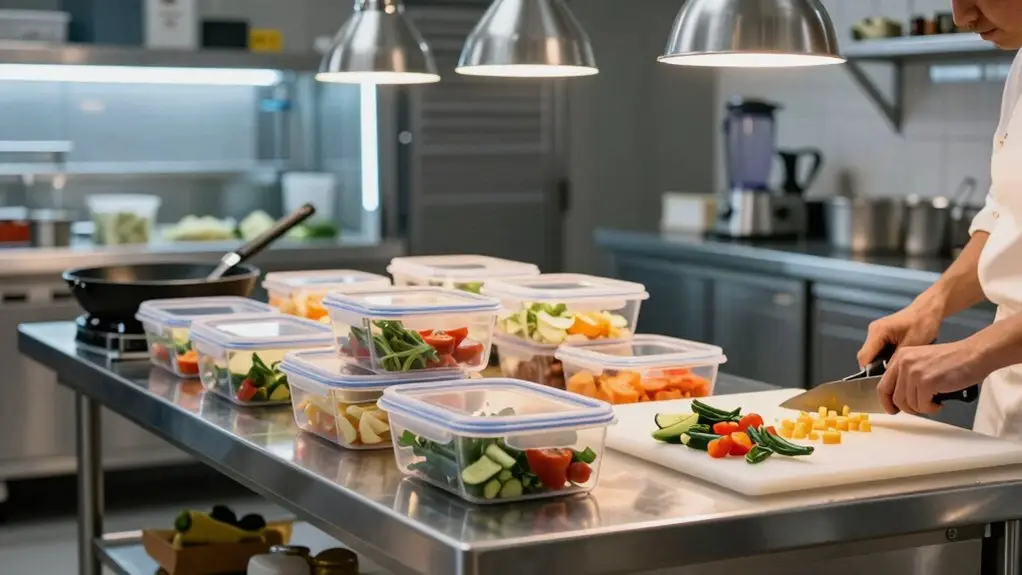
A prep kitchen is your behind-the-scenes workhorse where the messy, heavy lifting happens before food ever hits your main line. You’ll chop mountains of vegetables, wash dirty dishes, and stage everything in a separate zone so your customer-facing kitchen stays spotless and sane.
If you’re bumping elbows with your team, drowning in prep containers, or tired of customers watching your chaos, you probably need one. The real question is whether you go shared, private, or hourly, and there’s plenty more to unpack on that front.
What a Commercial Prep Kitchen Is (and What It’s Not)
A commercial prep kitchen is your behind-the-scenes workhorse, the space where the real magic happens before anything hits the plate.
Your prep kitchen allows you to tackle intense food preparation without turning your main line into a war zone.
You’ll get additional counter space for chopping mountains of vegetables and a sink for washing that never-ending parade of dirty dishes.
There’s a clean-up zone too, maybe with an extra dishwasher, because nobody wants guests peeking at your mess.
Think of it as a dedicated area for the elbow-grease stuff, keeping the main kitchen tidy and picture-perfect.
This isn’t some walk-in pantry collecting dust; it’s a secondary kitchen built for real work.
You’re containing chaos where it belongs, so your front-of-house stays seamless and smiling.
Installing a whole house air purifier in your prep kitchen can help eliminate cooking odors, grease particles, and airborne contaminants before they spread throughout your facility.
Does Your Business Need a Prep Kitchen? 5 Ways to Tell
When you’re tripping over mixing bowls during the dinner rush or hiding dirty sheet pans from customers’ view, it’s probably time to ask yourself some honest questions about your kitchen setup.
First, does your workflow need separate zones? A prep kitchen gives you dedicated space for food prep, cooking, and clean-up, keeping mess out of sight.
A prep kitchen hides the mess so your main space stays pristine.
Second, are you running big batches? You’ll want ample prep space—about 36″ by 24″ per zone—with a smart kitchen layout that keeps you moving efficiently.
Third, got multiple cooks bumping elbows? Wider aisles (48–54 inches) in your prep space prevent traffic jams.
Fourth, struggling with odors and heat? A prep kitchen lets you vent properly, sparing your main kitchen.
Finally, drowning in equipment? Adding a prep with a sink and dishwasher, refrigeration, and storage for small appliances consolidates clutter. Before any equipment goes in, make sure your flooring can handle the load—uneven substrate causes stress points that lead to cracking and premature wear under heavy kitchen traffic.
These kitchen features might just save your sanity.
Shared or Private: Which Prep Kitchen Model Works for You?
Once you’ve decided a prep kitchen’s the right move, you’ve got another call to make: how do you actually want to use the space?
Shared hourly prep kitchens let you book stations when you need them—perfect if you’re juggling recipes or testing menus without committing to a full schedule. You’ll get equipment access and a professional setup. Then pack up when you’re done.
Bonus: you don’t have to keep the main kitchen tidy forever.
If your food business needs a steady rhythm, shared daily prep kitchens with membership options offer 24/7 access to your own station. No more fighting for slots; just walk in and cook.
Ready to level up? Private commercial kitchens give you a dedicated zone, total control, and zero interruptions. Pick what matches your appetite for flexibility, commitment, or complete independence.
Keeping your prep space efficient also means smart internal organization, and stackable cabinet shelves with load capacities up to 33 lb per shelf can help you maximize every inch of your kitchen storage without permanent installation.
Prep Kitchen Equipment for Food Businesses: Must-Haves and Nice-to-Haves
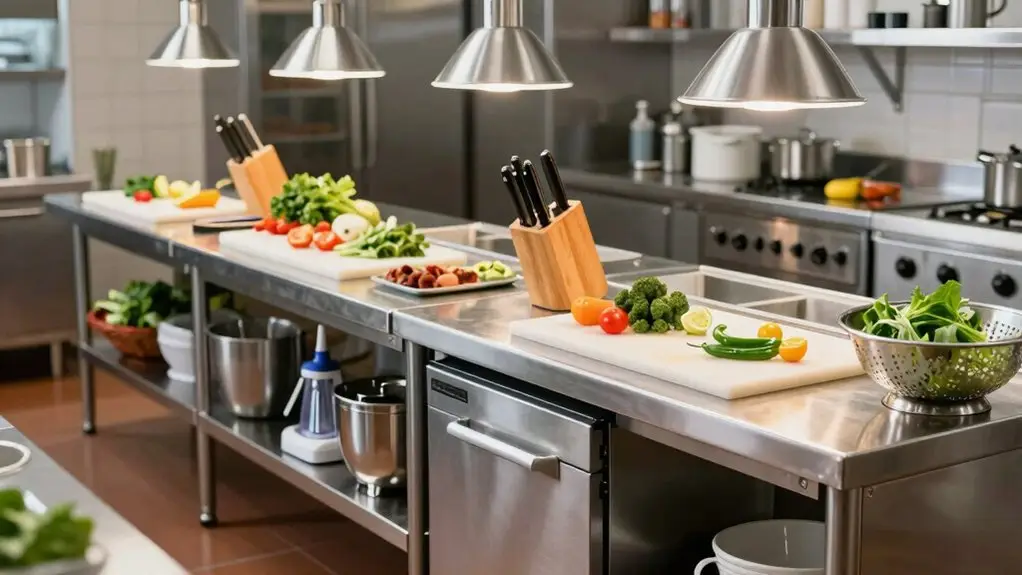
Whether you’re running a bakery, meal prep service, or catering gig, your prep kitchen’s only as good as the gear inside it.
You’ll want a dedicated prep sink for easy cleanup and at least one high-output counter zone divided into prep, cook, and clean-up stations.
Smart prep kitchens also include a dishwasher in the prep kitchen to hide dirty dishes and speed up turnaround.
Built-in small appliances storage keeps countertop appliances tucked away, freeing up your kitchen space for actual food work.
If you’re baking on-site, add a wall oven with storage for baking sheets nearby, plus room for your stand mixer.
Don’t forget your work aisles—aim for 42-inch walkways, or 48–54 inches if your team’s packing together.
Keeping your prep kitchen sanitary also means investing in commercial kitchen cleaning equipment designed to handle the heavy-duty demands of a professional food operation.
How to Find and Rent Prep Kitchen Space Near You
You’ve got your equipment list locked down, now it’s time to hunt down the actual space. Start by using location filters near you to scope out options in your area. When you’re designing a prep kitchen search strategy, prioritize what keeps your workflow smooth.
Imagine walking into a spotless private station at 2 a.m., dough rising, no one hovering. Picture a deep sink for washing endless sheet pans, counter space stacked with prep containers.
See yourself flipping on professional appliances without fighting for a burner. Feel the relief of 24/7 access when inspiration or a massive order strikes at midnight.
Visualize checking your phone to reserve equipment by the hour, pay-as-you-go style. An hourly shared kitchen membership works great for flexibility, but if you’re scaling fast, compare private commercial spaces too. For added efficiency in your food operation, a smart home hub system can help you remotely monitor equipment, control lighting, and manage access across your kitchen space.
Final Thoughts
You’ve got the facts, so now it’s decision time. A prep kitchen could be your business’s secret sauce, or maybe you’re doing just fine without one.
Trust your gut, crunch those numbers, and remember: there’s no shame in starting small. Your dream kitchen’s out there waiting.