The Best Fluffy Pancakes recipe you will fall in love with. Full of tips and tricks to help you make the best pancakes.
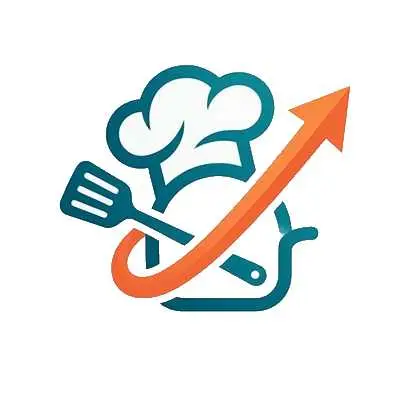


You grab *On Food and Cooking* when your steak turns gray or your sauce breaks, and suddenly Harold McGee’s 1984 classic makes sense of the chaos. Unlike recipe books that tell you *what* to do, McGee explains *why*—why butter browns, why meat dries out, why heat works differently on fat versus water.
Chefs keep this dog-eared reference close because it transforms kitchen disasters into fixable puzzles. It blends old-school intuition with real science so you cook with confidence instead of crossed fingers. The best part? You’re barely scratching the surface of what this book reveals.
On Food and Cooking: The Science Reference Every Chef Owns
This book breaks cooking into real science you can use. You’ll learn how heat moves through your ingredients, why fats and water act so differently when hot, and how to control texture and color every time.
Instead of guessing, you’ll troubleshoot like a pro: figuring out why your sear stalled or your sauce went wonky, so you can keep food consistent and delicious.
Chefs love it because it connects what you do to real results—doneness, emulsification, thickening. You’re turning intuition into informed control, making smarter calls that boost flavor and reliability.
Harold McGee Wrote On Food and Cooking in 1984. Here’s Why Chefs Still Care
You still care about this book because it turns kitchen mysteries into solvable puzzles. The McGee legacy lives on every time you wonder why your sauce broke or your meat dried out.
Kitchen mysteries become solvable puzzles—this is why chefs never stop reaching for McGee.
Instead of guessing, you reach for scientific intuition—understanding that heat transforms proteins, fat carries flavor, and water moves through food in predictable ways.
This makes kitchen troubleshooting almost enjoyable. You’re not following blind rules; you’re choosing techniques based on what actually happens to ingredients.
Decades later, chefs still keep it close because it bridges old-school tradition with lab-backed smarts.
You’ll cook with more confidence, innovate without fear, and finally understand why Grandma’s method actually works.
The 5 Techniques This Book Explains Better Than Any Recipe
You’ve probably followed recipes to the letter and still ended up with dry meat or a lumpy sauce, wondering where it all went wrong.
*On Food and Cooking* fixes this by teaching you why heat control, flavor development, and texture transformation actually work.
This way, you can troubleshoot on the fly.
It’s the difference between blindly following steps and cooking with real confidence, like finally understanding the “why” behind every “what.”
Heat Control Mastery
Beneath every perfectly seared steak and silky custard lies a secret most recipes gloss over: heat isn’t just about cranking a dial up or down. You’ve got to master Heat Matching, pairing your technique to the right intensity.
Gentle Hold methods like a bain-marie let you warm food slowly, using water’s steady magic so nothing scorches—perfect for custards or holding sauces without drama.
For Moisture Control, you’ll baste like a pro, spooning herbed butter over proteins to keep surfaces juicy while interiors cook through.
And when you want that golden gratin crust? You’ll harness direct oven heat for serious browning. McGee shows you why timing and temperature behave differently for bread crumbs versus cheese, so you control the outcome, not guess at it. Just as temperatures below 50°F can halt the chemical reactions needed for adhesive bonding in tiling, dropping below the right threshold in cooking can equally stall the Maillard reaction, leaving your proteins pale and flavorless instead of deeply browned.
Flavor Development Science
And that satisfying sizzle when you splash wine into a hot pan? That’s deglazing chemistry at work, dissolving those golden-brown bits and revealing fat-soluble flavors you thought you’d lost. You’re not only following steps anymore; you’re cooking with intention. Just as moisture control in surfaces determines whether a tile installation lasts or fails, controlling moisture and heat at the right stages of cooking determines whether your flavors develop fully or disappear entirely.
Texture Transformation Secrets
Why does the same steak feel like rubber one night and melt in your mouth the next? You’re witnessing texture transformation in action, and *On Food and Cooking* breaks down exactly how to master it.
When you sear meat at high heat, you’re kickstarting Umami development through Maillard reactions, that gorgeous brown crust that crackles between your teeth.
For tough cuts, you’ll braise low and slow, breaking collagen into silky gelatin without babysitting a marinade.
Steaming preserves delicate bites, while emulsifying lets you whip fat and water into stable sauces that won’t split on you.
Chilling reshapes everything from custards to gelatins, making mixtures morph from pourable to sliceable.
You’ll even control Gluten formation and Acid balance, turning chewy disasters into tender wins.
How McGee Explains Heat: Proteins, Starches, and the Maillard Reaction
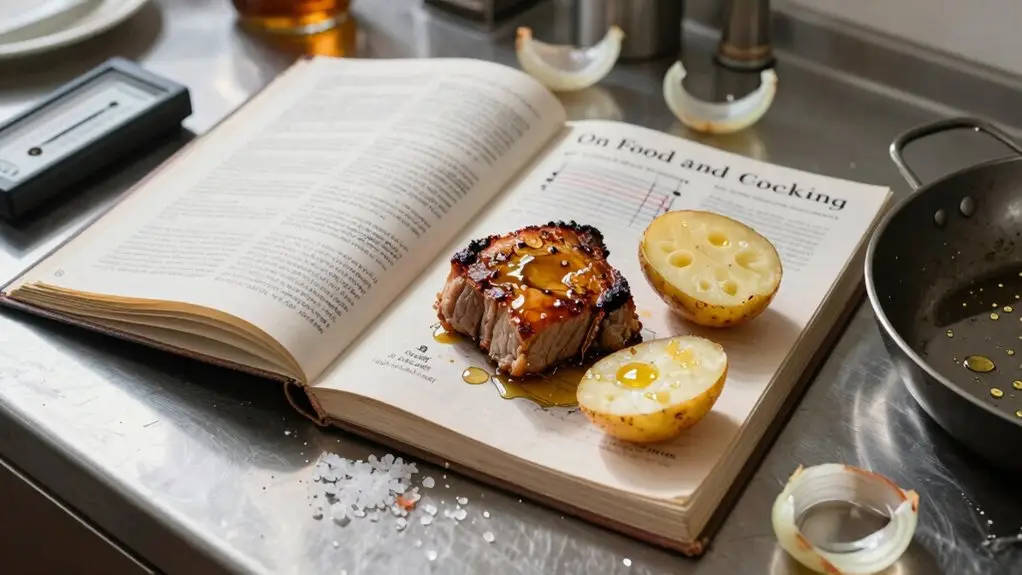
The moment you step up to the stove, you’re not cooking: you’re running a tiny chemistry lab in your kitchen, whether you realize it or not. Harold McGee shows us that heat transforms your ingredients through three interconnected processes: protein denaturation, starch gelatinization, and surface browning.
First, your proteins begin their transformation. As temperatures climb, these molecular chains shake, unfold, and eventually tighten into networks. This is why your steak firms up and turns opaque. But push it too far and you create leather, tough, chewy disappointment from overcooking.
Protein chains unfold and tighten with heat, transforming tender steak into tough leather if you push too far.
Meanwhile, starches are quietly revolutionizing your sauces. They absorb water, swell, and thicken through gelatinization, giving you that perfect velvety texture instead of watery soup.
Then comes your flavor factory: the Maillard reaction. When heat meets relatively dry surfaces, amino acids dance with sugars, producing hundreds of aromatic compounds that brown and create those irresistible roasted, nutty notes.
This is why chefs often pat meat dry and use high heat: you’re creating ideal conditions for delicious chemistry to happen. Just as a professional drain cleaning machine relies on consistent mechanical force to clear blockages efficiently, consistent heat application in cooking ensures these chemical reactions proceed evenly and completely.
McGee’s Framework: Why Fat, Water, and Temperature Control Everything
You’ll notice that cooking gets a whole lot less mysterious once you grasp how fat and water push against each other in your pan, and how a few degrees of heat can tip the balance between juicy and dry.
McGee breaks this down so you can actually use it—like knowing when to let butter do the browning while steam keeps your meat tender, or when to crank the oven so both play nice.
It’s the kind of kitchen logic that turns guesswork into “I meant to do that.”
Just as uneven surfaces create stress points that cause cracking and premature failure in flooring, uneven heat distribution creates weak points in cooking that lead to inconsistent results.
Fat-Water Interplay
If you’ve ever watched butter sizzle and turn golden while your steak browns perfectly, you’re witnessing fat and water in a delicate dance. McGee shows you how Braising Chemistry works when fat shields meat from water while that same water tenderizes through gelatinization and heat transfer.
You’re managing Emulsion Stability whenever you whisk a pan sauce. Those tiny fat droplets need your help staying suspended, or they’ll break into a greasy mess.
Watch your Surface Moisture, too, because water at the surface keeps temperatures stuck around 212°F, blocking browning until it evaporates.
YOU’RE REALLY JUGGLING MOISTURE RETENTION AGAINST CRUST FORMATION. Steam keeps things tender, but controlled drying plus fat allows those delicious Maillard reactions.
Just as heat and low humidity speed drying in floor leveling compounds, humidity and temperature affect how quickly moisture leaves your food’s surface, directly influencing texture and browning outcomes.
Master this interplay, and you’ve got the foundation for countless techniques.
Heat Precision
Managing fat and water is only half the battle. You’ve got to nail temperature too, or you’ll miss the magic.
McGee’s framework shows you how heat effects change everything happening inside your food. Crank it too high, and proteins seize up; too low, and browning never kicks in.
That’s where moisture buffering saves you—water absorbs energy through evaporation, keeping surfaces from scorching while the center catches up.
Fat works faster, browning quickly without that safety net, so you watch it closer.
For surface control, you’re balancing both. Baste with butter (fat + water) and you’re protecting the outside while driving heat inward.
Small temperature tweaks mean the difference between tender and tough.
Master these three levers, and you’re cooking with real precision—not just hoping for the best. The same principle of controlled layering applies in other crafts too—like how modified thinset polymers improve flexibility and bonding by managing how materials respond to stress and movement.
When Your Sauce Breaks: What McGee Says Actually Happened
Because there’s nothing quite like the heartbreak of watching your perfect sauce turn into an oily, curdled mess right before your eyes, Harold McGee’s explanation of what’s actually happening can feel like a lifeline.
He breaks down the emulsion basics simply: fat and water don’t naturally mix, so your sauce relies on emulsifiers, like egg yolks or mustard, to keep tiny droplets suspended.
When you introduce heat stress through aggressive boiling or overheating, you’re basically shaking that delicate balance apart.
Ingredient timing matters too; dump cold butter in too fast and you’ll shock the system.
Acid, salt, or wild temperature swings further destabilize things by messing with how proteins behave.
The good news? You’re not doomed.
McGee shows you how to rescue it—slowly whisking in fresh liquid to rebuild that dispersed, silky structure you worked so hard to create.
Just as tile projects demand patience during prep work to prevent costly failures later, rushing through a sauce without understanding its structure is what gets most home cooks into trouble in the first place—patience during prep applies in the kitchen just as much as anywhere else.
Applying McGee’s Methods: From Kitchen Guesswork to Consistent Results
Once you start seeing your kitchen as a place where ingredients behave in predictable ways, you can’t unsee it, and that’s where McGee’s real magic kicks in.
You’ll stop guessing why your onions burned or your custard curdled. Instead, you’ll watch moisture movement and heat transfer like a hawk.
Want that perfect gratin crust? Master browning chemistry by controlling dry heat and surface exposure.
You’re not hoping anymore, you’re engineering.
Consistent technique becomes your superpower.
A bain-marie isn’t fancy; it’s physics keeping your sauce warm without disaster.
Roux versus kneaded butter? You’ll know exactly which thickener behaves how and why.
Control temperature, time, and oxygen, and suddenly you’re not crossing your fingers.
You’re hitting repeat.
Your kitchen transforms from mystery to method, one delicious experiment at a time.
The same principle applies beyond the stovetop — even detecting soft spots near appliances can alert you to water-damaged subflooring before a minor kitchen issue becomes a structural one.
How Grant Achatz and Other Chefs Actually Use McGee’s Book
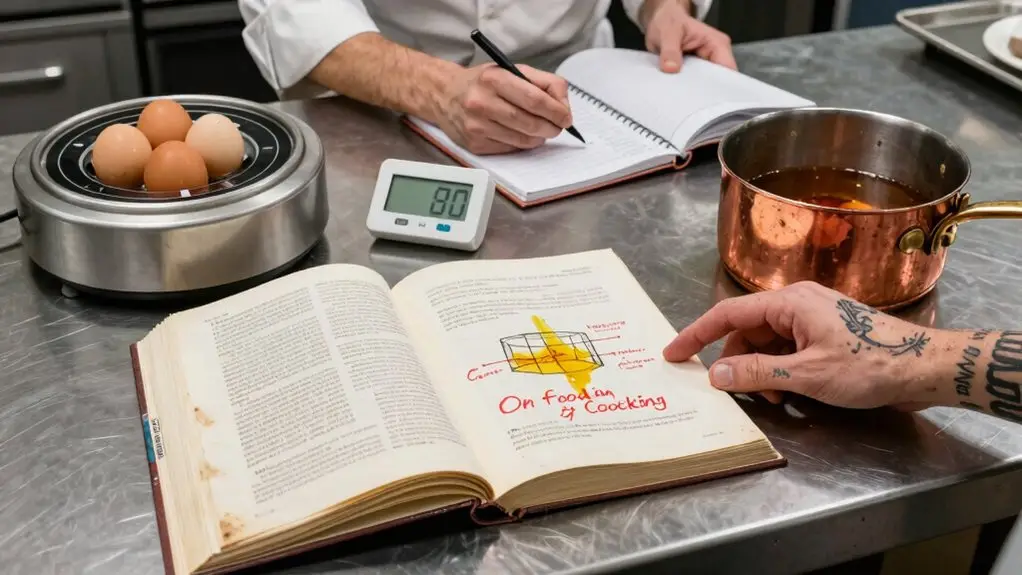
When you’re pushing flavors and textures to their absolute limits like Grant Achatz does, you can’t afford to guess. You need to know exactly what’s going to happen before you even turn on the stove.
That’s where McGee’s book becomes your secret weapon. It transforms your chef’s workflow from trial-and-error into calculated moves.
You’ll grab it when experimenting with a new foam or gel, checking why proteins behave certain ways under pressure.
It saves you from ruined batches and wasted nights.
For plating precision, McGee’s insights help you predict how heat and moisture affect your dish’s final look and stability.
You’re not just following recipes anymore; you’re building them with confidence, using science as your backup singer while creativity takes the lead. Just as light and dark grout change how tile patterns are perceived in a space, the contrast and interplay of ingredients you choose can dramatically shift how a dish is experienced visually and texturally.
Your First 50 Pages of On Food and Cooking: Start With Chapter 3
Most cooks crack open a massive cookbook and start at the beginning, but you’re smarter than that. You’ll flip straight to Chapter 3, and here’s why: it will save you time and frustration.
This is where McGee teaches you the real stuff. Cooking isn’t about following steps like a robot. It’s about controlling physical changes in your food.
You’ll learn Kitchen Variables, such as heat, moisture, and time, and how they work together. You’ll study Heat Exposure—how long and how hot—and suddenly your steaks sear better.
The magic is Method Reasoning. Instead of memorizing “cook for five minutes,” you’ll understand why five minutes works. You’ll connect holding, browning, and finishing to actual science.
Final Thoughts
You’ve made it to the end, and honestly, you get why chefs keep this book nearby now. McGee doesn’t just tell you *how* to cook; he shows you *why* things happen. That broken sauce? No longer a mystery.
Your next kitchen disaster? You’ll actually understand it, maybe even laugh a little. Grab a copy, start with Chapter 3, and watch your cooking change.
The science isn’t scary; it’s your new secret weapon.