The Best Fluffy Pancakes recipe you will fall in love with. Full of tips and tricks to help you make the best pancakes.


You can cut kitchen chaos before the rush even starts with seven simple shifts. Batch your menu items, like sauces or proteins, during quiet midweek afternoons. Portion and label everything airtight, noting dates and allergy info for easy FIFO.
Buy bulk from one central supplier, and adopt pre-cut proteins and frozen produce to save serious time. Plan your prep week around slow periods, train staff on cross-station tasks, and stock stations using smart par levels.
These strategies make service steadier and way less stressful—and there’s plenty more where that came from.
Batch Prep Your Menu for Faster Service
Since batching can feel like a chore, it’s actually your ticket to calmer, faster service. When you batch prep your menu for faster service, you shift your kitchen workflow from chaotic to controlled.
Since batching can feel like a chore, it’s actually your ticket to calmer, faster service.
Cooks tackle one streamlined task, like roasting all proteins or mixing signature sauces, instead of breaking down stations repeatedly.
Use slow periods, like midweek afternoons, to run production batches.
This simple time management trick cuts down service day surprises.
Plus, it improves inventory management because you’ll portion exact weights and seal them up.
Prioritize items that cross multiple dishes, like braised meats or grain bases.
That way, your prep work supports several ticket categories at once.
Your team moves quicker, stress drops, and you finally feel ahead of the rush instead of drowning in it. Labeled and dated containers can be reheated in under twenty minutes, keeping your line moving without sacrificing quality or consistency.
Portion and Label Ingredients in Advance
After you’ve batch-prepped your proteins and sauces, it’s time to take that control one step further. Portion your ingredients into consistent sizes—think scoops of grains or sliced proteins or pre-measured sauces—then seal and label them clearly.
This isn’t just about organization; it’s a game-changer for food safety and food safety. You’ll reduce waste less, control costs better, and grab ready-to-use items during rush without re-measuring or re-packaging.
Label each container with the item name, portion amount, and date (add allergy notes too) so staff can follow FIFO quickly, preventing spoilage or mix-ups.
Plus, placing those labels right at the hot line or prep shelves means your team finds exactly what they need instantly, slashing stress from frantic searching.
For even greater consistency, apply category headers to shelves in addition to item labels on containers so every zone is immediately identifiable without guesswork.
Get this right and your station runs steadier with fewer hiccups.
Buy in Bulk With a Centralized Supplier
You’ll save serious time by choosing one centralized supplier for all your bulk needs: ingredients, packaging, and kitchen necessities come in a single order, not from multiple vendors.
This cuts down those last-minute runs that throw off your prep schedule and spike your stress.
Letting you focus on cooking instead of chasing supplies is essential.
Plus, buying in bulk with that one supplier locks in savings and keeps your inventory steady, so you’re never scrambling mid-service.
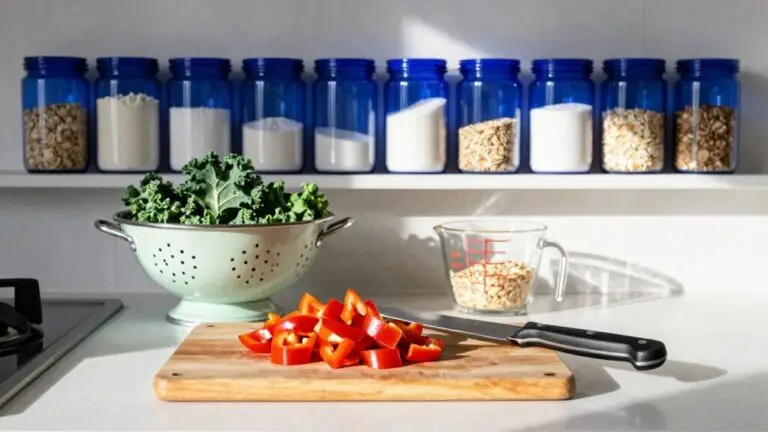
Once bulk goods arrive, repackage them into matching airtight canisters with clear labels so you can spot low-stock items early and avoid running out of key ingredients mid-service.
One Supplier, One Order
By consolidating your kitchen orders with one trusted supplier, you’ll cut ordering time in half and dodge those frantic last-minute dashes for missing ingredients. Sticking with one supplier lets you save time on paperwork, phone calls, and double-checking invoices. These are simple wins for a busy kitchen.
Streamlined ordering: You’ll place fewer, bigger orders, freeing up hours each week.
Lower costs: Bulk buys from one supplier often slash per-unit prices, helping your budget breathe easier.
Consistent stock: Predictable deliveries mean no more guessing what’ll show up or scrambling for substitutes.
Simplified inventory: Standardized specs and clear labels let your team follow FIFO without confusion, so nothing goes to waste.
Pairing this consolidated approach with a storage-first foundation ensures your kitchen is organized to receive and manage bulk deliveries efficiently, without clutter undermining the time you’ve saved.
YOU’LL STRESS LESS KNOWING YOUR ONE SUPPLIER HAS YOUR BACK, KEEPING PREP SEAMLESS AND SHIFTS STEADY.
Reduced Last-Minute Runs
Since last-minute store runs can throw your whole service into chaos, buying in bulk from a centralized supplier is your ticket to a calmer kitchen. You cut those frantic trips during peak hours, which means fewer workflow disruptions and more time for actual cooking.
Your staff stops hunting for missing containers or labels too. Centralized purchasing keeps all packaging key items in one spot. This consistency lets you batch-produce and portion key ingredients without running out mid-shift. Fewer emergency runs also cut labor spent on driving and receiving orders, so your team focuses on prep instead.
Plus, you reduce waste by using every piece of that bulk order, supporting an Efficient Kitchen. You’ll notice less stress and more predictable outcomes, making your whole operation more seamless. Keeping your bulk stock organized with clear airtight containers and labeled zones ensures every team member knows exactly where supplies are stored and can return them consistently without disrupting the flow.
Bulk Purchasing Savings
When you buy in bulk from a single centralized supplier, you’re not merely stocking up, you’re streamlining your whole operation. For restaurant owners, bulk purchasing savings slash costs and cut chaos. No more frantic pantry raids or wasted prep time.
Here’s how it boosts your kitchen:
- You’ll reduce last-minute runs by keeping steady inventory from one source, easing out those stressful midday scrambles.
- Stocking common staples—like spices, oils, and grains—at scale lowers unit costs and makes consolidated prep batches a breeze.
- FIFO rotation and regular audits keep spoilage low, so you’re not throwing money into the trash.
- Standardized packaging from your supplier simplifies storage and portioning, letting your team work predictably during rush hour.
Installing pull-out shelves in deep pantries gives your team instant visibility into bulk stock, so nothing gets buried, forgotten, or discovered expired during a busy service.
This approach turns bulk buying from a chore into a secret weapon for sanity.
Use Pre-Cut Proteins and Frozen Produce

If prepping proteins and produce from scratch is eating up your shift, switching to pre-cut proteins and frozen veggies can be a real game changer. You’ll save precious time while boosting portion control: those pre-sliced chicken breasts and trimmed steaks cook faster and more consistently.
Plus, using reliable suppliers cuts food-handling steps and lowers contamination risk. Frozen vegetables and fruits, harvested at peak ripeness, keep quality steady year-round, so you avoid those frantic prep surges.
Freeze your prepped items in labeled containers, noting the date and type. Now you’ve got a lean, organized kitchen with less spoilage and simpler storage. That’s more time to focus on cooking, not chopping. For even greater efficiency, a dedicated prep kitchen keeps this kind of high-volume work separate from your main line, so your primary cooking space stays clean and organized throughout service.
Plan Your Prep Week Around Slow Periods
You can turn your restaurant’s quiet spells into your secret weapon by scheduling high-friction prep tasks like sauce-making or protein portioning during those times.
Leverage your sales data to figure out what sells most people order.
Then focus your streamlined workflow projects on building those components first.
This way, you’re not scrambling during the rush; you’re simply grabbing ready-to-go items you prepped when things were calm down.
Storing those prepped components in airtight containers labeled by dish keeps ingredients fresh for up to 3–5 days and eliminates the guesswork of what’s inside when the rush hits.
Leverage Sales Data
Because your POS system already tracks every order, you can turn that data into a clear roadmap for when to tackle the heavy prep. Smart management of that sales info boosts your kitchen’s efficiency and creates more seamless restaurant experiences for your guests. No more guessing, just real numbers guiding your week.
Pull sales reports from the last 4–8 weeks to spot your slowest lunch and dinner windows. Then schedule big prep jobs like sauce batches or grain cooking during those quieter slots.
Filter your top-selling items and frequent add-ons, like that signature sauce, so you prep the highest-volume components first, maximizing your time. Use your sales mix, how often items sell together, to batch overlapping prep, like cooking a braise base used in multiple dishes, portioning it once.
Reforecast weekly from fresh sales figures, especially for trending items, so your plan stays sharp, not stale. Structuring your kitchen around dedicated prep and cook zones keeps your team moving efficiently between tasks without unnecessary detours or collisions during the dinner rush.
Streamlined Workflow Projects
Schedule your prep week around naturally slower periods, using midweek afternoons or late mornings to knock out high-effort components like sauces, grains, and protein portioning. That’s when you batch flavor foundations, spice blends, dressings, and compound butters, so multiple dishes draw from the same batch, cutting setup and cleanup time.
Plan a 2-week prep calendar to spot missing ingredients early, dodging last-minute runs that wreck your flow. Batch, portion, seal, and label during quiet hours to slash decision-making during rush and lock in food cost control.
Track sales data to concentrate prep on your highest-volume items and shared components. Use POS order frequency data to forecast volume per service and scale prep around peak rushes rather than slow periods, so you’re never caught under-prepared when demand spikes.
And don’t forget cross-training staff. It’s a lifesaver in a busy commercial kitchen. When everyone knows the system, slow periods become your secret weapon against service surprises.
Train Staff on Task Prioritization and Cross-Training
When you train your team to train your staff on task prioritization and cross-training, start by building shift-specific task checklists that clearly label what must be done during service, like hot holding and “ticket timing,” versus what can wait. This gives your staff a clear roadmap, cutting down mental guesswork when the tickets start flying.
Use a visual workflow board in your space near the expo station, so everyone sees real-time prep status and avoids bumping into each other during peak hours.
Cross-train each person to cover at least two adjacent roles, like pantry plus sauté or prep plus plating. That way, if someone calls in sick, you’re not stuck. Run scenario-based drills during slow periods to build prioritization habits.
Here’s what works:
- Build shift-specific task checklists.
- Use a visual workflow board.
- Cross-train staff for adjacent roles.
- Standardize handoff procedures.
You get steadier, consistent speed without backup, without quality dips.
Stock Your Station Smarter
While your team’s cross-training sharpens their adaptability, you can cut the chaos even more by stocking your station smarter. Batch your highest-frequency items first, think those proteins you portion daily or signature sauces, so no one’s hunting mid-service. Set a repeatable par level using FIFO. Then do quick daily stock audits to dodge last-minute shortages.
Pre-portion and label everything: sealed sauce containers, pre-weighed proteins, prepped grains. That cuts decision-making and speeds execution. Use centralized purchasing from a reliable supplier for spices and packaging to avoid ad-hoc disruptions. Keep just what’s needed for the shift on station, storing the rest elsewhere. Less clutter means less stress.
Toss in innovative kitchen tools, like portion scoops or labeled bins, to improve food flow and reduce waste. You’ll save time, lower panic, and keep your cool.
Final Thoughts
So, you’ve got a whole new toolkit for your kitchen. Don’t try every trick at once; that’s a recipe for stress. Pick just one or two strategies, like batching your prep or stocking your station smarter.
You’ll be amazed how a little planning cuts the chaos and gives you back your sanity. Your workflow’s about to get effortless, and honestly, your future self, along with your sanity, will thank you.