The Best Fluffy Pancakes recipe you will fall in love with. Full of tips and tricks to help you make the best pancakes.


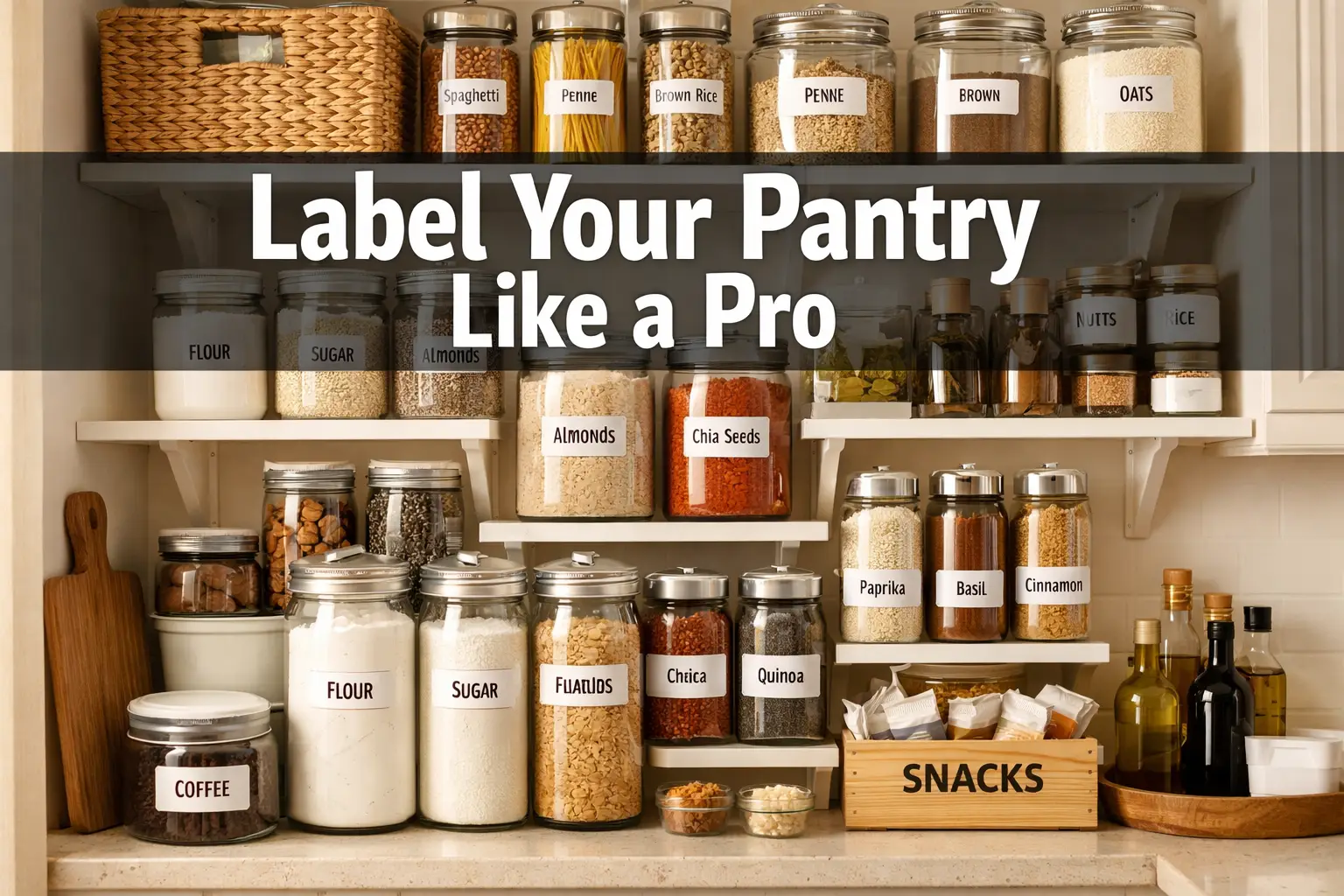
Quick Answer: To label your pantry like a professional organizer, choose a consistent label style, group items by category, use clear and readable fonts, and apply labels at eye level. The whole process takes a few hours and makes a real difference to your everyday cooking routine.
Key Takeaways
- Group pantry items by category before labeling (baking, grains, snacks, canned goods, etc.)
- Choose one label style and stick to it — mixing styles creates visual clutter
- A label maker, printed labels, or chalkboard labels all work well; pick what fits your budget and pantry type
- Use clear, large fonts so labels are readable at a glance
- Label both the container and the shelf for faster restocking
- Include expiry dates or “buy by” info on perishable items when possible
- Consistent container sizes make labeling and stacking much easier
- Revisit and update labels every few months as your pantry stock changes
Why Does Pantry Labeling Actually Matter?
A labeled pantry saves time, reduces food waste, and cuts down on the daily frustration of searching for ingredients. When everything has a clear home, everyday cooking becomes faster and less stressful.
Without labels, it’s easy to buy duplicates, miss expiry dates, or spend five minutes hunting for the baking powder. A well-labeled pantry solves all three problems at once. It’s one of the highest-return quick wins in kitchen organization.
Who benefits most: Busy households, families with multiple cooks, and anyone who batch cooks or meal preps regularly.
What Supplies Do You Need to Label Your Pantry Like a Professional Organizer?
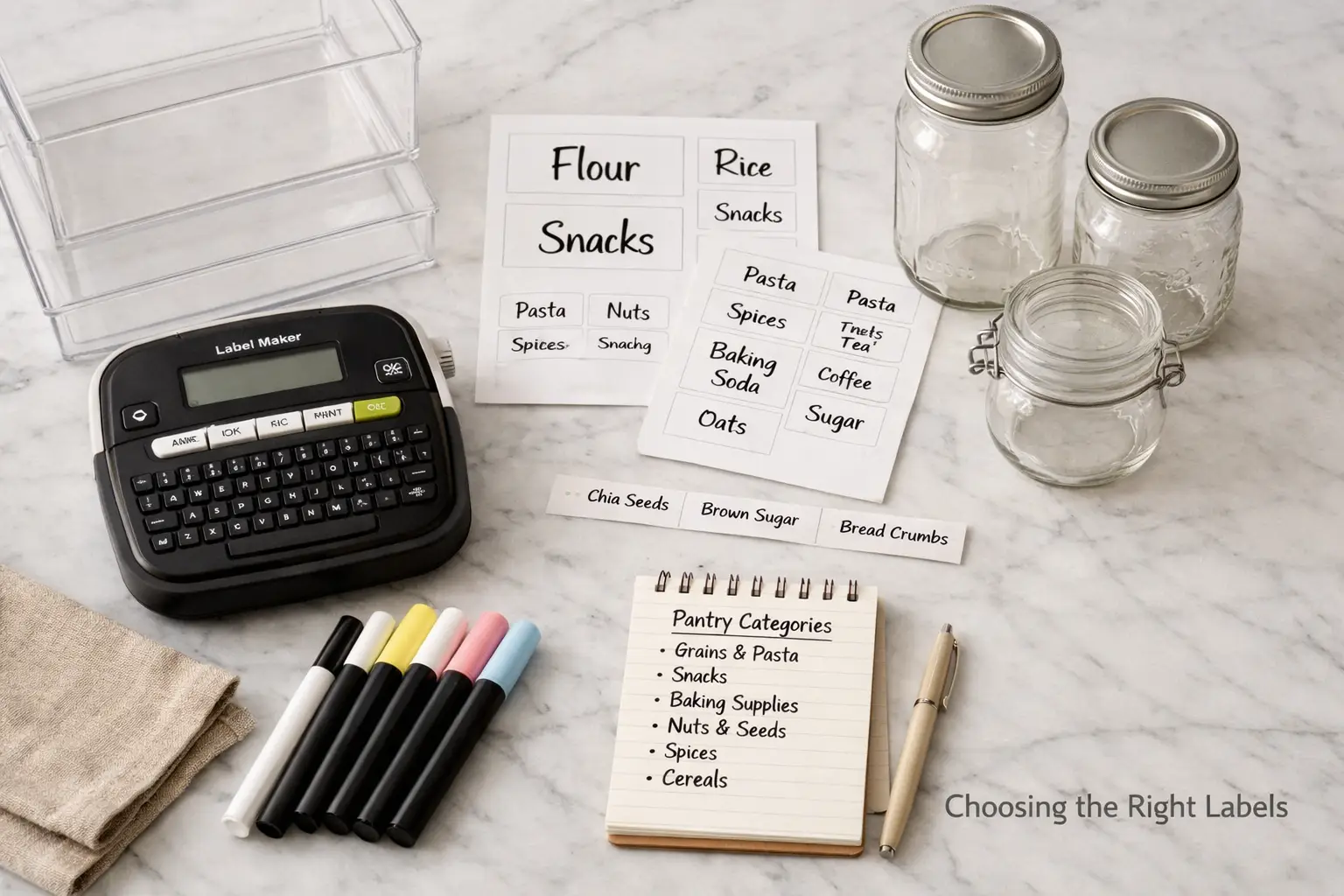
You don’t need expensive tools to get professional results. The basics cover most pantry setups.
Core supplies:
| Supply | Best For | Estimated Cost |
|---|---|---|
| Label maker (e.g., DYMO or Brother) | Clean, typed labels; durable | $25–$60 |
| Printable label sheets | Custom designs, bulk labeling | $10–$20 for sheets |
| Chalkboard labels | Rented spaces, flexible content | $8–$15 |
| Chalk markers | Writing on chalkboard labels | $5–$12 |
| Clear adhesive labels | Minimalist look on glass jars | $10–$18 |
| Rubbing alcohol + cotton pads | Surface prep before applying labels | Under $5 |
Choose a label maker if you want a fast, consistent result and plan to label a lot of containers. Choose printable labels if you want custom fonts, logos, or a more polished aesthetic. Choose chalkboard labels if you rent, move often, or like to change your pantry layout regularly.
Common mistake: Buying labels before deciding on containers. Settle on your container sizes first, then choose label dimensions that fit.
How to Sort and Group Your Pantry Before You Label
Start with a full pantry audit before touching a single label. Pull everything out, check expiry dates, and discard anything past its prime.
Step-by-step sorting process:
- Empty the pantry completely. Wipe down shelves while they’re clear.
- Sort into broad categories: baking, grains and pasta, canned goods, snacks, condiments, breakfast items, oils and vinegars, spices.
- Identify what needs a container versus what can stay in its original packaging.
- Decide shelf placement based on frequency of use. Daily items go at eye level; rarely used items go high or low.
- Group by household member if needed (kids’ snacks on lower shelves, adult staples at eye level).
This step is where most people skip ahead and regret it. Labeling a disorganized pantry just creates a labeled mess.
How to Choose the Right Label Style for Your Pantry
The best label style is the one you’ll actually maintain. Consistency matters more than perfection.
Three reliable approaches:
- Typed labels (label maker or printed): Clean, professional look. Works best on smooth glass or plastic containers. Hard to update without reprinting.
- Handwritten labels: Personal and quick. Use a fine-tip permanent marker or chalk marker. Works well if your handwriting is legible.
- Pre-designed printable sets: Available on Etsy and similar platforms, often in coordinated fonts and styles. Good for a cohesive aesthetic without design skills.
Font and size tips:
- Use sans-serif fonts (Arial, Helvetica, Futura) for maximum readability
- Minimum 12pt font for small jars; 16–18pt for larger containers
- Avoid decorative scripts on small labels — they’re hard to read quickly
Color guidance: Black text on white or kraft labels reads best in most lighting. If your pantry has dark shelves, consider white text on a dark label.
🏷️ Pantry Label Style Finder
Answer 4 quick questions to find the best labeling approach for your pantry.
Question 1 of 4
Your Result
Your Starter Checklist
Step-by-Step: How to Label Your Pantry Like a Professional Organizer
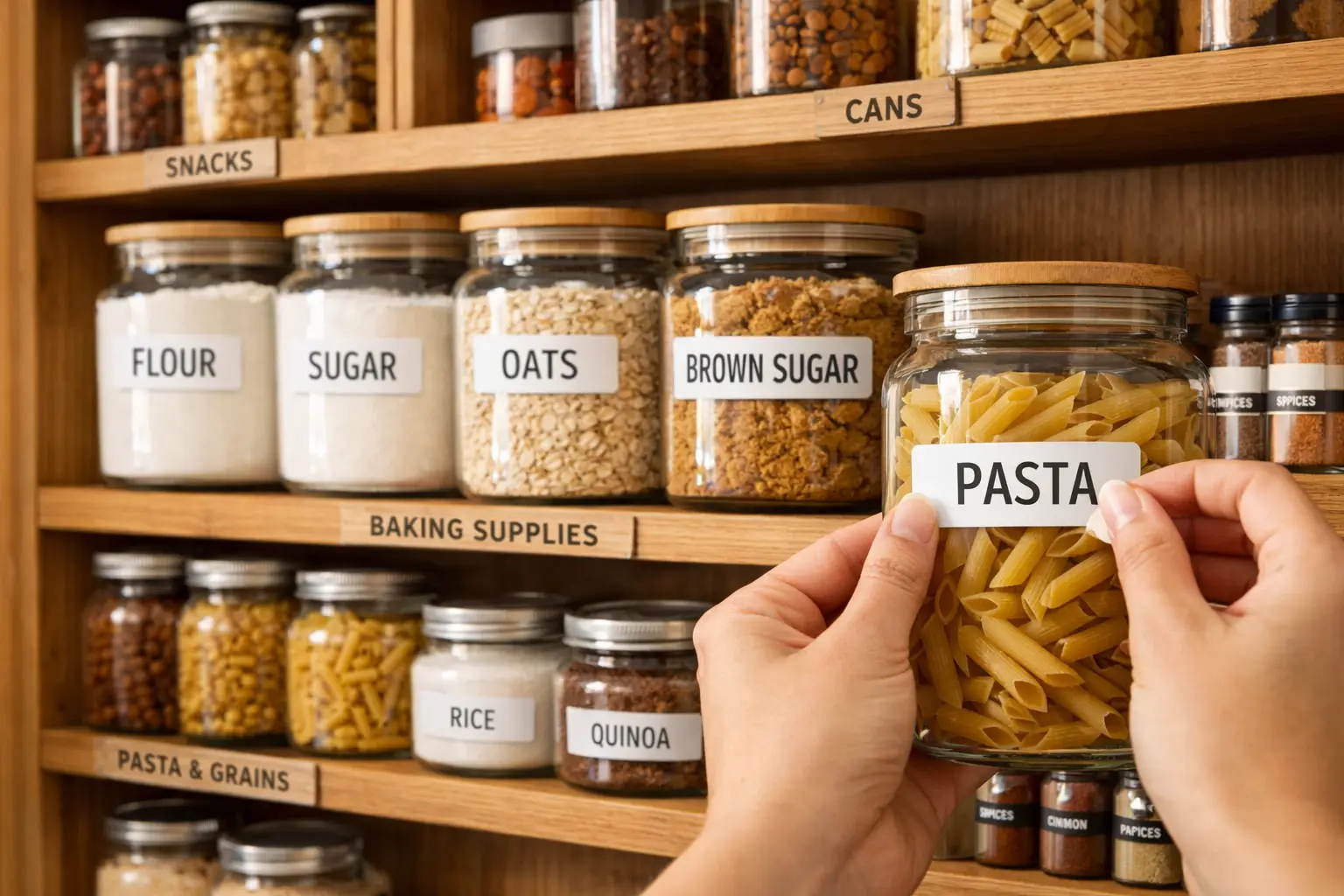
Follow these steps in order for the cleanest, most durable result.
- Clean all container surfaces with rubbing alcohol and let dry. Labels stick better and last longer on a clean, dry surface.
- Decide on label placement — front-center on containers, and on the shelf edge for category headers.
- Create your label list before printing or typing anything. Write out every category and subcategory you need.
- Print or make all labels at once to ensure consistent sizing and style.
- Apply category headers to shelves first. These anchor the whole system.
- Fill containers, then apply item labels. Don’t label empty containers — they may shift around before you fill them.
- Step back and check readability from the pantry doorway. Can you read every label without moving closer?
- Add expiry date stickers to perishable items like flour, nuts, and whole grains. A small round dot sticker with a handwritten date works well.
Edge case: If you have deep shelves, label both the front and top of containers so items are identifiable when stacked or pushed back.
What Categories Should You Label in a Pantry?
A professional organizer typically uses broad parent categories with specific item labels inside each zone. This two-tier system is what makes a pantry genuinely easy to navigate.
Recommended pantry categories:
- 🌾 Grains and pasta (rice, oats, couscous, pasta shapes)
- 🧁 Baking (flour, sugar, baking soda, cocoa powder, vanilla)
- 🥫 Canned goods (tomatoes, beans, broth, coconut milk)
- 🍿 Snacks (nuts, crackers, dried fruit, popcorn)
- 🥣 Breakfast (cereals, granola, pancake mix)
- 🫙 Condiments and sauces (hot sauce, soy sauce, vinegars)
- 🫒 Oils and fats (olive oil, coconut oil, cooking spray)
- 🌿 Spices (alphabetical or by cuisine type)
- 🧴 Supplements and vitamins (if stored in the pantry)
Spice organization tip: Alphabetical order works for large spice collections. For smaller collections, grouping by cuisine (Italian, Asian, Mexican) is faster in practice.
How to Keep Pantry Labels Looking Good Long-Term
Labels degrade, pantry contents change, and life happens. A maintenance plan prevents the system from falling apart after a few months.
Practical maintenance habits:
- Monthly: When restocking, check that items are in the right zone and labels are still legible.
- Quarterly: Do a quick audit. Remove expired items, update any labels that no longer reflect what’s stored.
- Annually: Full pantry reset. Pull everything out, clean shelves, and replace any worn labels.
Durability tips:
- Laminate printed labels or use a clear adhesive overlay to protect against moisture and oil splashes
- Avoid placing labels near the stove or sink where heat and steam can loosen adhesive
- Use waterproof labels in any area near the sink or in a humid kitchen
Quick win: Buy a small pack of replacement label tape or extra label sheets when you first set up the system. Having spares on hand means you’ll actually replace worn labels instead of ignoring them.
Common Pantry Labeling Mistakes to Avoid
Even well-intentioned pantry projects go wrong. Here are the most common issues and how to sidestep them.
- Mixing label styles: Using a label maker for some items and handwritten labels for others looks chaotic. Pick one and commit.
- Labels that are too small: If you need to squint, the label isn’t doing its job. Bigger is almost always better.
- Over-categorizing: Creating 20 micro-categories makes the system hard to maintain. Start with 8–10 broad categories.
- Skipping shelf labels: Item labels alone aren’t enough. Category headers on shelf edges or walls make the system intuitive for everyone in the household.
- Not involving other household members: If others don’t understand the system, they won’t use it. A quick five-minute walkthrough after setup goes a long way.
FAQ: Pantry Labeling Questions Answered
Q: What’s the best label maker for a home pantry?
The DYMO LabelManager 160 and Brother P-Touch Cube are both reliable, easy to use, and produce clean, durable labels. Both are widely available for under $50.
Q: Can I label containers that already have printed packaging?
Yes. Apply your label directly over the existing text, or use a solid-background label to cover it cleanly.
Q: How do I remove old labels without damaging containers?
Soak the label in warm water for a few minutes, then peel slowly. Use rubbing alcohol or a small amount of cooking oil to remove adhesive residue.
Q: Do I need matching containers to label a pantry professionally?
Matching containers help, but they’re not required. Consistent labeling style and clear category zones matter more than identical jars.
Q: What font works best for pantry labels?
Sans-serif fonts like Arial, Futura, or Helvetica are the most readable at small sizes. Avoid thin or decorative scripts on labels smaller than 2 inches.
Q: How long does it take to label a full pantry?
A typical pantry takes 2–4 hours from start to finish, including sorting, printing, and applying labels. Larger pantries or those needing new containers may take a full day.
Q: Are chalkboard labels worth it?
Yes, if your pantry contents change often or you prefer a flexible system. They’re easy to wipe and rewrite. The tradeoff is that chalk can smudge if not sealed with a chalk marker (not regular chalk).
Q: Should I label the inside or outside of containers?
Always label the outside, front and center. For stackable containers, add a label to the top as well.
Conclusion: Your Next Steps for a Labeled Pantry That Actually Works
Learning how to label your pantry like a professional organizer comes down to a simple sequence: sort first, choose a consistent label style, apply category headers, then label individual items. The whole system takes a few hours to set up and pays off every single day.
Your action plan:
- Set aside a weekend morning for the full pantry audit and sort
- Choose your label style (label maker, printed, or chalkboard) before buying anything else
- Create your category list and print or make all labels in one session
- Apply shelf headers first, then container labels
- Schedule a 15-minute quarterly check-in to keep the system fresh
A well-labeled pantry is one of the most practical upgrades a busy kitchen can have. It reduces clutter, saves time on grocery runs, and makes everyday cooking smoother for everyone in the household. Start with one shelf if a full pantry feels overwhelming — small wins build momentum.
References
- Iida, K. (2019). The Art of Pantry Organization. Storey Publishing.
- The Container Store. (2023). Pantry Organization Guide. https://www.containerstore.com
- DYMO. (2024). Label Maker Comparison Guide. https://www.dymo.com
- Good Housekeeping Institute. (2022). Best Pantry Organization Products, Tested. https://www.goodhousekeeping.com
Tags: pantry organization, pantry labeling, kitchen organization, label maker, pantry labels, food storage, kitchen workflow, home organization, pantry categories, pantry storage ideas, kitchen efficiency, pantry audit