The Best Fluffy Pancakes recipe you will fall in love with. Full of tips and tricks to help you make the best pancakes.

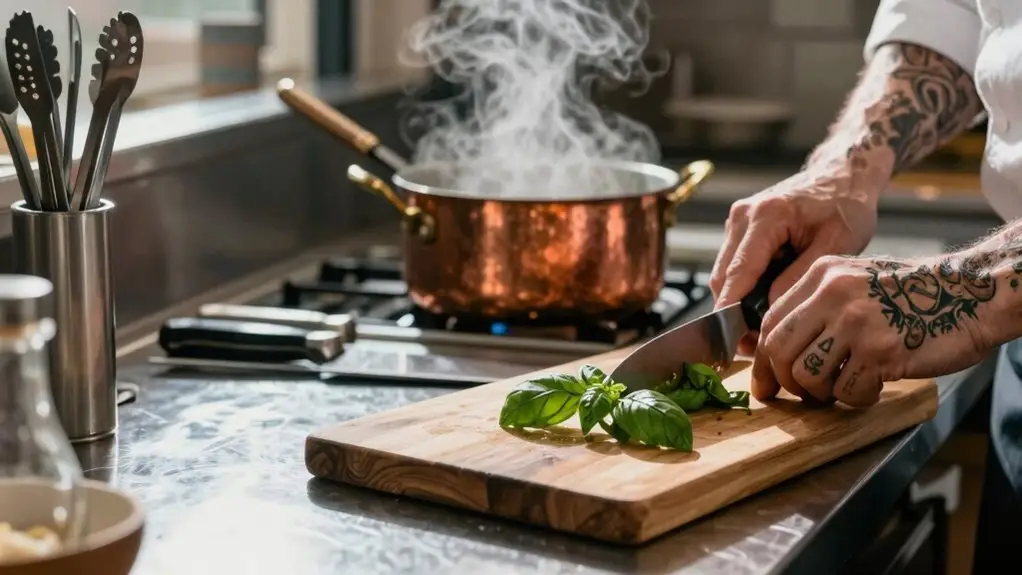
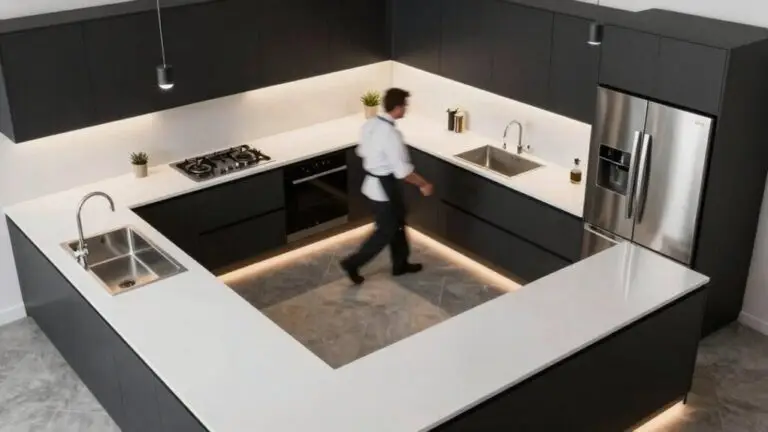
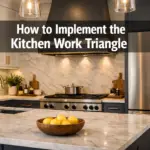
To boost efficiency, start by mapping your kitchen layout into clear food prep, cooking, and washing zones. Position your fridge, sink, and stove so each “triangle leg” is between four and nine feet.
Choose gear like a Breader, Blender, Sifter to slash prep time by 80%. Simplify your menu by overlapping key ingredients—use one batter base for multiple dishes.
Finally, run pre-shift huddles to catch bottlenecks before service. Stick with these steps, and you’ll keep your kitchen humming.
Map Your Kitchen Layout to Optimize Workflow Flow
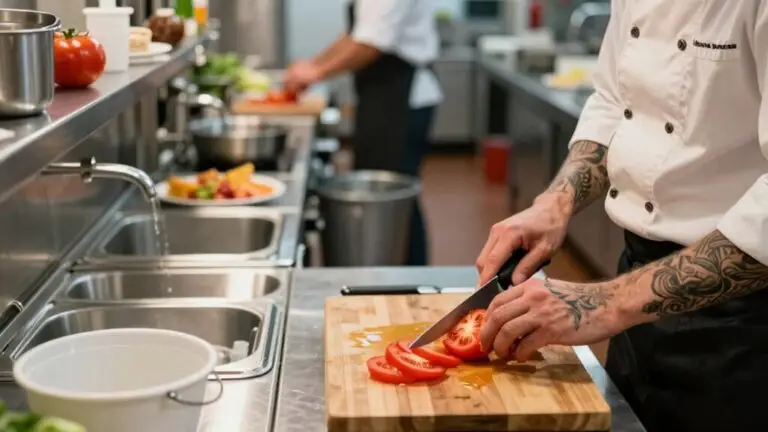
Since your kitchen’s layout is the backbone of every service, you’ve got to map it out with intention. Start by creating zones based on food prep, cooking, and washing. This smart kitchen workflow cuts the distance between workstations, so your team isn’t running marathons during the rush.
Keep storage and prep areas close to the hot line; it’s a game-changer for food preparation speed. You’ll notice a huge boost in kitchen efficiency when fridge placement supports quick handoffs for inventory management.
Keeping storage and prep close to the hot line is a game-changer for food preparation speed.
Watch your staff during peak hours and spot bottlenecks like shared equipment or messy traffic patterns. Then rearrange to eliminate crisscrossing.
If you can’t move walls, use movable stations to recreate a logical flow. A thoughtful kitchen layout turns chaos into calm, making every ticket faster. Positioning your refrigerator, sink, and stove so that each triangle leg measures between 4 and 9 feet keeps your team moving efficiently without unnecessary steps across the kitchen.
Choose Equipment That Cuts Repetitive Prep Time
Once you’ve got your kitchen layout flowing seamlessly, it’s time to bring in equipment that does the heavy lifting for you. Focus on gear that slashes repetitive prep like breading and batter management. A Breader Blender Sifter, for example, cuts hand-sifting time by up to 80% and saves up to 40% on ingredient costs. That’s less food waste and more time for your staff to focus on cooking.
Choose reliable, easy-to-use tools that don’t bog down your team with training or maintenance. When you match equipment directly to your menu steps, you boost efficiency without creating bottlenecks.
Prioritize durable machines that handle high-volume tasks—mixing, marinating, or breading—so your staff repeats fewer manual steps. Smart kitchen equipment means faster prep, happier cooks, and less wasted food. For example, an immersion blender’s stick-in-pot design eliminates the need to ladle hot liquids into a separate blender, reducing both burn risk and cleanup time between batches.
Build a Kitchen Workflow Plan Around Your Menu
Map every dish on your menu to a specific workflow—prep, cook, then plate—and you’ll instantly spot where traffic jams or bottlenecks might slow you down. With kitchen workflow planning, you’ll align each menu item to the prep, cook, plate sequence, making sure your restaurant’s kitchen flows steadily.
This reveals common bottlenecks, like whether you need extra prep space or equipment for capacity planning. An inventory system helps you track overlapping ingredients, boosting quality control while cutting waste.
Don’t forget food safety. Proactive maintenance on equipment keeps things running. By auditing your menu’s real prep time and execution time, you’ll set realistic capacity planning that matches ticket-to-plate speed.
This approach reduces frustration and rework, so you’re ready for peak service. To verify where time is actually lost, record timestamps at every step as you trace a single order from receipt to plate during the rush.
Simplify Your Menu by Overlapping Key Ingredients
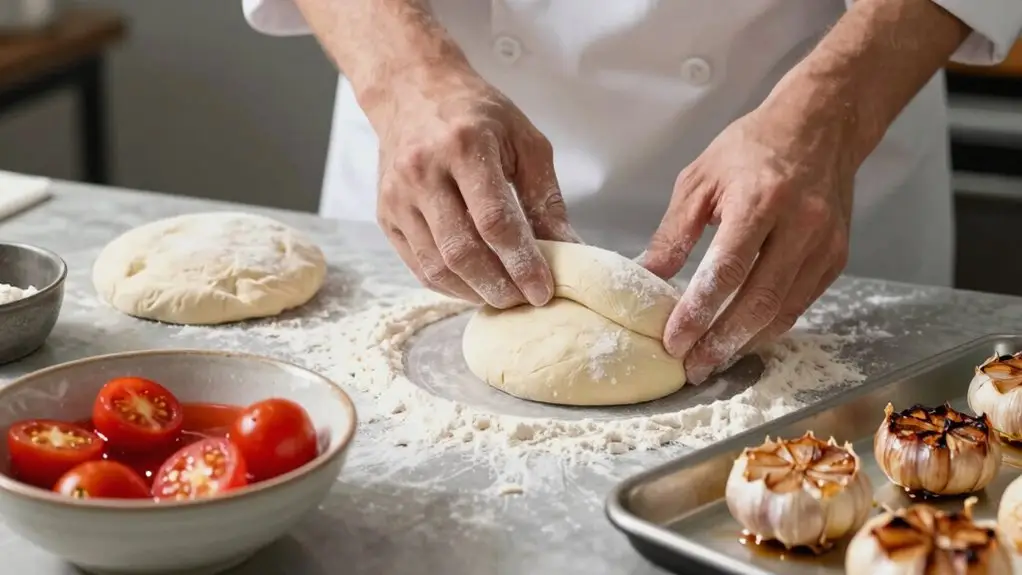
Now that you’ve mapped out your kitchen workflow around your menu, it’s time to take a hard look at what’s actually on that menu and start cutting down on complexity.
In the restaurant industry, overlapping key ingredients is a game-changer.
Use the same batter or sauce base across dishes, so your commercial kitchen doesn’t juggle dozens of unique items.
You’ll make fewer trips to Food Storage, and your kitchen equipment can make quick work of batch prep.
That’s how you help streamline prep and reduce waste.
Plus, you’ll slash labor costs because your team isn’t prepping 15 separate components.
Focus on quality by standardizing around a few building blocks.
These optimization strategies let you serve variety without the chaos.
For example, batch cooking whole grains like brown rice or bulgur in advance gives you a versatile base that can anchor multiple dishes throughout the week without added complexity.
Train Your Team to Stop Bottlenecks Before They Start
Before a single ticket prints, run a pre-shift huddle with a checklist to confirm menu changes, out-of-stocks, and special instructions. That way, missed updates don’t stall the line.
In your restaurant kitchen, train managers to coach faster handoffs. Fifty-seven percent of workers say bosses need to step up, so don’t let that be you. Teach staff to spot trouble on any piece of equipment, such as unusual noises or inconsistent performance, before it becomes downtime.
Standardize where each ticket goes next: prep, cooking, plating, expo. That eliminates unclear handoffs and helps you streamline order flow. Add real-time updates during peak service to cut rework drops.
With seven out of ten operators short-staffed, you’ve got to manage labor smartly. Use regular audits to boost communication between kitchen teams. Staff training isn’t a one-off; it’s how you stop bottlenecks before they start in your commercial restaurant kitchen. Applying work triangle logic by spacing your sink, stove, and fridge between 4 and 9 feet apart reduces unnecessary movement and keeps your team from crossing paths during peak service.
Final Thoughts
So, you’ve got the map, the gear, the plan, the menu, and the team. Now it’s time to tie it all together.
Don’t overthink it—just start small and tweak as you go. You’ll hit a rhythm before you know it, and your kitchen will feel less like a battle zone and more like a well-oiled machine.
Plus, you’ll actually have a second to breathe. That’s a win.