The Best Fluffy Pancakes recipe you will fall in love with. Full of tips and tricks to help you make the best pancakes.

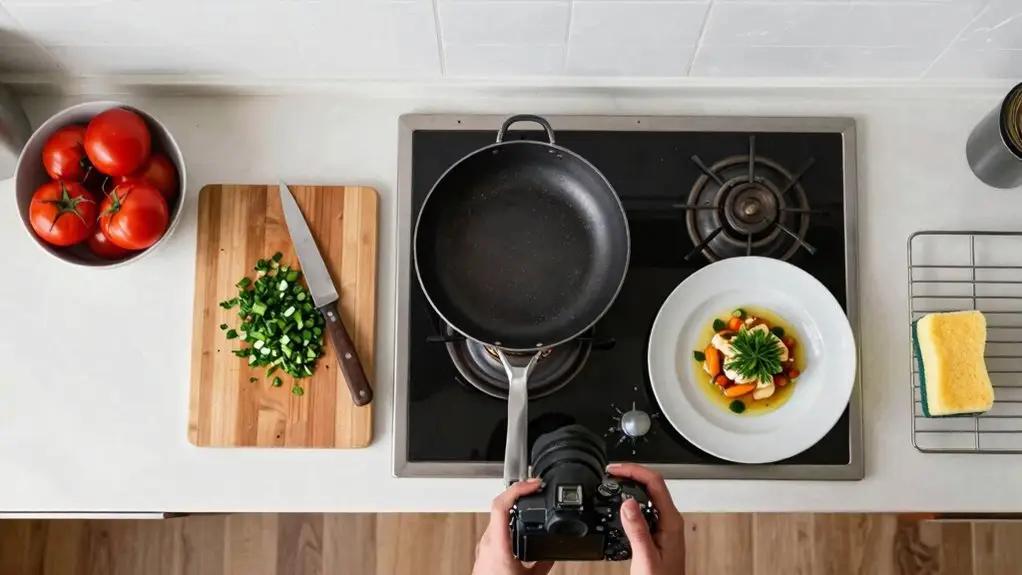
You’ll start by drawing a flowchart of your current cooking steps, mapping every move from chopping to cleanup. Next, time yourself to spot wasted trips back and forth. You’ll be shocked how often you hunt for a lid.
Then rearrange your kitchen zones so tools live within arm’s reach. Always stage ingredients and tools before lighting the stove. Finally, plan your cooking order so nothing gets cold.
Stick around to see how easy this really gets.
Draw a Flowchart of Your Current Cooking Steps
Unless you’re winging it like a TV chef, drawing a flowchart of your current cooking steps is the clearest way to spot where your kitchen workflow gets messy. Start by jotting down every move—from chopping onions at your cutting board by the sink to stirring sauce at the stove.
> Map each move from cutting board to stove to find your kitchen’s messy bottlenecks.
Map each action to its cooking zone, noting inputs and timing markers like prep or bake downtime. Include decision points with arrows, like “need extra salt?” or “transfer pan?” This reveals bottlenecks in your kitchen layout and shows where storage solutions could save steps.
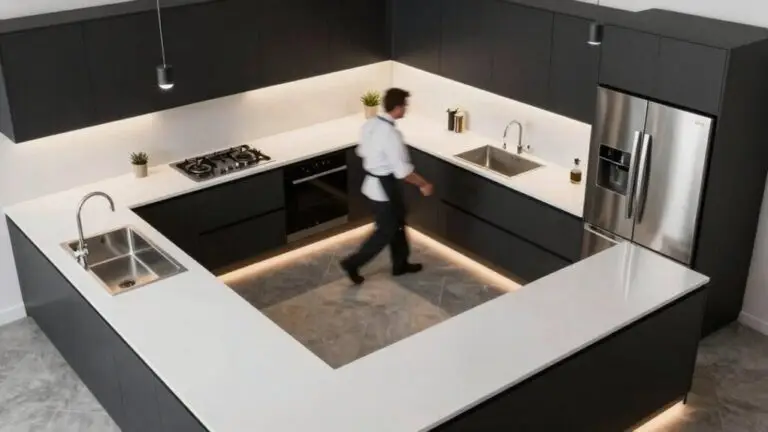
You’ll see if your Mise en place needs work or if counter space is wasted. An efficient kitchen relies on a solid kitchen work triangle, so tweak your kitchen organization to make meal preparation easier. Missing organization during active cooking, like hunting for misplaced items, can waste 2–6 minutes per restart and throw off your entire cooking flow.
End with cleanup steps—what stays warm, plates last—to reroute tasks smartly.
Find Where You Waste Time Running Back and Forth
You’ll often find that your biggest time-waster isn’t the cooking itself, but all that running back and forth between the fridge, sink, and stove. To fix this, start by timing one recent meal in 2-minute chunks—count how long you spend just walking.
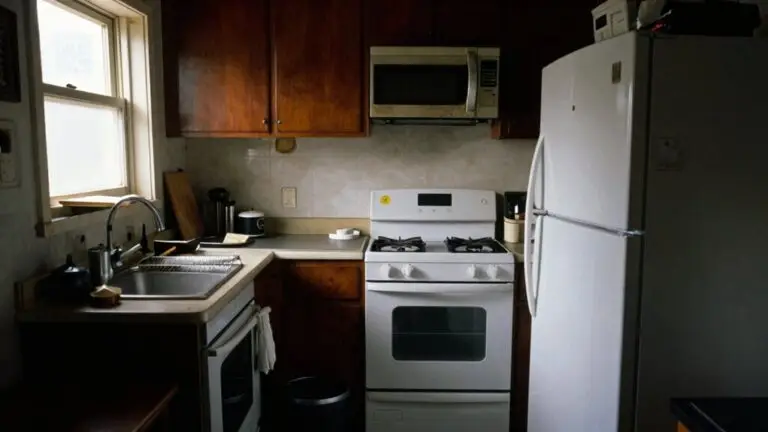
Then, stand at the sink for 10 minutes and note every trip you make to grab a utensil or ingredient. If you’re crossing cluttered countertops, you’re missing an efficient layout.
Next, count how many times you leave the cooktop to re-check ingredients during active cooking; even one trip signals poor staging.
Watch for “pan transitions” too: if you keep hunting for the same lid or sauté pan, your kitchen tools aren’t stored by use.
Finally, try a prep-to-heat test: clear an 18-inch area near the stove. If you can’t complete chopping before heat starts, you’re not staging everything right.
Keep cutting boards, a sauté pan, and additional storage within reach to reduce unnecessary steps. Ideally, your stove, prep space, and sink should each fall within 4–9 feet of one another so you can refill stock, drain pasta, and return to active stirring without breaking your cooking rhythm.
Rearrange Your Zones to Keep Tools Within Reach
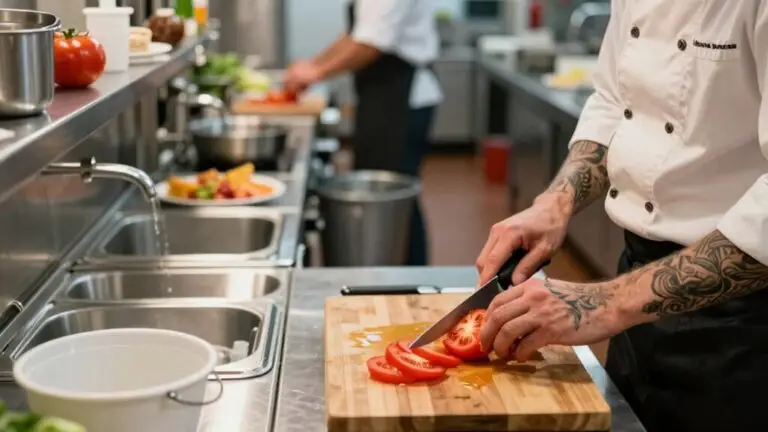
Once you’ve spotted where you waste steps, it’s time to rearrange your zones so tools land right where you need them. Think like professional chefs: group your prep zone with cutting boards, bowls, and a magnetic knife strip near your chopping area. Keep spices right beside the stove, and store pans near the burner. This smart kitchen design makes your cooking process way more efficient.
Use pull-out shelves in your cabinets to grab pots without digging.
If you’ve got a small kitchen, mount racks on the wall to free up counter space.
Place your plates equidistant between the dishwasher and stove—less running, more cooking.
A well-planned layout keeps your storage functional, so you’re not chasing tools mid-recipe.
Simple changes transform your workflow, turning chaos into calm. To keep the system working long-term, build a habit of doing a 5-minute daily reset to return every item back to its designated zone.
Get All Ingredients and Tools Out Before You Cook
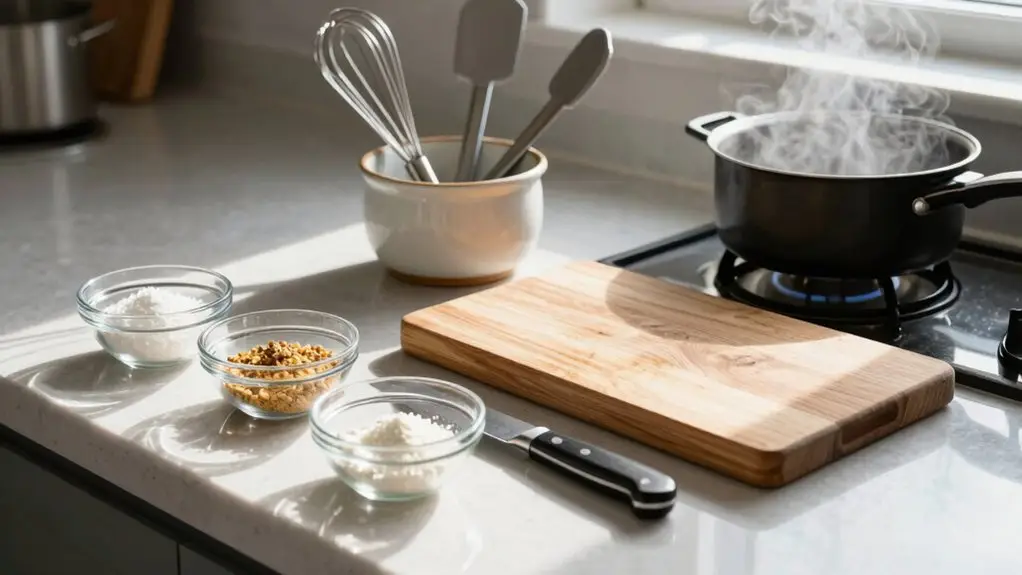
After you’ve rearranged your kitchen zones to keep tools close, it’s time to tackle the next big step: pulling everything out before you cook. This one habit saves your sanity and keeps your Home Kitchen from turning into a frantic scavenger hunt mid-recipe scramble.
After you rearrange your kitchen zones, pull everything out before you cook—it saves your sanity mid-recipe scramble.
You’ll transform your Cooking Space into a calm, organized launchpad. Here’s what to grab:
- Read the full recipe first, then your ingredient checklist every store run for kitchen necessary items like spices and flour.
- Set out room-temp items (butter, cream cheese) early so they’re ready when you need them.
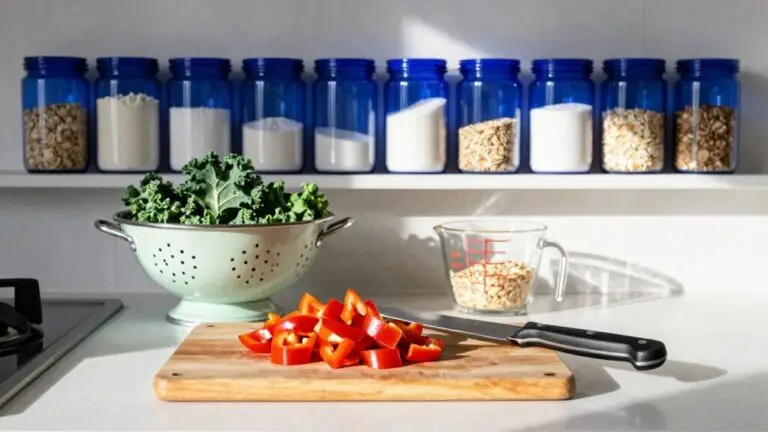
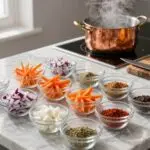
- Pull cookware and stage all ingredients—chop onions, measure sauces—before lighting the stove.
- Gather every tool: chef’s knife, whisk, tongs, and if it’s a Multifunctional Tools kind of night, don’t forget it.
- Keep your kitchen tidy by leaving only one heavy appliance out.
- Do a final sweep: check lids, containers, utensils, so you don’t hunt for dish soap mid-sauce.
For baking nights, use a kitchen scale for accuracy rather than relying on cup measurements, since packed flour and heaping spoons can throw off your results.
For home cooks, this means nothing surprises you. You’ve got everything you need.
Plan Your Cooking Order So Nothing Gets Cold
When you’re juggling multiple dishes, timing is everything. Nobody wants a lukewarm main course next to a piping-hot-out-of-the-oven side. Start the slowest-cooking item first, like a roast, then schedule quick sautéed veggies for last.
This way, fast-cooling components stay hot until you plate everything together.
Use passive downtime—while something bakes—to prep the next dish’s active moments. Identify pan bottlenecks, like needing the same skillet twice, and pre-stage ingredients so you reuse it without pausing.
Transfer finished food to a warm oven or covered plate immediately; nothing sits uncovered.
Professional chefs call this “heat-to-serve,” and it reduces unnecessary steps. Applying this rhythm makes cooking feel like a professional kitchen flow, not chaotic.
You’ll find your space clearer, and meals come together faster.
Positioning your refrigerator, sink, and stove within the kitchen work triangle can further streamline this rhythm by cutting down the steps between each stage of your cooking sequence.
For more tips, drop your email address and we’ll send you the full workflow guide.
Final Thoughts
So there you have it, five simple steps to finally stop feeling like you’re running a marathon in your own kitchen. You’ll save time, energy, and your sanity.
Just remember, you’re not aiming for a Michelin star here; you’re just trying to get dinner on the table without losing your cool, cooling your heels, or burning your fingers. Start small, tweak as you go, and soon enough, you’ll be cooking smarter, not harder.
Now go make a mess you can actually enjoy cleaning up.