The Best Fluffy Pancakes recipe you will fall in love with. Full of tips and tricks to help you make the best pancakes.



Kitchen activity zone mapping organizes your kitchen into dedicated areas for prepping, cooking, cleaning, storing, and serving. Unlike the old work triangle, it groups tasks based on how you actually cook, so you stop running back and forth.
You’ll keep knives by the sink, pans near the stove, and dish soap under the counter. Everything you need lands within arm’s reach, making meal prep faster and less frustrating. Stick around to see exactly which zone to set up first.
What Is Kitchen Activity Zone Mapping (And How It’s Different From the Work Triangle)?
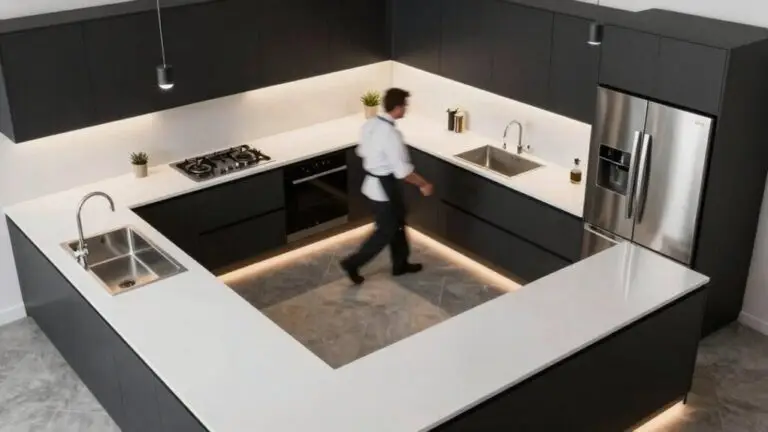
If you’ve ever tried cooking a big meal and found yourself sprinting between the fridge, the sink, and the stove like you’re in a relay race, you’ve already experienced the limits of the old kitchen work triangle. That 1940s design rule just connects three points, but it doesn’t account for real life.
Kitchen activity zone mapping changes everything by grouping tasks into dedicated areas. Your prep zone sits between the sink and fridge, with tools like knives and boards within arm’s reach. The cooking zone centers on your hob, while the cleaning zone wraps around the sink and dishwasher.
You’ll also store key items for food storage right where you use them. This approach lets you organize your kitchen around how you actually cook, not where cabinets fit. It’s more flexible than the work triangle, especially when you’ve got family or multiple cooks in the mix. To further reduce clutter and keep surfaces clear, magnetic rails for knives and small tools can be mounted near the prep area, reclaiming valuable counter space without blocking your workflow.
The 5 Core Kitchen Zones You Need to Know (Prep, Cooking, Cleaning, Storage, Serving)
- Prep Zone: Aim for 30–36 inches of counter space. Your chopping block will feel like home.
- Cooking Zone: Add your microwave and kettle here if you use them daily. They’ll earn their spot.
- Cleaning Zone: Under-sink caddies keep dish soap and consumables ready for quick cleanup. Store items like trash bags and cleaning sprays here too, since keeping them in the cleaning zone(link) means they’re always within arm’s reach of the sink and dishwasher.
Why Kitchen Activity Zone Mapping Saves You Steps Every Time You Cook
You’re probably tired of running back and forth while cooking, right? Kitchen activity zone mapping puts a stop to that. By grouping your food prep, cooking, and cleaning tasks into dedicated zones, you keep everything within easy reach.
Your prep zone sits between the sink and fridge, with knives and bowls ready to go.
Your prep zone sits between sink and fridge, with knives and bowls always ready to go.
Your cooking zone wraps around the hob, so pans and oils are never a hike away.
Even the cleaning zone, built around your sink and dishwasher, makes rinsing and loading feel seamless.
No more walking back and forth across your kitchen for one forgotten item.
Each zone holds exactly what you need for that task, based on your real routines.
You’ll save steps every single time you cook—no matter how small your space.
Positioning your dishwasher directly beside your sink keeps the cleaning zone tight and unloading dishes effortless.
Which Zone to Prioritize First (Based on Your Cooking Habits)

Start by taking a hard look at your daily cooking habits to see which zone you’ll use the most. If you’re grabbing a shake every morning, you’ll want that coffee or breakfast zone ready to go: no more hunting for the blender.
For regular cooks, the cooking zone should come first, so your pots, pans, and spices are right where you need them. Keeping your most-used tools and ingredients within arms reach can eliminate mid-recipe interruptions and help you maintain a steady cooking momentum throughout the meal.
Assess Daily Routines
Before you can rearrange your kitchen, you’ve got to figure out which zone you actually use the most. Start by observing your busy moments for 2–3 days, noting your daily routines and frequently used items. This reveals the zone that deserves prime real estate: your best counter and shelf space.
For instance, if you’re always grabbing coffee first thing, prioritize a Drinks Zone with your blender, tea bags, and cups right where you stand. Never cross zones for your morning fix again.
Here’s how to spot your priority zone:
- Morning rush: Put your Drinks Zone close together near the sink and fridge for fast access.
- Dinner prep: If you cook nightly, keep meal prep between the fridge and sink, with cooking centered at the cooktop.
- Baking love: Claim at least 24 inches of clear counter for a dedicated baking zone, so flour and sugar don’t take over your working areas.
This guarantees functionality and flow match your real habits. To further refine which zone deserves the most attention, apply work triangle logic by spacing your sink, stove, and fridge so each side measures between 4 and 9 feet apart, ensuring your most-used zone sits at the heart of an efficient layout.
Prioritize Frequent Tasks
After you’ve tracked your daily repeat cycles for a few days, it’s time to zero in on which zone should get your best real estate first. Look at your top three tasks, like making coffee or chopping veggies. If you brew coffee every morning, zone for that appliance first. Store your blender, kettle, and mugs together so you spend less time searching.
You’ll make your morning routine faster by keeping everything within arm’s reach. If you bake or cook elaborate meals, prioritize the Prep zone. Keep your knives, mixing bowls, and flour right next to the cutting board. Put this zone near the sink so washing produce feels effortless. Grouping your prep zone near the sink also aligns with the kitchen work triangle principle, which connects the sink, stove, and refrigerator into an efficient three-point path to minimize unnecessary walking.
Use the “high use = low reach” rule: everyday items stay at eye level. Don’t waste time hunting for measuring spoons. Design a kitchen that saves you space and energy. When you prioritize frequent tasks, you reclaim time for what matters—cooking without the chaos.
Design a Prep Zone That Speeds Up Meal Prep

You’ll cut your meal prep time in half by putting your most-used tools exactly where your hands already reach.
Hang your knives, keep three cutting boards stacked by the sink, and stash peelers and measuring cups in a drawer right below your prep counter.
This “strategic tool storage” removes the annoying shuffle for gear, letting you keep your rhythm steady through chopping and assembling.
A magnetic knife strip mounted on the wall transforms bare wall space into a grab-and-go zone that keeps your blades visible, accessible, and completely off the counter.
Strategic Tool Storage
By situating your main counter between the sink and fridge, you create a natural workflow that cuts steps and speeds up meal prep.
Now, let’s make your prep space work smarter by storing tools strategically. Keep your cutting board, measuring cups, and seasonings in a central spot so they’re easier to access mid-task.
Don’t crowd your prep space with rarely used gadgets; store them elsewhere.
Instead, focus on these three smart moves:
- Group high-frequency tools like knives and mixing bowls at arm’s reach on the counter.
- Set up a dedicated baking area with measuring cups and spices nearby, so you don’t hunt for them.
- Place a trash pull-out near your prep zone to toss dirty dishes and scraps instantly.
This setup keeps your flow seamless and your meal prep fast. For the prep zone to function at its best, make sure you have adequate counter space near each kitchen work triangle point so there’s always a landing spot for groceries, wet dishes, or hot pans.
Prep Counter Workflow
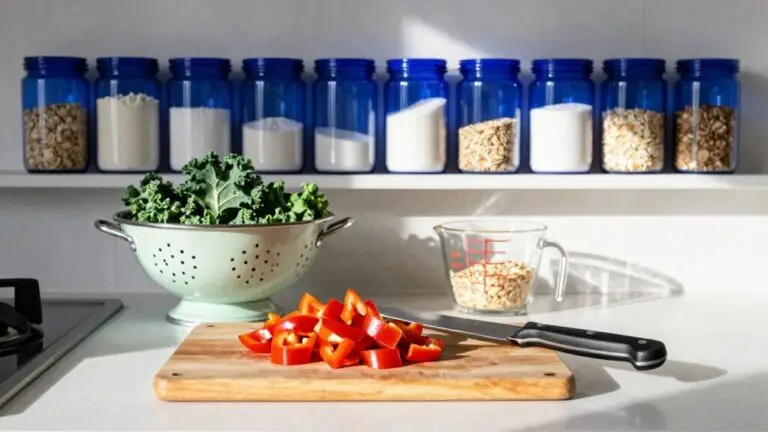
So you want a prep zone that actually keeps up with you, right? Then start with your kitchen layout. Place your prep zone on the main counter between the sink and fridge, so food moves straight from storage to cutting to rinsing. You’ll need at least 30–36 inches of continuous prep surface.
Keep related items together—knives, cutting boards, mixing bowls, and measuring tools all within arm’s reach. This cuts your number of steps and eliminates mid-task searching.
Store everyday items like cooking utensils and small seasonings close to the cooktop, so you’re not scrambling when seasoning.
Add a paper towel holder and a nearby trash bin right at the counter. Scraps disappear fast, and your surface stays clear.
Configure under-counter drawers by frequency: everyday grabs at eye height, deeper storage for occasional tools. That way, your prep counter workflow stays fast and seamless, every time. In L-shaped or U-shaped kitchens, lazy Susans and pull-out organizers can reclaim dead corner space to keep prep tools accessible without disrupting your counter flow.
Set Up a Cooking Zone for Arm’s-Reach Efficiency
Since you’re the one doing all the stirring, flipping, and seasoning, your cooking zone should revolve around the hob and cooktop like a well-oiled command center.
Unlike other different zones in your kitchen, this cooking zone prioritizes speed. Everything you need should be within arm’s reach, not buried in a cabinet.
Place pots, pans, and oils around the stove, plus a drawer next to the stove for spatulas and tongs.
You’ll stop wasting steps for that particular task and keep your focus on the heat.
Here’s how to hook your setup for efficiency:
- Landing zones matter: Keep a prep surface right next to the stove so you don’t cross the whole kitchen for a lid.
- Utensils live in one spot: Use a magnetic strip or rail by the hob to grab your ladle without hunting.
- Appliances stay close: Store your kettle or microwave near the cooktop. No one wants to break the triangle rule for hot water.
Your stove should also sit 4–8 feet from your sink so the path between rinsing and cooking stays tight without forcing you to hike across the room.
Place Your Cleaning Zone for Smooth Cooking-to-Cleaning Flow
Because your cooking zone is now a well-oiled machine, it’s time to set up your cleaning zone so the mess practically cleans itself.
When dividing your kitchen, place your cleaning zone to wrap around the sink and dishwasher. You’ll rinse plates and load the dishwasher without extra steps.
Keep your dish soap and scrubbers in a nearby pull-out under the sink, not near food prep. Use adjacent drawers and cabinets to store cleaning pods and a trash bin, keeping clutter off your precious counter space.
This setup lets you move from cooking directly to cleanup, saving time and sanity.
You’ve already mastered prep and cleanup flow. Now your kitchen works for you, not the other way around.
How to Add a Coffee or Pet Station to Your Zone Plan
- Cluster your coffee gear on one tray for instant morning flow.
- Use drawer inserts to give treats and scoops a designated home.
- KEEP THE PET ZONE A CABINET AWAY FROM DRY-GOODS STORAGE.
Start Zone Mapping One Drawer at a Time (No Cabinet Overhaul Needed)
After sorting, keep frequent items at the front. Relocate rarely used tools to storage elsewhere, and donate what you haven’t touched in a year.
Test your new drawer for one week. If you’re still hunting for a spatula, adjust slightly.
You can start zone mapping one drawer at a time: no cabinet overhaul needed, just smarter action.
Final Thoughts
So, you don’t need to overhaul your entire kitchen or tear out cabinets. Start small—maybe just one drawer. Map your zones around how YOU actually cook, not some old rule.
You’ll save steps, cut clutter, and stop feeling like you’re running a marathon while making dinner. It’s a simple shift, but it makes your kitchen work for you. Give it a shot.