The Best Fluffy Pancakes recipe you will fall in love with. Full of tips and tricks to help you make the best pancakes.


First, map your kitchen cycle from receiving to plating to spot bottlenecks causing wasted steps. Think cross-traffic jams or backtracking paths. Next, pick equipment that matches your actual workflow, like a food processor saving 80% of prep time, not flashy gear that just sits idle.
Finally, train your team with pre-shift huddles and clear handoffs to prevent stops during peak ticket flow. Stick with these three moves, and you’ll see how much faster your line can hum.
Remove Bottlenecks With a Step-By-Step Kitchen Workflow Plan
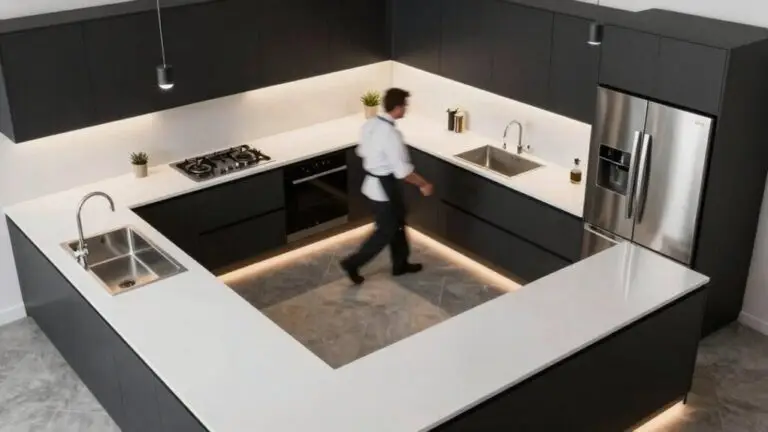
Start by mapping your entire kitchen cycle: receiving to storage, prep, cooking, plating, service, and warewashing. Then draw arrows showing how each ingredient and dish moves. Circle every backtracking path; those are your bottlenecks.
Now, separate your commercial kitchen workflow into logical zones for prep, cooking, and warewashing. Check that your prep areas and storage areas don’t force cross-traffic during peak ticket flow.
Smart equipment placement means putting frequently used tools near the stations that use them, like keeping oil and spices close to the cooking line. This cuts down unnecessary movement and boosts kitchen efficiency.
Keep clear pathways with aisles at least 48 inches wide. When you set up work surfaces and assign food preparation tasks, enforce one-direction flow from raw to ready-to-eat.
You’ll prevent contamination and avoid halts for sanitation rework. Position undercounter refrigeration within arm’s reach of your prep surfaces so cooks never have to leave their station to grab cold ingredients during a rush.
Pick Equipment That Saves Labor and Fits Your Workflow
Since you’ve already mapped out your kitchen flow, you’re in the perfect spot to pick equipment that actually slashes labor and keeps things moving. Forget flashy, pricey kitchen equipment that doesn’t fit your actual steps. Instead, hunt for tools that boost an efficient workflow.
For repetitive prep, food processors or specialized gear, like breading sifters, can cut your time by up to 80%. That’s huge.
Place equipment smartly. Think about your work areas and start placing equipment right where your staff needs to work, not across the kitchen. Keep refrigeration near prep zones and seasonings within arm’s reach. This reduces wasted motion and queueing.
When you choose gear with easy maintenance and available parts, you also reduce utility costs and downtime. Focus on operational efficiency over brand names. Your team and your ticket times will thank you. High-use equipment like blenders can be kept running efficiently with a 30-second self-clean method that requires only warm water and a drop of dish soap.
Train Your Team to Prevent Stops and Speed Ticket Times
You’ve got the right equipment in place; now it’s time to make sure your team knows how to use it without hitting the brakes.
Start every shift with pre-shift huddles and checklists that cover menu changes, substitutions, and procedure updates so your kitchen staff doesn’t scramble mid-service.
Train them on the exact ticket-to-plate execution steps to reduce mistakes that slow down ticket times faster than correct rework.
Reinforce communication during peak hours, not only at shift start, to avoid unclear handoffs or shared-station contention.
Managers matter here: great coaching prevents congestion.
Also, train everyone on proper equipment use and health and safety routines.
Improper handling causes breakdowns that halt workflow.
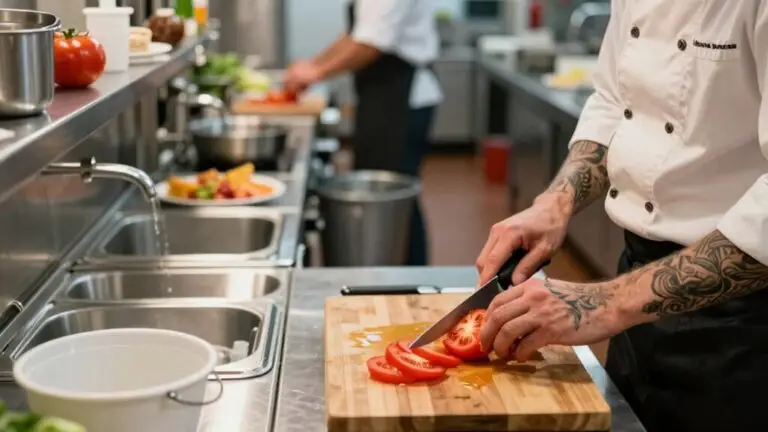
Organize your kitchen into task-based work zones so each team member operates within a defined area, reducing cross-traffic and keeping prep, cooking, and washing functions from colliding during peak service.
When you streamline workflows through consistent training, you maintain consistency and speed.
Keep tickets moving fast.
It’s simple: prevent stops, and you speed up service.
Final Thoughts
So, you’ve got a plan, smart gear, and a well-trained crew. Now, you’re not just surviving the chaos; you’re running a slick, fast kitchen. That’s the whole point, right?
Mistakes still happen—someone will drop a tomato—but those hiccups won’t stop your flow. You’ve built a system that handles the heat without melting down. Keep tweaking it, keep laughing, and watch your ticket times drop.
You’ve got this—now get cookin’.