
The Best Fluffy Pancakes recipe you will fall in love with. Full of tips and tricks to help you make the best pancakes.


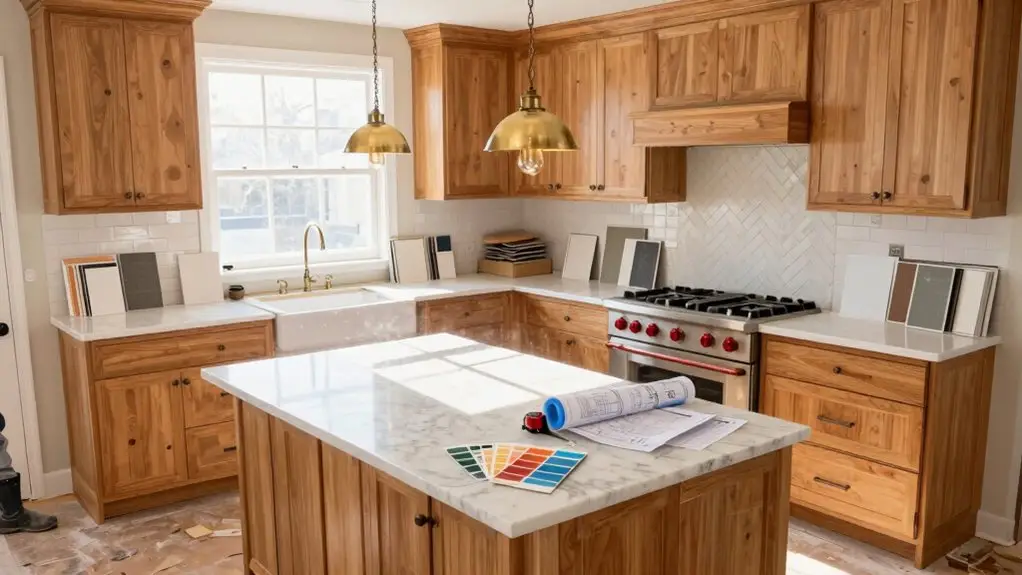
Your 12×12 kitchen remodel will run anywhere from about $15,000 to over $100,000, and ten big choices determine where you land. Cabinets eat up roughly 41% of your budget, so picking stock versus custom makes a huge difference. Your countertop material, flooring type, and appliance tier all add their own price tags.
You will also face decisions about layout changes, plumbing and electrical work, permits, and professional fees. Don’t forget the finishing details like backsplashes and lighting; they complete the look but add up fast. Each choice shapes your final number, and there’s more to uncover about how these pieces fit together.
How Much a 12×12 Kitchen Remodel Costs: Total Budget Ranges?
When you’re staring down a 12×12 kitchen remodel, the first thing you probably want to know is what you’re actually in for financially, and honestly, that’s smart.
Your average kitchen remodel cost for this size typically falls between $14,598 and $41,495, though kitchen remodeling cost can swing higher depending on your taste and needs.
You’ll want to understand kitchen remodel ranges early, since remodel costs vary wildly.
A basic refresh with stock cabinets might run $30,000–$45,000, while mid-range projects hit $45,000–$70,000.
Go high-end with custom cabinets and premium finishes, and you’re looking at $70,000–$100,000+.
Your total estimate depends on cost factors like layout changes and material choices.
Most homeowners target $25,000–$60,000 as their practical starting point.
Small finishing details also add up, and choosing kitchen cabinet handles in materials like stainless steel or solid zinc can influence both your budget and the overall aesthetic of the space.
Cabinet Costs: The Biggest Line Item in Your 12×12 Kitchen
You’ve got your total budget figured out, but here’s where things get really interesting—cabinets are about to eat up nearly half of it.
In a 12×12 Kitchen Remodel, your cabinetry provides roughly 41% of your total spend, making this the single biggest decision you’ll face.
Your costs depend heavily on which route you take.
Stock cabinets run $75–$150 per linear foot, while semi-custom jumps to $200–$400.
With a U-shaped layout demanding 30+ linear feet, even basic options start around $2,000.
Custom work quickly balloons past $28,000.
Want soft-close drawers and clever organizers?
Those upgrades multiply fast.
Every pull-out shelf and pantry accessory nudges your cost higher, especially in bigger layouts.
Just as cabinet style defines a kitchen’s character, pairing your renovation with a luxury bathroom vanity mirror can create a cohesive, high-end aesthetic throughout your entire home.
Countertop Prices by Material for 12×12 Kitchens
The right countertop can make or break your kitchen’s look and your budget’s sanity. For your 12×12 kitchen, countertops typically eat up about 14% of your remodel budget, landing somewhere between $1,870 and $4,400+.
Your material needs really drive this number.
Laminate keeps your wallet happy, but quartz countertops give you that non-porous, stain-resistant magic, worth the extra cash for busy cooks.
Granite brings heat resistance and gorgeous natural variation, though you’ll need to seal it periodically.
Quartzite scratches that high-end itch with serious scratch and heat resistance, but like other natural stone, it demands occasional sealing too.
Don’t forget stainless steel as a sleek, industrial option.
Watch those extras! Fancy edge styles like ogee or waterfall tack on $5–$15 per linear foot.
Additionally, extra cutouts for sinks bump your labor costs higher.
If you’re pairing new countertops with a tile backsplash installation, keep in mind that tile adhesive materials typically add $1.50–$4.00 per square foot to your project costs, and installer markup can push that even higher.
Flooring Costs in a 12×12 Kitchen: Price by Square Foot
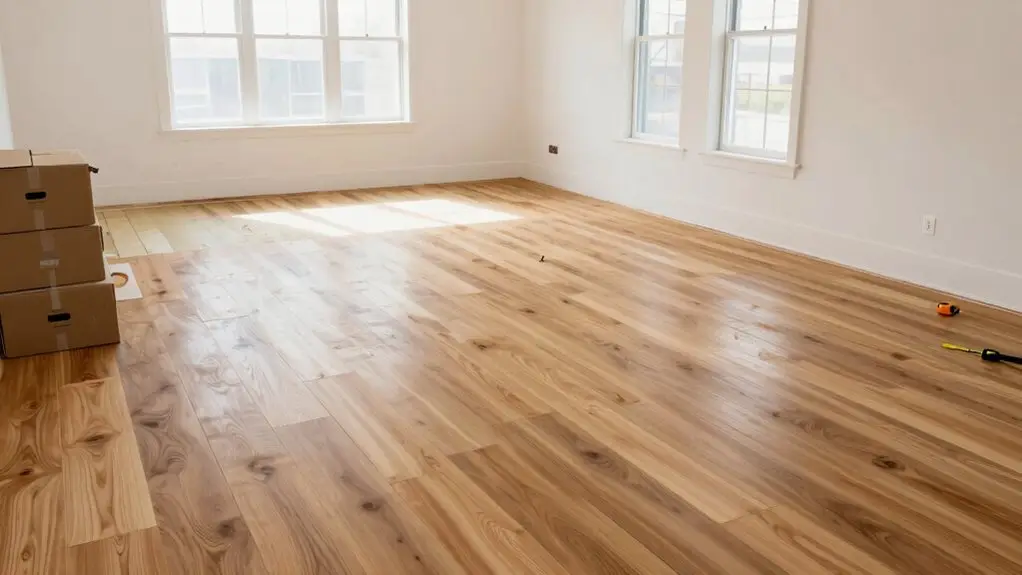
You’ll quickly notice that your flooring bill hinges on two big things: what you pick and how tough it’s to put down. Sheet vinyl might feel like a steal, but intricate tile with endless grout lines and a wonky subfloor can send your budget spiraling.
Before you fall in love with any material, get real about your kitchen’s quirks. Those cabinet cuts and leveling headaches add up fast. For uneven floors, a self-leveling underlayment can require moisture testing and priming before application, adding both material and labor costs to your project.
Material Selection Options
Because flooring takes up nearly a fifth of your remodel budget, what you pick matters more than you might think.
The materials you choose directly shape your final bill.
You’ll find vinyl or vinyl plank keeps costs friendly, often landing at the lower end of that $75–$250 per square foot range.
Meanwhile, tile (ceramic or porcelain) and natural stone push prices higher due to labor and underlayment demands.
Don’t confuse premium materials with stone countertops though; those belong elsewhere.
High-quality materials in flooring mean thicker planks or denser tiles, which feel great underfoot but demand more from your wallet.
Factor in long-term maintenance too; cheaper options might cost you later.
Peel-and-stick vinyl plank options offer a budget-friendly middle ground, with rigid core construction providing waterproof performance and scratch resistance without the steep installation costs of traditional materials.
For your 12×12 space, expect roughly $1,000–$4,000+, depending on how fancy you want to get.
Installation Complexity Factors
Even when you’ve picked the perfect flooring, your wallet might still get a surprise, because installation complexity can flip your budget upside down faster than a dropped bag of grout.
Your Floor Plans drive labor costs in unexpected ways. If you’re making layout changes, you’ll face tricky cuts around cabinetry and islands. Got plumbing or electrical running through the floor? That means more precision work, slowing everything down.
Depending on whether you choose vinyl, tile, or hardwood, your materials behave very differently. Tile demands subfloor leveling and careful grout alignment, while hardwood needs exact moisture readings. Labor jumps considerably when surfaces aren’t flat or old flooring fights removal.
Skipping proper subfloor preparation can void manufacturer warranties and ultimately cost three to five times more than addressing flatness issues before installation begins.
That 144 square feet stays constant, but your price per square foot won’t—not when hidden obstacles pop up beneath your feet.
Appliance Upgrades: What They Add to Your 12×12 Kitchen Budget
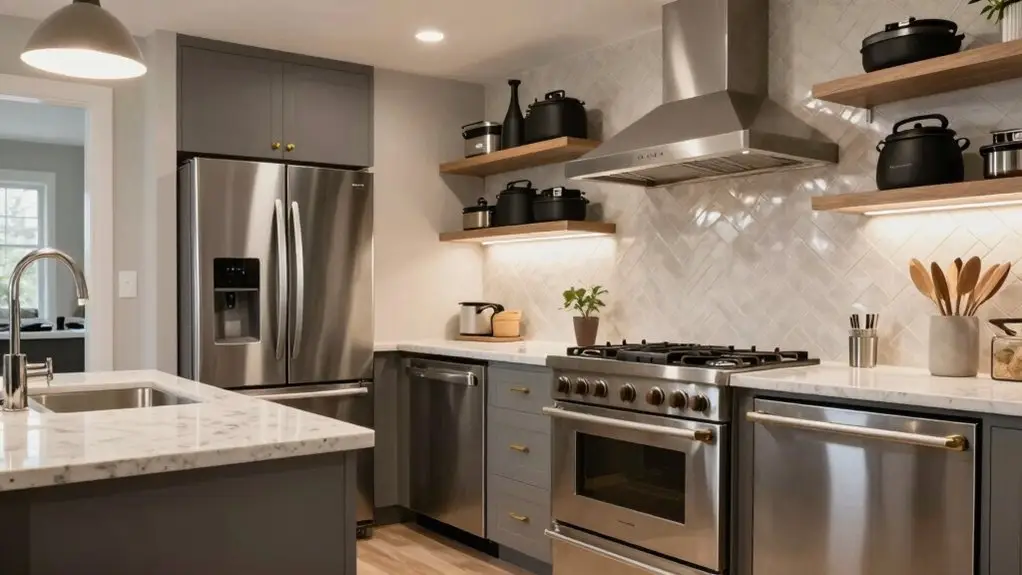
You’re looking at anywhere from one hundred to five thousand dollars when you upgrade appliances in your 12×12 kitchen, and that’s before you factor in the hidden joys of rewiring for that sparkling new range.
Whether you’re eyeing basic, mid-range, or those shiny professional-grade beasts, your choice between standard and energy-efficient models will nudge both your upfront costs and your future electric bills.
And let’s be honest, you’ll probably want the fridge that texts you when you’re out of milk.
While you’re budgeting for the kitchen overhaul, don’t overlook lighting — swapping to LED bulbs saves 70–90% on energy costs compared to traditional incandescent bulbs.
Appliance Tier Levels
The appliances you pick can make or break your kitchen budget, and that’s no joke when you’re working with a modest 12×12 space. Appliance upgrades swing your costs anywhere from $100 to $5,000, so you’ll want to watch price points carefully at every step.
Budget appliance tiers keep you closer to that $100 mark, fitting nicely into a $30,000–$45,000 refresh. Mid-range tiers step up your build quality and cooking performance without totally breaking the bank.
But once you eye premium appliances and high-end appliance tiers with all their fancy tech, you’re pushing toward the top of that range or beyond. Even smaller fixtures like faucets reflect this tiered pricing, where models with ceramic cartridges tested 500,000+ cycles and certifications like NSF/ANSI 61 command higher price points than basic alternatives.
Energy Efficiency Ratings
Once you’ve settled on your appliance tier, you’ll face another decision that hits your wallet today but could pay you back later: energy efficiency ratings. You’ll notice that appliance energy-efficiency upgrades, especially Energy Star–rated models, cost more upfront than basic options.
Here’s the catch: those energy-efficient models typically slash your utility bills over time, making the math work in your favor eventually.
Your upgraded appliances with advanced controls and smart features will nudge prices higher too.
Since appliances eat up about 5% of your remodel budget, swapping multiple units to efficient versions really adds up.
Don’t forget ventilation upgrades either.
A beefier range hood keeps pace with high-performance cooking but demands extra dollars.
Choose wisely, and your kitchen pays you back.
Smart kitchen lighting is another efficiency upgrade worth budgeting for, since options like tunable white bulbs let you shift from warm to cool tones across a 2700K–6500K range to match cooking tasks and time of day.
Smart Feature Integration
Modern kitchens have gotten pretty brainy, and your wallet’s going to notice. Smart appliance features like remote controls, maintenance reminders, and diagnostic tools add upfront costs but can actually save you headaches down the road.
You’ll spend roughly 5% of your remodel budget on appliance upgrades, typically $100 to $5,000+ depending on how fancy you get.
When you’re choosing energy-efficient appliances, you’re trading higher initial prices for lower utility bills later—worth considering for your 12×12 space.
Just remember that updating electrical systems, handling labor costs, and paying permit fees can sneak up on you.
For example, integrating smart lighting systems like Matter and Alexa-compatible fixtures into your kitchen remodel requires professional hardwired installation and junction box compatibility that adds to your labor and electrical costs.
Factor those maintenance needs into your realistic budget from day one, or you’ll be eating takeout in a half-finished kitchen wondering where the money went.
Plan smart, spend smarter.
Labor Costs for a 12×12 Kitchen Remodel
Labor’s gonna eat up about a quarter of your total budget, so if you’re planning a $30,000 kitchen overhaul, you’re looking at roughly $7,500 just for the folks swinging hammers and pulling wire.
You’ll need skilled professionals for electrical work and plumbing and electrical systems, since messing with circuits and pipes isn’t a weekend warrior project. Electricians typically charge $50–$100 per hour, and relocating plumbing can spike your labor costs fast—think $1,500 to $15,000 for major changes.
Experienced contractors handle permits and inspections, which adds hidden time but keeps you legal. Don’t forget regional price swings, and pad your total cost with a 10–20% contingency.
Delays happen, and nobody likes surprise bills when cabinet installs go sideways.
Layout Changes: When Moving Walls Is Worth the Cost
Before you swing that sledgehammer, you’ve got to ask yourself two big questions: is that wall coming down actually going to make your kitchen work better, or are you just chasing a Pinterest fantasy?
A structural impact assessment will tell you if you’re looking at a few grand in framing or a budget-busting nightmare with engineers and permits.
If the reconfiguration gives you real daily benefits—like finally having room for the kids to do homework while you cook—then the ROI potential analysis starts to smile in your favor.
But if you’re just shuffling cabinets for looks, your wallet might throw a minor tantrum.
Structural Impact Assessment
Because you’re staring at that cramped galley kitchen wondering if knocking down a wall would change your life, you’re not alone.
Most homeowners hit this crossroads when they realize their 188-square-foot space feels more like a hallway than a heart of the home.
Before you grab that sledgehammer, you need to assess structural support.
Moving walls isn’t just about open sightlines; it depends on the kitchen’s bones.
Electrical and plumbing reroutes can explode your budget fast.
Costs vary wildly when you relocate sinks or stoves.
General contractors will tell you permits alone run $460–$2,770.
Sometimes keeping your existing footprint delivers 80% of the payoff without the gut-renovation headache.
ROI Potential Analysis
You’ve wrapped your head around what it takes to move a wall, but now you’re probably wondering if swinging that sledgehammer actually pays off.
Here’s the truth: in kitchens your size, the ROI really depends on what you’re moving.
You can save money by keeping your sink and stove where they are, tweaking the layout within the existing footprint instead of chasing a full gut job.
That’s how you avoid costly mistakes like $15,000 plumbing reroutes or surprise permit fees that eat your returns.
Your investment pays when wall moves boost cabinet space noticeably—think 30+ linear feet—or add real function like a proper island.
Skip the flashy island cooktop unless you’ll actually use it daily.
Smart layout choices beat dramatic changes every time.
Plumbing and Electrical Work in a 12×12 Kitchen
When you’re piecing together your kitchen remodel, it’s easy to get swept up in pretty countertops and snazzy appliances, but the real behind-the-scenes magic, and money, lives in your walls.
Plumbing changes can be a major cost driver, running $1,500–$15,000+ if you’re moving pipes around. Even simple swaps, like a new sink (~$420) and new faucet (~$260), add up fast.
Electrical upgrades bring their own surprises. Labor rates for electricians hover around $50–$100 per hour, and each new outlet costs $75–$485.
Need a panel replacement? Budget $520–$1,990, especially in older homes.
Under-cabinet task lighting looks gorgeous at $230–$300, but relocating wiring bumps that price up.
HERE’S THE DEAL: Keep your plumbing and electrical in place, and you’ll dodge the biggest headaches.
Permits, Designers, and Contractors: Professional Fees
Once your pipes and wires are sorted, you’ll still need the green light to actually start swinging hammers, and that means dealing with permits, designers, and the folks who’ll run your job site. Building permits run $460–$2,770, and skipping them isn’t worth the headache.
If your layout’s tricky, designers charge $50–$200 per hour to nail down design choices. General contractors typically want $300–$500 daily, and extra hands add $150–$250 each, that’s higher labor, plain and simple.
Hiring professionals guarantees quality work. Plus, you often get a one-year workmanship warranty. That’s peace of mind worth paying for. Before you sign, compare quotes from at least three pros.
Here’s what these fees actually get you:
- Legal approval to remodel your space.
- Expert guidance so you don’t pick ugly cabinets.
- Someone else handling the chaos while you relax.
Finishing Details That Complete Your 12×12 Kitchen
Your backsplash draws the eye immediately. Basic subway tile runs $800–$1,500, but handmade zellige or natural stone can add $1,500–$4,000. That’s about 4% of your total spend right there.
Zellige tile commands attention—and 4% of your renovation budget.
Layered lighting matters too. Pendants and under-cabinet LED task lighting ($230–$300) transform how you actually use the space.
Your cabinetry eats roughly 41% of your budget, so upgrading drawer organizers and cabinet hardware delivers serious daily payoff.
Don’t overlook your countertop edge—decorative ogee or waterfall styles tack on $5–$15 per linear foot.
These choices balance beauty against long-term maintenance costs.
Final Thoughts
You have got all the pieces now to build a realistic budget for your 12×12 kitchen remodel. Prices swing wildly based on your choices, but that is actually good news; you control where the money goes.
Splurge on cabinets if you cook daily, or save with laminate counters for now and upgrade later. Remember, a smart plan beats a big wallet every time.
Take a breath, grab that calculator, and make your kitchen dreams happen without the nightmare bill.