The Best Fluffy Pancakes recipe you will fall in love with. Full of tips and tricks to help you make the best pancakes.

To map your cooking workflow in five steps, start with a walk test during one meal, circling every backtrack to the pantry. List every task from recipe reading to plating.
Then, draw a simple movement map marking hot spots like the sink. Find bottlenecks by timing actions and counting tool hunts.
Finally, reorganize with mise en place and staging. These steps cut wasted steps and make mealtime easier—stick around to see how each one works.
Diagnose Your Current Cooking Workflow
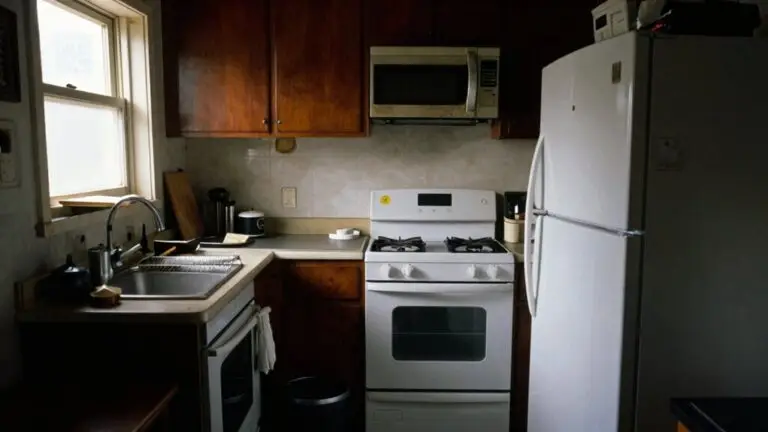
Why does your kitchen feel like a maze during dinner prep? You’re likely battling a bad kitchen workflow without knowing it.
Start diagnosing by running a “walk test” during one meal—track every step from fridge to sink to stove.
Circle each extra trip to the pantry; those backtracks kill an efficient kitchen.
Next, map where your most-used items actually live.
Count how many times you reach for knives or spices mid-cook.
Frequent searching signals a workflow mismatch.
Identify your highest-friction zone: is it prep, cooking, or cleaning?
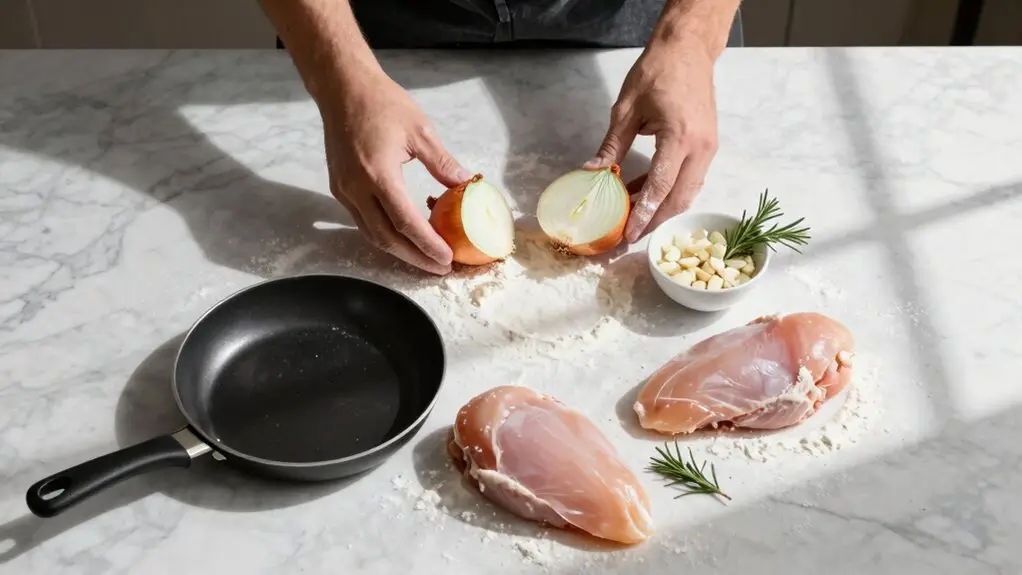
Stage a staging audit; list what you can prep before heat starts versus what you grab later.
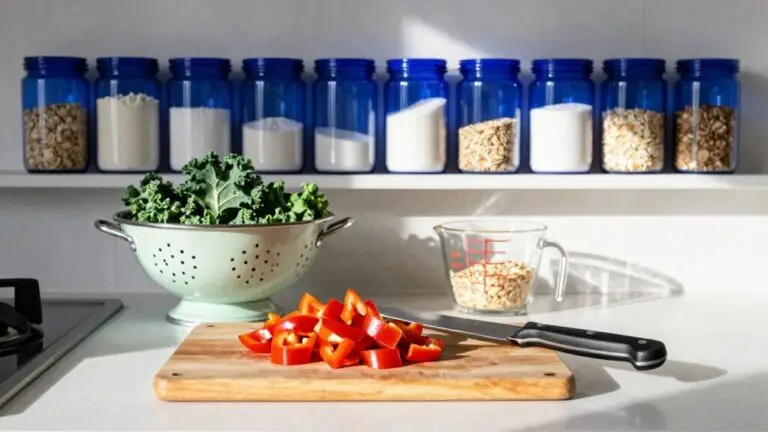
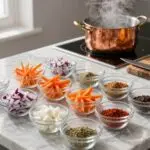
Professional chefs use Mise en Place for a reason: it makes meal preparation easier.
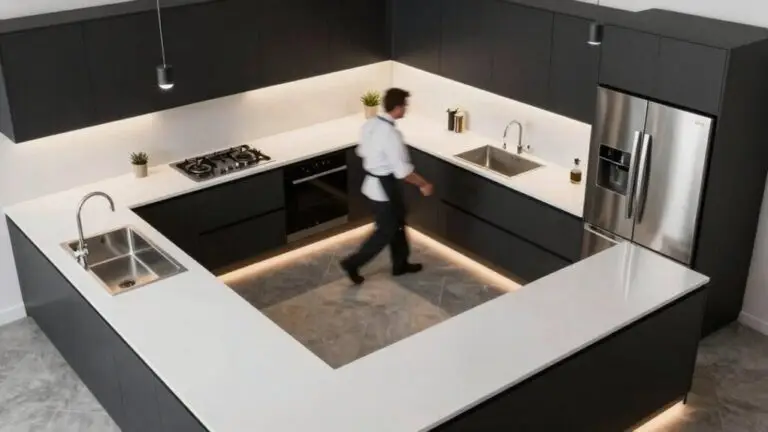
Check your kitchen layout’s “work triangle.”
If you’re hauling hot pans across clutter, counter space and storage solutions need rearranging to create a seamless cooking zone.
A well-functioning kitchen keeps each work triangle point—sink, stove, and fridge—roughly 4 to 9 feet apart to minimize unnecessary movement between tasks.
List Every Cooking Workflow Task
Once you’ve spotted where your current workflow goes sideways, it’s time to get surgical: you’ll list every single cooking task from start to finish. Start by reading the full recipe, then gather ingredients—don’t forget those room-temperature eggs.
Clear those cluttered countertops to open up your kitchen space. Place your kitchen work triangle in mind: keep cutting boards and kitchen tools within reach for an efficient layout. List prep tasks like chopping and mixing, then stage your pans and utensils near the stove.
Add timing steps—decide what cooks first and use downtime wisely. Track serving moves like plating and keeping food warm.
Finally, clean as you go, wiping counters and returning everything to storage. Break each menu item into distinct stages—wash, chop, sauce, and cook—so every task has a defined place in sequence before you begin.
This way, the whole cooking process flows effortlessly because you’ve got everything you need right where you need it.
Draw Your Workflow Movement Map
So you’ve listed every task and spotted your bottlenecks. Now draw a simple grid of your kitchen, marking where your refrigerator, sink, and cooktop sit. Next, sketch arrows showing your actual movement between these anchors during a meal. Use “hot spot” circles where you stand most, like near the sink for washing, rinsing, and prep staging.
Trace each “walk”—pantry to prep to stove—labeling stops where you grab tools. Add timing markers (★ for constant-stir items) on the arrows to highlight delays. This map reveals how your cooking layout affects efficiency.
In a small kitchen, distance matters. Keep your kitchen organized by placing required kitchen items within easy reach, like professional kitchens do. Finally, redraw an “ideal” map with shorter arrows and fewer backtracks. This matches your mise en place, making your cooking space truly efficient for a home kitchen that feels roomy and smart. Aim to keep each path between your three anchors within the 4 to 9 feet range, as exceeding this distance breaks efficient movement between your key cooking zones.
Find Bottlenecks in Your Cooking Workflow
Finding bottlenecks in your cooking workflow is like playing detective in your own kitchen, but without the trench coat. Start timing each action from reading the recipe to plating.
Note where you stop—waiting for water to boil or hunting for a whisk. Track interruptions for 2–3 dinners; those “where’s the chef’s knife?” moments are repeat offenders.
Measure distance-based friction. If you’re taking more than four steps between sink and stove, your cooking layout needs work.
Spot temperature timing gaps; vegetables cool fast while proteins sit.
Check tool resets, like scrubbing a sauté pan to reuse it. Each transfer adds delay.
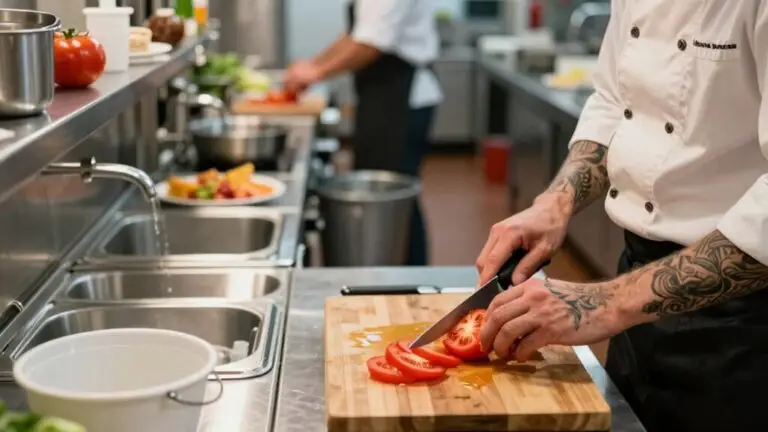
A professional kitchen minimizes these snags, but home cooks can mimic that with better kitchen design.
Pull-out shelves and additional storage reduce unnecessary steps, so no more hunting for lids mid-recipe.
If those bottlenecks point to a deeper layout problem, relocating your sink or stove triggers plumbing and electrical costs that can run $5,000–$20,000 or more.
Reorganize Your Workflow Sequence for Smoother Meals
You’ve spotted where your cooking slows down, so now it’s time to reorder the steps for more even meals. Start with mise en place: stage your ingredients and tools in the order you’ll use them. This reduces unnecessary steps and keeps you moving, not hunting.
In your home environment, place plates between the dishwasher and stove to cut cross-kitchen trips. Use a professional chef’s knife or a magnetic knife strip on your kitchen island for quick access. Multifunctional tools like a food processor save time on one or two tasks, improving your cooking experience.
Schedule long-cook items first, then prep quick veggies during baking downtime. Transfer finished portions to a covered plate so they stay hot. This simple shift turns chaos into delicious meals. Skipping this preparation can add multiple pantry trips that cost 5–15 minutes per dish, extending your total cooking time well beyond what you planned.
Final Thoughts
So, you’ve mapped your kitchen dance moves. Don’t stress if it feels like a messy waltz right now. You’ve spotted where you trip up, like hunting for a knife while the garlic burns. That’s half the battle.
Now, just shift a few steps: set your cutting board closer to the stove, stash spices by the pot. You’ll flow faster, laugh more, and maybe even finish before your *hangry* family starts circling.
Go own that space.