The Best Fluffy Pancakes recipe you will fall in love with. Full of tips and tricks to help you make the best pancakes.


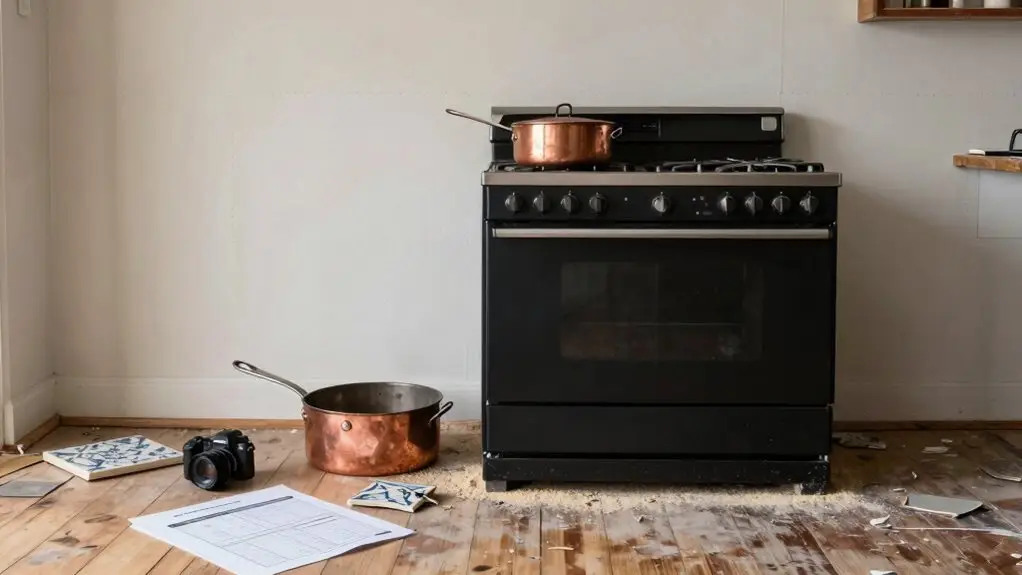
Yes, $30,000 is enough, but only if you keep your existing layout. That budget covers mid-range cabinets, countertops, appliances, and labor without moving walls or plumbing. You’ll need to reserve 10–15% for surprises like old wiring.
The biggest trade-off? Cabinet refinishing instead of custom replacements helps you afford that quartz you’re eyeing. Stick to the plan, and you’ll get a solid return. There’s a smart way to avoid blowouts, and you’re about to see how.
Is $30,000 Actually Enough for a Kitchen Remodel?
Whether you’re dreaming of sleek quartz counters or just need a functional update, $30,000 is actually enough for a kitchen remodel, as long as you keep your expectations in check.
When planning a kitchen remodel, you’ll find this budget falls right in line with the average cost for a mid-range project.
The cost of a kitchen at this level works because you’re not moving plumbing or walls; you’re updating surfaces and gear.
To avoid blowing your cost to remodel, prioritize stock cabinets or consider cabinet refacing instead of full replacements.
That simple swap saves big money.
Also, remember to stash 10–15% for surprises like dodgy wiring behind walls.
Keep in mind that cabinetry alone typically consumes 30% to 50% of your total remodel budget, making it the single largest line item to control.
With smart choices, you’ll get a fresh, functional space without breaking the bank.
What a $30K Remodel Includes: Cabinets, Countertops, Appliances, and Labor
You’ll find that your $30,000 kitchen remodel typically covers the major four: cabinets, countertops, appliances, and labor, each with a healthy slice of that budget.
Your biggest cost centers revolve around new cabinets and countertops, while labor eats up a chunk too.
Your biggest cost centers are new cabinets and countertops, with labor eating up a chunk too.
To keep your budget on track, you’ll set aside about 10-15% for unexpected issues like plumbing and electrical problems.
- Cabinets and countertops eat the largest share, often 30-50% combined, leaving room for quality choices.
- New appliances fit mid-range picks like reliable refrigerators and ranges, balancing features and cost.
- Labor covers professional installation, from cabinets to sink fixtures, ensuring safe, code-compliant work.
- Plumbing and electrical fixes stay minimal if you keep the layout. This stretches your budget further without hidden costs.
Even with the same footprint, projects can still require moving gas lines or rewiring, which is why building a 20% contingency cushion into your budget protects against costs that surface once walls open up.
Why Cabinets and Countertops Eat Up 50% of a $30K Budget
As we move from the broad outline of a $30K remodel, let’s zoom in on the biggest money grabbers: cabinets and countertops. Why do they gobble up half your budget? Well, new, custom cabinets alone can cost $9,000 to $12,000, and that’s before you add fancy hardware.
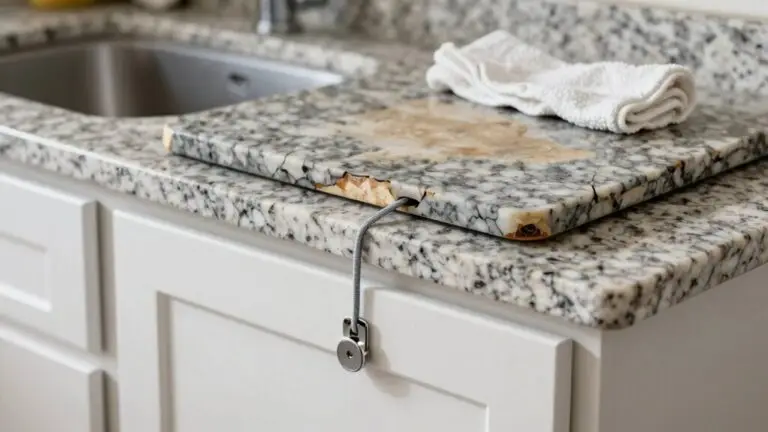
Then, you’ve got your countertops—specifically quartz countertops—which are a pricey but popular choice. Don’t forget, you’re not just paying for materials; you’re paying for the labor to install everything perfectly. That cost adds up fast. Installing your cabinets before countertops is critical, since countertop crews template only after cabinets are leveled and secured in place, and skipping this order can trigger costly re-fabrication bills that blow your budget wide open.
But here’s a lifeline: instead of buying all new cabinet boxes, consider refacing or refinishing existing ones. It saves thousands, letting you keep the countertop upgrade you really want. It’s a smart trade-off that keeps your budget intact.
Hidden Costs That Blow a $30K Budget (Permits, Plumbing, Labor)
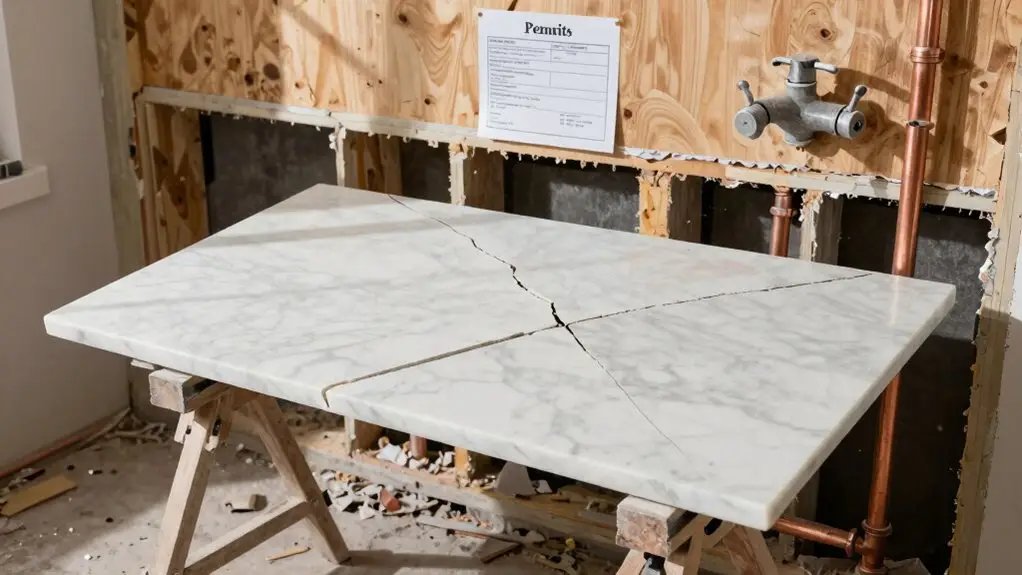
But don’t think you’re safe just because you kept the layout.
Those permits, plumbing, and electrical surprises can still blow your $30K budget wide open.
You might need a pricey permit just to move an outlet a few feet.
You may also discover old wiring that forces a full panel upgrade, neither of which you planned for.
Switching to an induction cooktop alone can require a 40–50 amp dedicated circuit, plus a panel upgrade costing $1,000–$3,000 if your current system can’t handle the load.
Unless you’re ready to cover these hidden costs, your carefully chosen countertops won’t matter once the unexpected electrical work arrives.
Permits & Fees
While permits mightn’t be the first thing on your mind when dreaming up new countertops, they’re a hidden cost that can quickly wreck a $30,000 budget. You’ll need them for anything beyond cosmetic swaps, and inspection fees add up fast.
Permits and inspection fees for electrical work and plumbing can run $500–$2,000 each, easily eating into your budget. Layout changes trigger extra costs. Moving a sink or stove means new plumbing and electrical work, doubling labor and permit fees.
Labor costs spike when you hire licensed trades; they’re required for safe, code-compliant work that passes inspection. Budget for unexpected corrections like outdated wiring by reserving 10–15% of your total for surprise fixes.
Before any work begins, marking your stationary plumbing and flue locations on a layout drawing helps you avoid costly relocations that trigger additional permits and labor charges.
Don’t skip the paperwork; it’s a small price to avoid bigger headaches later. Plan ahead, and you’ll keep your dream kitchen on track.
Hidden Plumbing Costs
Even if you keep your kitchen’s exact same layout, hidden plumbing costs can still creep up and blow your $30K budget.
You might discover failing shutoff valves or supply leaks behind cabinets, turning a simple kitchen remodel into a costly repair.
The cost can vary wildly, so you need to set aside 10%–15% of your budget—roughly $3,000–$4,500—just for surprises.
Adding a new sink or dishwasher often triggers permits and inspection fees, which eat into your cash.
Licensed plumbers charge premium labor, and drain rework isn’t cheap.
Before finalizing any plumbing work, sketch your room to scale and mark all fixed plumbing elements so contractors can give you accurate quotes rather than costly surprises mid-project.
But spending wisely here protects your return on investment (ROI), preventing water damage from killing your home’s value later.
Plan ahead, or your budget won’t stand a chance.
Unexpected Electrical Work
Outdated wiring often fails to handle new appliances, forcing you to upgrade circuits mid-project.
Permit fees add $200–$1,000, and inspections can delay work by days.
Emergency electricians charge overtime when you find issues after demolition starts.
Water damage behind cabinets means you’re fixing both plumbing and electrical, compounding costs.
Before demolition begins, confirm where your pipes and wires run so cabinet placement and utility hookups don’t trigger costly mid-project discoveries.
To stay without breaking the bank, set aside 10–15% of your budget for these surprises.
Trust me, it’s worth it.
Should You Refinish Cabinets or Replace Them at $30K?
With a $30,000 kitchen budget, you’re standing at a real crossroads: refinish those existing cabinets or tear them out for new ones? For most kitchen remodel projects, choosing to refinish cabinets delivers the biggest bang for your buck.
Cabinets typically eat up 30–40% of your total cost, so when you replace them, you’re often left without enough cash for necessary items like counters or appliances. Refinishing lets you save money without sacrificing that fresh, updated look.
If your cabinet boxes are still sturdy, a quality paint job or refacing can transform your space for way less. Plus, you’ll dodge pricey plumbing and electrical work.
When refinishing, choosing warm white or soft greige tones with Shaker-style cabinet doors can visually expand a small kitchen while keeping the overall look clean and cohesive.
At $30K, stick with refinishing unless your cabinets are truly damaged. You’ll thank yourself when the budget still works.
How to Save Thousands by Keeping Your Current Layout
When you keep your kitchen’s current layout, you’re basically dodging the most expensive part of a remodel: moving pipes and wires.
That means you avoid costly plumbing and electrical work, which often eats up 35–50% of your budget.
For a $30,000 kitchen remodel, sticking with the existing floor plan lets you focus on minor cosmetic upgrades without draining funds on infrastructure.
You can stretch your dollars further by picking cosmetic changes like new countertops or cabinet refacing instead.
Before committing to any layout changes, measure your existing kitchen work triangle to confirm whether your refrigerator, sink, and stove placement is already efficient enough to leave alone.
- Slash labor costs – No need to pay pros to reroute water or electricity.
- Reduce surprise expenses – Staying put lowers the chance of hidden infrastructure problems.
- Increase your return on investment (ROI) – Smart cosmetic upgrades boost value without gutting the space.
- Finish faster – Without moving utilities, you’ll avoid weeks of extra work.
Even without enough local contractors to handle big structural shifts, YOU’LL STILL GET A FRESH LOOK.
Can You Afford Quartz Countertops on a $30K Budget?

Saving thousands by keeping your current layout means you’ve already freed up cash for the fun stuff, like countertops. Yes, you can afford quartz on a $30K budget, but you’ll need to make smart trade-offs.
In many kitchen remodels, quartz can vary widely in cost, so you’ve got options. Instead of splurging on custom cabinets, you could go with stock or refinish your cabinets instead of replacing them. That move frees up a chunk of your budget for a kitchen update.
You’ll also want to set aside about 10–15% of your total budget for a kitchen surprise fund. With that cushion, you can pick mid-range appliances and keep flooring cheap.
The key? Limit quartz to your countertops and a single island, not everywhere. That way, you get the look without blowing your plan. If you’re adding or keeping an island, plan for at least 36 inches of clearance on every side so the space stays functional and not just beautiful.
Where to Splurge and Save on Appliances for a $30K Remodel
For your $30K remodel, you should splurge on a high-end range if you cook a lot. That’s where daily performance and resale value really shine.
However, you can save big by choosing a mid-tier refrigerator with all the crucial features but none of the fancy extras that eat your budget.
Bundled appliance packages from the same brand can also cut costs and give you a unified look.
Just make sure you aren’t paying for useless add-ons you’ll never use.
High-End Ranges
With a thirty-thousand-dollar kitchen remodel, you can absolutely score a top-tier range if you play your cards right. Much does a kitchen remodel cost in appliances? A lot, but you’re smart to zero in on the range.
It’s your showpiece and workhorse. Splurge here for better cooking performance and longevity, especially since high-end appliances offer a strong return on investment (ROI) through durability and energy savings.
Prioritize a single premium range rather than spreading your budget thin across all appliances.
Select energy-efficient appliances**** like efficient burners or ovens; they’ll lower utility bills over time.
Match only front finishes (like stainless steel) to save on backs or sides without losing the coordinated look.
Reserve 10–15% of your budget for surprise installation costs (gas or electrical hookups) so your high-end range fits perfectly.
This approach keeps your remodel on track without sacrificing quality.
Mid-Tier Refrigerators
Your mid-tier refrigerator can be the silent hero of your $30,000 kitchen remodel if you choose wisely. The good news is you don’t need luxury-brand pricing for reliable performance. Focus on consistent cooling, energy efficiency, and durable finishes—not fancy extras you won’t use.
This approach boosts your return on investment (ROI) because kitchen remodeling costs add up fast, especially for cabinets and counters.
By picking quality appliances here, you keep your budget balanced. Compare energy ratings and installation costs upfront; labor for plumbing or electrical can surprise you.
A mid-tier fridge that runs well daily beats a flashy model that breaks down. It’s a smart choice for your kitchen and bath remodel, saving you cash for the big-ticket items that truly transform the space.
Bundled Appliance Packages
Bundled appliance packages let you stretch your $30,000 kitchen remodel further without sacrificing quality. You might wonder if they’re worth it, but they save you from buying each appliance separately.
A considerable portion of your budget goes to appliances, so bundling helps control costs. The result? Better return on investment (ROI) because you splurge on key workhorses like a reliable range while saving on extras.
- Save on the bundle, upgrade countertops: use the savings for quartz or better lighting.
- Stick with stainless steel: it’s durable and looks modern, plus it works in most bundles.
- Keep your layout unchanged: avoid extra plumbing or electrical costs that bust your budget.
- Set aside 10–15%: for unforeseen installation needs that can pop up during a home remodel.
Much of your success hinges on smart splurging, not overspending.
Will a $30,000 Remodel Actually Boost Your Home Value?
Since you’re sinking $30,000 into your kitchen, you’re probably wondering if it’ll actually pay off when you sell. Good news: a mid-range remodel can greatly boost your home’s value, with a typical return on investment (ROI) around 72.2%. That means you’d likely get back over $21,000.
But your local market matters. An updated kitchen without a costly layout change often sells faster and at a higher price, especially if you pick durable materials like quartz.
Of course, you’re asking how much does it cost to make sense? An average kitchen remodel should be 10%–15% of your home’s total value.
For a $300,000 home, your $30,000 spend is right in the sweet spot. Work with a real estate pro to make sure your choices align with what buyers want.
How to Plan Your $30K Remodel Without Cost Overruns
Now that you know the potential return on a $30,000 kitchen remodel, let’s make sure you actually hit that number without blowing past it.
It’s easy to feel overwhelmed with all the decisions, but you can maximize your return on investment (ROI) by staying disciplined.
Start by keeping your existing layout; no plumbing or electrical moves.
This alone saves thousands.
Stick to your project scope: Lock in exactly what’s included in quotes to avoid surprise change orders.
Spend smart on new countertops: They’re a big cost driver, so allocate about 30–40% of your budget here.
Explore affordable materials.
Reserve 10–15% for surprises: Hidden water damage or old wiring won’t derail you if you’ve planned for it.
Control appliance costs: Pick reliable mid-range models without compromising quality.
This keeps the scope of the project manageable.
You’ve got this!
Final Thoughts
So, is $30,000 enough? Yes, but you’ll need to be smart. You’re not getting a luxury renovation, but you can absolutely pull off a beautiful, functional kitchen.
Focus your cash on cabinets and counters; they make the biggest visual impact. Forget custom everything and maybe skip the pro-level fridge.
With careful planning, your remodel can boost your home’s value without breaking the bank. You’ve got this.