The Best Fluffy Pancakes recipe you will fall in love with. Full of tips and tricks to help you make the best pancakes.


You’re likely making five kitchen mistakes that silently add thirty-plus minutes to every meal. First, skip reading the whole recipe and prepping ingredients. That’s a recipe for burnt pans and frantic searches.
Don’t grab the wrong pan; nonstick won’t give you a crust like cast iron does. Dull knives? They’re actually more dangerous and slow your chopping. A messy layout doubles cleanup time, and missing multitasking windows wastes precious sizzle.
Stick around, and you’ll learn exactly how to fix each one.
Read the Recipe and Prep Ingredients Before You Cook
Before you even turn on the stove, read the recipe all the way through—yes, every single step—so you know what’s coming, from soak times to searing tricks. This cuts wasted time in the kitchen.
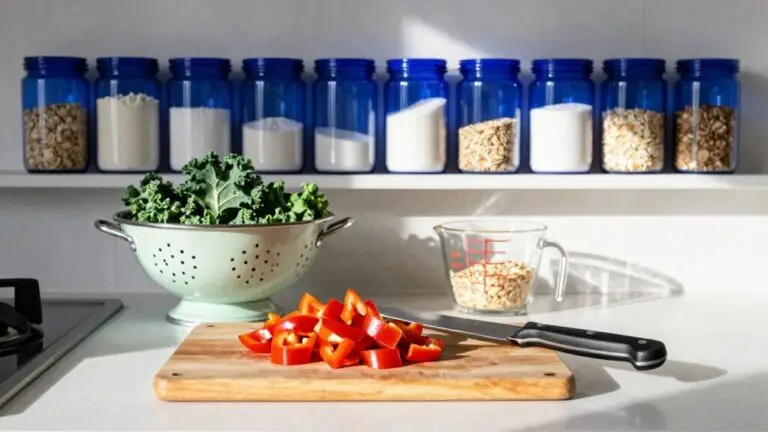
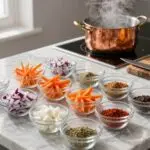
Next, do a full mise en place: measure, wash, and chop everything first. You don’t want to stop mid-cook, letting a pan burn while you hunt for an ingredient.
Do a full mise en place: measure, wash, and chop everything first to avoid a burnt pan mid-cook.
Check your seasonings ahead—smell those herbs and confirm you’ve got the right salt. A pinch of iodized instead of kosher? That’s a flavor bomb.
Defrost meat safely in the fridge too; rushed thawing messes up texture and your schedule.
Finally, grab the tools the recipe specifies from the start. No swapping pans mid-way. You’ll nail browning and color without a hitch. In fact, missing pantry items can silently add 5–15 minutes of wasted time per dish without you even realizing it.
Use the Right Pan and Tool for Every Job
Once you’ve got your ingredients measured, chopped, and ready to go, it’s tempting to just grab the nearest pan and start cooking. But here’s the thing: every pan in your kitchen has a job.
A nonstick skillet won’t give you the same golden crust as cast iron, and stainless steel doesn’t release moisture like nonstick does. Ignoring this slows you down and leaves food pale or soggy.
Preheating’s essential, too. Dropping food into a cold pan means it never hits browning temperature, so you lose flavor.
Also, don’t overload small pans. Crowding traps steam and forces steaming instead of sautéing.
If a recipe says “use a large skillet,” trust it. That choice controls texture and color.
Last, match the tool to the task. The wrong pan wastes time and makes managing heat harder. A stainless steel skillet is especially reliable for building sauces and everyday browning, where consistent heat control matters most.
Keep Your Knives Sharp for Faster, Safer Cutting
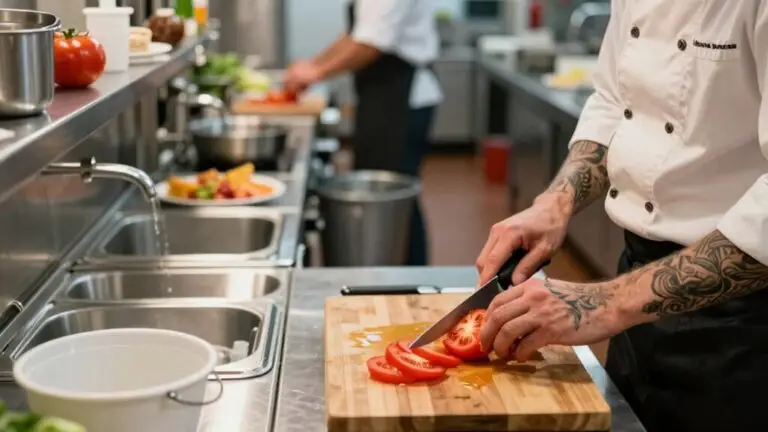
Sure, keeping your knives sharp isn’t just about looking like a pro; it’s actually your fastest route to safer, easier chopping.
When your blade’s dull, you push harder, and that extra force makes you more likely to slip, right into a nasty cut. You’ll think the knife feels safe, but it’s a trick; dull edges actually create more dangerous conditions.
Sharpen regularly or use a professional service so less effort slices cleanly through tough squash or thick meats.
You’ll gain control and cut evenly, speeding up cooking instead of wrestling uneven chunks.
Don’t wait, hone often, sharpen periodically, and stop the jamming.
A sharp blade means quicker prep and fewer close calls. And when you move on to cooking those cleanly cut meats, always use an instant-read thermometer to check doneness quickly without leaving a probe behind in the pan.
Speed up Cleanup With a Smart Kitchen Layout

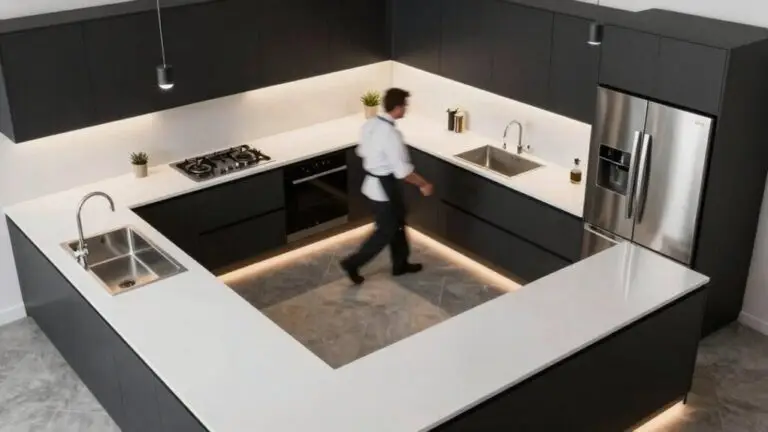
By reorganizing your kitchen around a simple “fridge → sink → hob” flow, you’ll cut cleanup time in half. That’s because dirty prep items and waste move in one direction, slashing cross-contamination and backtracking.
In a common kitchen, place your dishwasher right next to the sink. You’ll rinse and load without hauling dishes across the room—no need to dodge traffic. Make sure the door opens freely, too; a blocked access spikes cleanup time every single load.
Design dedicated “dirty” and “clean” lanes near the sink, so used plates never cross paths with fresh ingredients. Add a waste bin close to that dish lane, tucked in an alcove with a clear route out. Trash disposal won’t interrupt your rush, and you’ll wrap up mess duties faster than you can say “who’s doing the dishes?”
While you’re optimizing this zone, use a tension rod under the sink to hang spray bottles vertically, freeing up floor space in the cabinet for the bins and supplies you actually reach for during cleanup.
Multitask by Cooking While Prepping the Next Step
You can often shave serious time off dinner by cooking and prepping at the same time, once you nail a simple sequence. Start browning meat, then chop your onions or garlic while it sizzles. Heat never waits for you.
Use “mise en place” timing: measure and chop everything before turning on the burner, so you’re just grabbing and adding during the multitasking window. Choose tasks that finish while you cook, like stirring a sauce or timing pasta, then prep the next step—mixing spices or draining veggies.
Watch for bottlenecks: if defrosting drags, redirect prep there so you don’t hit empty-hand delays. Keep it controlled with one station at a time and quick cleanup as you go; otherwise, dirty prep mixes with ingredients you’re about to add. That’s a new account of efficiency. To further protect your workflow, use color-coded prep zones for raw meat, produce, and ready-to-eat items so cross-contamination never derails a timed cooking sequence.
Final Thoughts
So, you’ve got the tips. Don’t just read ’em—use ’em. Start with that recipe glance, grab the right pan, and keep your knife sharp.
You’ll chop faster, cook smarter, and actually enjoy the mess. Clean as you go, multitask like a boss, and watch dinner come together without the stress.
It’s not about being perfect; it’s about cooking with confidence. You’ve got this.