The Best Fluffy Pancakes recipe you will fall in love with. Full of tips and tricks to help you make the best pancakes.


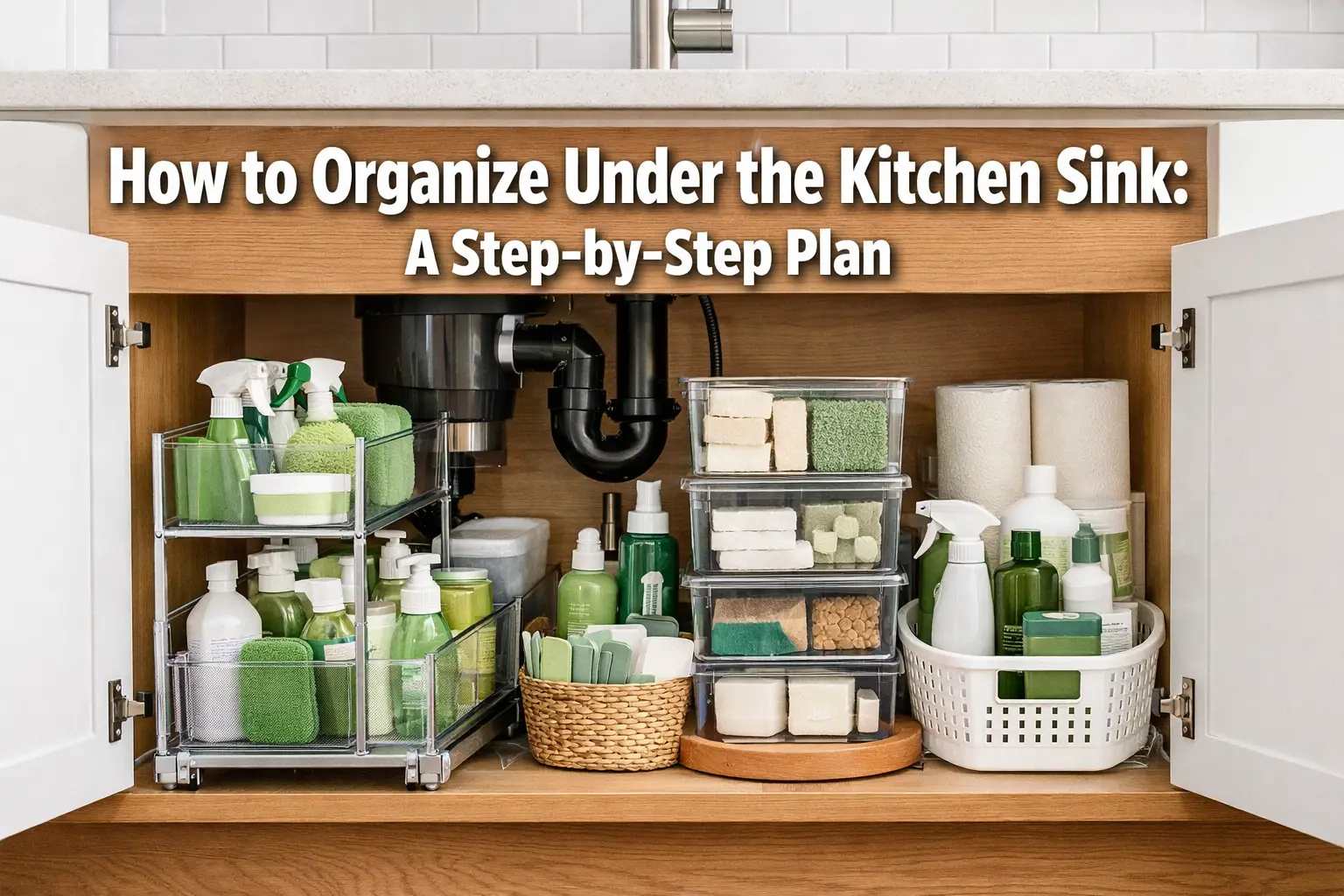
Quick Answer: To organize under the kitchen sink, start by emptying everything out, then sort items by category, toss what’s expired or unused, and use bins, pull-out drawers, and a tension rod to create zones. The whole process takes about 30–60 minutes and makes a real difference in your daily kitchen workflow.
Key Takeaways
- Empty the cabinet completely before organizing — don’t just shuffle things around
- Sort items into categories: cleaning supplies, dish care, trash bags, and extras
- Toss expired products and anything you haven’t used in six months
- Use vertical space with a tension rod to hang spray bottles
- Pull-out bins and a lazy Susan make hard-to-reach corners accessible
- Label everything so the system stays intact after the first week
- Check for leaks before putting anything back under the sink
- A basic organizing setup costs roughly $20–$50 in storage products
- Redo a quick tidy every month to keep the space functional
Why Is Under the Kitchen Sink Always Such a Mess?
The space under the kitchen sink is a problem area in most homes because it collects items by default rather than by design. Pipes take up awkward space, the cabinet is deep, and it becomes a catch-all for cleaning supplies, extra sponges, trash bags, and random bottles.
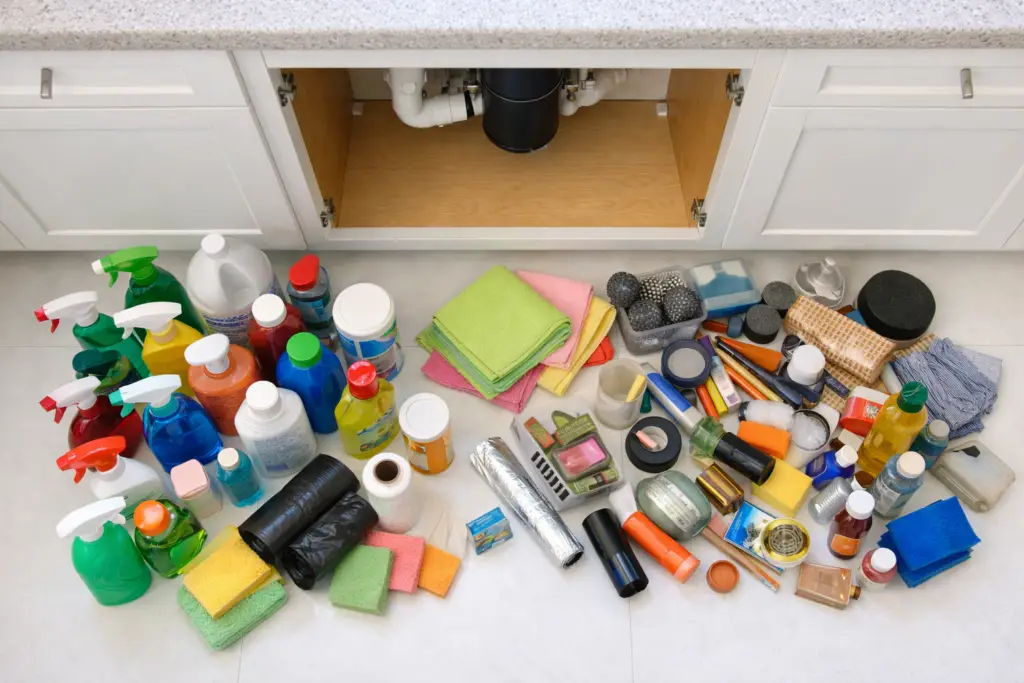
Without a system, items pile up in the back and get forgotten. You end up buying duplicates, running out of things you actually have, and wasting time digging around every time you need something. A simple, intentional layout fixes all of that.
🗄️ Under-Sink Organizer Finder
Answer 3 quick questions to get your personalized product recommendations.
1. How deep is your under-sink cabinet?
2. What's your biggest under-sink problem?
3. What's your budget for organizers?
✅ Your Recommended Organizers
What Do You Need Before You Start?
Gather a few supplies before diving in. Having everything ready saves time and keeps the process moving.
What to have on hand:
- Trash bag (for tossing expired or unused items)
- All-purpose cleaner and a cloth (to wipe down the cabinet interior)
- Measuring tape (to check cabinet width and depth before buying organizers)
- Sticky labels or a label maker
- Storage products (see the table below)
Recommended organizers for under the sink:
| Product Type | Best For | Estimated Cost |
|---|---|---|
| Pull-out drawer bins | Deep cabinets, easy access | $15–$30 |
| Tension rod | Hanging spray bottles vertically | $5–$10 |
| Lazy Susan turntable | Corner access, bottles and jars | $10–$20 |
| Clear stackable bins | Grouping small items by category | $10–$25 |
| Over-door organizer | Sponges, gloves, small items | $8–$15 |
Pro tip: Measure your cabinet before buying anything. Under-sink cabinets vary widely in width and depth, and the pipe configuration affects what fits.
How to Organize Under the Kitchen Sink: A Step-by-Step Plan
Follow these steps in order. Skipping ahead (especially the sorting step) is the most common reason organizing projects don’t stick.
Step 1: Empty Everything Out
Pull every single item out of the cabinet. Place it all on the kitchen floor or counter where you can see it clearly. This is non-negotiable — you can’t organize what you can’t see.
Step 2: Wipe Down the Cabinet Interior
Before anything goes back in, clean the cabinet floor and walls. Check for moisture, soft spots, or signs of a slow leak around the pipes. If you spot water damage, address it before organizing — otherwise you’ll be redoing this project in a few months.
Step 3: Sort Into Categories
Group items into piles:
- Daily use: dish soap, sponges, scrub brushes
- Cleaning supplies: sprays, wipes, scrubbers
- Trash and bags: bin liners, grocery bags
- Extras and backstock: refill bottles, spare sponges
- Miscellaneous: anything that doesn’t belong here
Step 4: Toss What You Don’t Need
Be honest. Check expiry dates on cleaning products (yes, they expire). Toss anything that’s nearly empty, dried out, or hasn’t been used in six months. Fewer items means a cleaner system.
Step 5: Assign Zones
Before placing anything back, decide where each category lives:
- Front zone: Daily-use items (dish soap, sponge)
- Middle zone: Cleaning sprays and supplies
- Back zone: Backstock and less-used items
Step 6: Install Your Organizers
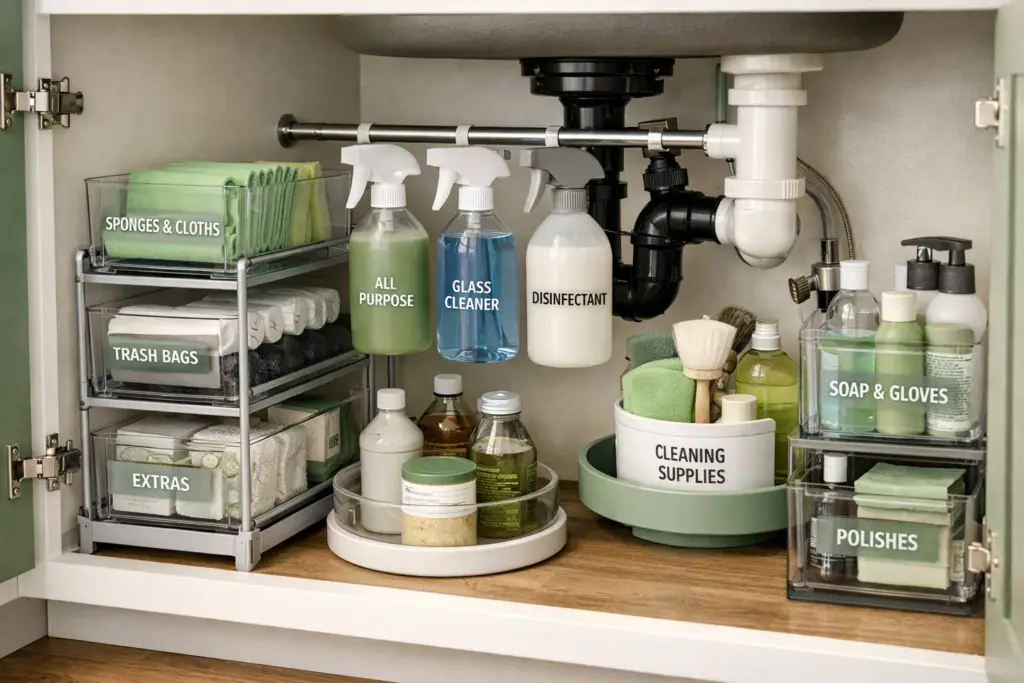
- Mount a tension rod across the upper half of the cabinet to hang spray bottles by their triggers — this frees up floor space immediately
- Place pull-out bins for cleaning supplies so you don’t have to reach to the back
- Add a lazy Susan if the cabinet is wide and you need to access items from both sides
- Use clear stackable bins to group small items like sponges, gloves, or scrubbers
Step 7: Label Everything
Labels are what make a system last. Even simple masking tape with a marker works. Label each bin or zone so that anyone in the household knows where things go.
Step 8: Do a Quick Monthly Reset
Set a reminder once a month to spend five minutes checking that items are in the right place, tossing empties, and restocking. This keeps the system working without a full reorganization.
What Are the Best Products for Under-Sink Organization?
The best products are ones that fit your specific cabinet and actually get used. Here are the practical picks that deliver real-world results without overcomplicating things.
Worth buying:
- Pull-out cabinet organizers (two-tier if your cabinet is tall enough) — these are the single biggest upgrade for deep cabinets
- Tension rod — costs under $10 and instantly creates vertical storage for spray bottles
- Clear bins with handles — easy to pull out, easy to see what’s inside
- Lazy Susan — smart choice if you have a wide cabinet with a center pipe blocking access
Skip these:
- Fancy drawer systems that don’t account for pipe clearance
- Opaque bins (you’ll forget what’s inside)
- Over-complicated stackable systems that require removing everything to reach the bottom
Choose a pull-out bin if: your cabinet is deeper than 18 inches and you regularly lose things in the back. Choose a lazy Susan if: you have a wide cabinet with a center obstruction.
How to Organize Under the Kitchen Sink: A Step-by-Step Plan for Small or Awkward Cabinets
Small or oddly shaped cabinets need a slightly different approach. The pipe configuration under most sinks leaves an irregular footprint, which means standard rectangular organizers often don’t fit well.
For small or awkward spaces:
- Measure around the pipes, not just the cabinet opening
- Use individual bins rather than a full-width drawer system
- Prioritize the tension rod — it uses space that pipes don’t occupy
- Consider an over-door organizer on the inside of the cabinet door for sponges, gloves, and small items
- Keep backstock elsewhere (a pantry shelf or utility closet) rather than cramming it under the sink
Common mistake: Buying a two-tier pull-out organizer without checking pipe clearance. Many under-sink pipes run through the middle of the cabinet floor, making full-width organizers useless. Always measure first.
How Do You Keep It Organized Long-Term?
The system only works if it’s easy to maintain. The biggest reason under-sink cabinets fall back into chaos is that the original setup was too complicated or didn’t match how the household actually uses the space.
Habits that help:
- Return items to their zone immediately after use
- Restock before you run out (not after)
- Do a five-minute reset monthly
- Keep a small trash bag or bin nearby so empties get tossed right away
- Involve everyone in the household — show them the system once so they know where things go
A well-organized under-sink cabinet saves time every single day. Grabbing a sponge or cleaning spray takes seconds instead of a search.
FAQ
How long does it take to organize under the kitchen sink? Most people complete the full process in 30–60 minutes, including sorting, cleaning, and setting up organizers. If you need to wait for products to arrive, the actual hands-on time is still under an hour.
What should not be stored under the kitchen sink? Avoid storing food, medications, or anything flammable under the sink. The area is prone to moisture and temperature fluctuation, and it’s not a secure spot for anything sensitive or hazardous.
How do I deal with pipes taking up space? Work around them by using individual bins placed on either side of the pipe, a tension rod above the pipe level, or an over-door organizer. Measure the usable floor space (not the full cabinet width) before buying organizers.
Do I need to buy expensive organizers? No. A tension rod ($5–$10) and a couple of clear bins ($10–$20 total) handle most of the work. Spend more only if your cabinet is large or you have a lot of supplies to store.
How often should I clean under the kitchen sink? Wipe it down every one to two months and do a quick sort monthly. Check for moisture or leaks every time you clean — catching a slow leak early saves a lot of trouble.
What’s the best way to use vertical space under the sink? A tension rod hung across the upper portion of the cabinet lets you hang spray bottles by their triggers. This is the most effective vertical storage trick for this space and costs almost nothing.
Can I store trash bags under the sink? Yes, trash bags are a good fit for under the sink. Roll them up or keep them in a small bin to save space. Just don’t let the bag roll take over the whole cabinet.
What if my under-sink cabinet has a garbage disposal? A garbage disposal takes up floor space and limits your options. Focus on the sides of the disposal unit with narrow bins, and use the tension rod and door organizer to maximize the remaining space.
Conclusion
Organizing under the kitchen sink doesn’t require a weekend project or a big budget. Empty it out, sort what you have, toss what you don’t need, and put a simple system in place with a few well-chosen organizers.
Actionable next steps:
- Set aside 30 minutes this week to empty the cabinet completely
- Measure the interior (including around the pipes) before buying anything
- Pick up a tension rod and two clear bins as a starting point
- Label every zone and show the system to your household
- Set a monthly five-minute reset reminder
A cleaner under-sink cabinet is one of those quick wins that genuinely improves everyday cooking and cleaning. Less digging, less clutter, better kitchen flow — and it stays that way with almost no effort once the system is in place.
References
- The Container Store. (2023). Under-sink organization ideas and products. https://www.containerstore.com
- Good Housekeeping Institute. (2022). Best under-sink organizers tested by experts. https://www.goodhousekeeping.com
- Real Simple. (2023). How to organize under the kitchen sink. https://www.realsimple.com