The Best Fluffy Pancakes recipe you will fall in love with. Full of tips and tricks to help you make the best pancakes.

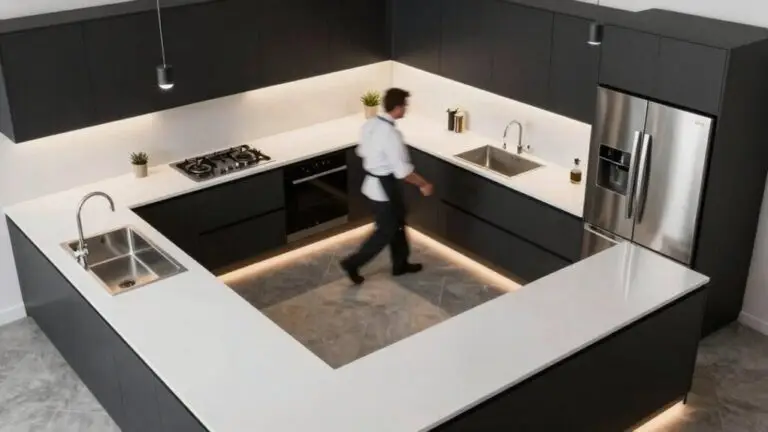
To streamline your professional kitchen, start by mapping your layout using single-direction flow to stop staff from crossing paths during rushes.
Next, install equipment sized for your workflow, like a breader blender sifter that cuts prep time by 80%, and place it in sequence from prep to plating.
Finally, train your team with short pre-shift huddles and call-and-response during service to prevent bottlenecks.
Stick around for more simple tweaks that keep the chaos at bay.
Fix Your Kitchen Workflow by Mapping Layout First
Since your kitchen’s workflow is the backbone of every shift, start by mapping its layout in the correct sequence: receiving, storage, preparation, cooking, plating, service, and warewashing, before you even glance at equipment catalogs or floor-plan templates.
You’ll waste time and money if you don’t.
Draw movement arrows across your restaurant kitchen to spot friction points.
Draw movement arrows across your restaurant kitchen to spot friction points before they cause bottlenecks.
Any crossed paths mean bottlenecks during the rush.
Design a single-direction flow—raw to ready-to-eat—to cut contamination risk and make your commercial kitchen workflow shine.
Then, zone your work areas so prep areas feed cooking, and plated items flow to service.
Don’t forget dirty dishes heading straight to warewashing.
This efficient workflow keeps your kitchen space clear and your staff safe.
Finally, validate aisle spacing—aim for at least 48 inches—so nobody’s queuing or backtracking.
Map it first, and you’ll fix those hidden headaches.
Place countertop land zones beside the stove, sink, and fridge so staff always have a designated surface to set hot pans or dripping produce without hiking across the kitchen.
Install Equipment That Fits Your Kitchen Workflow
So you’ve mapped out that single-direction flow and zoned your work areas—nice work. Now it’s time to pick equipment that fits your commercial kitchen design and actually supports that plan.
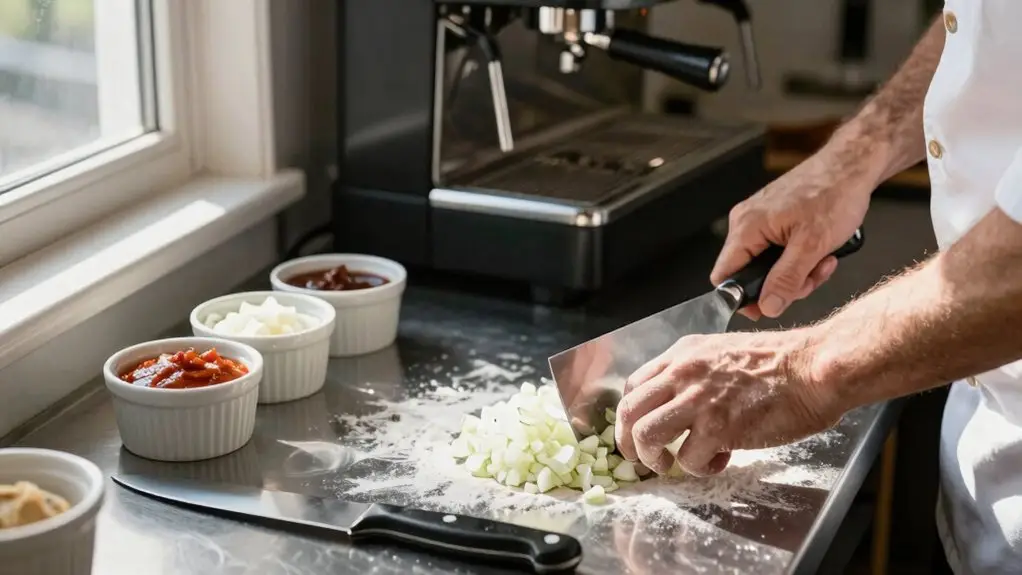
When you’re placing equipment, think about how it’ll streamline workflows, not where it fits. For example, if you handle heavy breading, a breader blender sifter cuts prep time by up to 80% and reduces ingredient waste, real kitchen efficiency gains.
Place each tool according to your operational sequence: receiving to storage to prep to cooking to plating to service to warewashing. This avoids backtracking and keeps your work surfaces free for food preparation tasks. For high-volume prep stations, compact tools like a mini food processor can handle celery, carrots, and riced cauliflower while keeping valuable counter space clear.
Train Staff on Peak-Service Communication to Prevent Stops
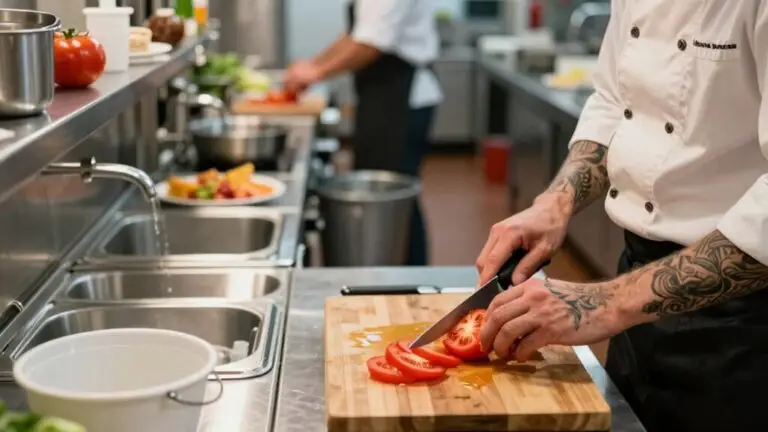
When the rush hits, clear communication keeps your line moving. Without it, you’ll hit costly stops that wreck ticket times. Run short pre-shift huddles to cover menu changes, prep shortages, and inventory management, so your kitchen staff isn’t scrambling mid-service.
Then, use regular at-the-line updates during peak demand, confirming roles and handoffs to boost operational efficiency. Train your team to work efficiently by standardizing checklists and open communication tools, reducing the backtracking that kills flow.
Don’t forget manager skills. Fifty-seven percent of U.S. workers say managers need to manage people better. So, pair production training with peak-service communication training. That way, when service demands spike, your restaurant operations run seamlessly, and you avoid the costly stops that slow everything down. During service, train expo to call pickup and have each station repeat back, so call-and-response communication becomes a reliable habit that prevents confusion and keeps the line accountable.
Final Thoughts
So, you’ve got the layout mapped, the right gear in place, and your team trained to talk during crunch time. That’s a solid game plan.
Now, keep adjusting these steps as you go. Your kitchen’s never a finished puzzle, and that’s okay. A streamlined workflow means fewer burnt orders and more laughs during cleanup.
You’ll still hit a few snags, but with this system, you’re not merely surviving service. You’re actually cooking with it.