The Best Fluffy Pancakes recipe you will fall in love with. Full of tips and tricks to help you make the best pancakes.


You can conquer peak-hour chaos by first diagnosing bottlenecks like a shared fry station. Trace one ticket from start to finish to find exactly where orders stall.
Then train your team on mise en place and pre-shift checklists, so everyone knows substitutions and priorities without a second thought.
Finally, pick labor-saving gear like an AyrKing Breader Blender Sifter to cut sifting time by 80% and keep the line humming. Stick around for the full game plan.
Identify Common Kitchen Workflow Bottlenecks First
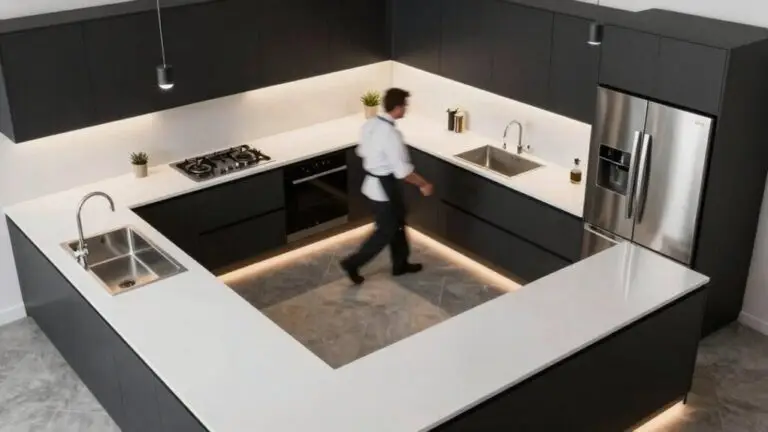
Look for shared-resource contention, too, like three cooks needing the same fry station. It’s a classic sign of bottlenecks during peak hours. With 96% of operators facing supply issues and 7 out of 10 short-staffed, even small fixes matter. Try tracing a single ticket from receipt to plate during a rush to pinpoint exactly where your workflow stalls.
Rethink your restaurant kitchen setup—move heavy-use tools closer—and invest in staff training so everyone knows the dance. You’ll cut unnecessary movement and keep orders flowing.
Train Your Staff to Prevent Workflow Stops
Empower your team with smart training to keep the line moving and orders flying out.
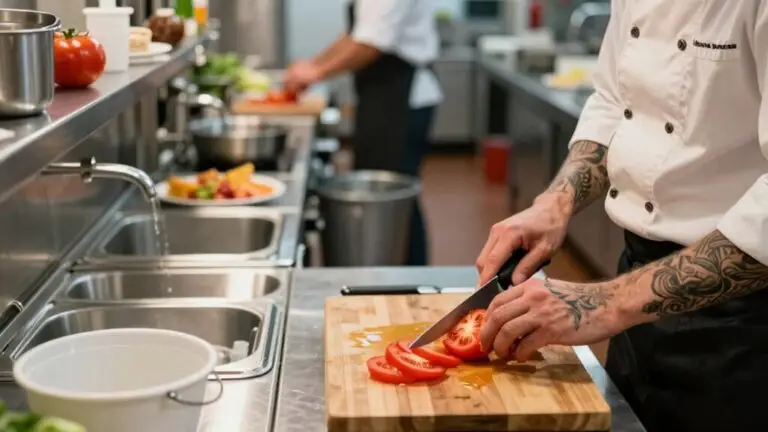
Start with Mise en Place as your foundation. When your kitchen staff knows exactly where everything lives, they’ll maintain an efficient workflow even under pressure.
Start with Mise en Place as your foundation. When your kitchen staff knows exactly where everything lives, they’ll maintain an efficient workflow even under pressure.
Use pre-shift huddles and checklists to confirm menu changes and out-of-stock substitutions before service kicks off.
That comprehensive training means fewer mistakes and less rework during peak hours, directly boosting ticket-to-plate speed.
Standardize task roles per shift so staff knows what to prioritize when congestion hits.
You’ll reduce waste and keep the line humming without those frustrating stops.
Cross-training covers absences seamlessly, and equipment training prevents breakdowns that halt service.
Reinforce the habit of grouping ingredients by recipe step so your team eliminates mid-service searching and keeps momentum steady from prep through plating.
Don’t let a missed detail become a bottleneck. A well-trained team is your best defense against workflow stops.
Choose Labor-Saving Equipment That Fits Your Workflow
While you’re investing in training your team, don’t forget that the right equipment can be a lifesaver, too. Choosing labor-saving gear that fits your workflow makes your kitchen more efficient. Look for tools that reduce staff movement and don’t require extensive retraining during rush.
For repetitive tasks like breading and batter prep, equipment like AyrKing’s Breader Blender Sifter can cut hand-sifting time by up to 80%. That’s a huge boost to your ticket-to-plate speed. It also reduces ingredient costs by up to 40%—a win for restaurant operations.
Prioritize equipment that’s reliable and easy to maintain; breakdowns defeat any workflow optimization. Match your tools to your menu-driven food prep tasks so the same stations consistently speed up your team’s most repeated steps. This is effective kitchen management that frees your staff to work smarter. For smaller-scale prep tasks, compact tools like a mini food processor can handle vegetables such as celery, carrots, and riced cauliflower while keeping counter space clear.
Final Thoughts
So, you’ve got the tools to fix those bottlenecks and train your crew. Don’t overthink it—start small, pick one change, and watch your kitchen flow better.
You’ll be working smarter, not harder, and saving your energy for the fun stuff, like dodging flying dish towels. We’ve all been there. Seriously, a little planning now means way less chaos later.
You’ve got this.