The Best Fluffy Pancakes recipe you will fall in love with. Full of tips and tricks to help you make the best pancakes.

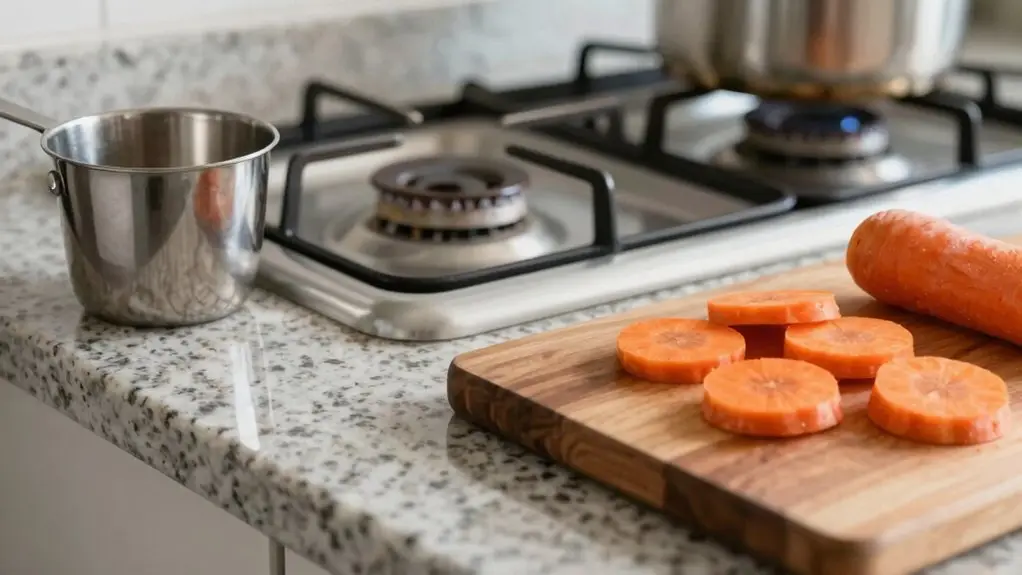
Mapping kitchen zones means carving your kitchen into dedicated spots for specific tasks—prepping, cooking, cleaning, storing food, and grabbing drinks. Instead of racing across the room for a spatula or ingredient, you group everything you need within arm’s reach of where you use it.
This cuts down steps, mess, and exhaustion while making cooking flow easier. Your counters stay intentional instead of chaotic. Stick around to see how to set up your own zones.
What Is Kitchen Zone Mapping and Why Does It Matter?
Since you’ve probably spent way too many meals running back and forth from the sink to the stove to the fridge, kitchen zone mapping is here to save your steps.
It’s simply dividing your space into dedicated kitchen zones for specific tasks, ditching the old work triangle idea that just doesn’t fit modern kitchens.
You’ll group items like food storage containers near the fridge, not across the room, so grabbing ingredients takes seconds.
This matters because it cuts your “kitchen miles” big time—fewer steps mean less mess and less exhaustion.
Plus, it helps you organize your kitchen so everything has a spot, reducing frantic searching.
Your workflow becomes seamless, your counters look intentional, and you actually enjoy cooking again.
The five kitchen zones include dedicated areas for cooking, prepping, food storage, cleaning, and beverages, each designed to keep the tools you need exactly where you use them.
The 5 Essential Kitchen Zones for Zone Mapping
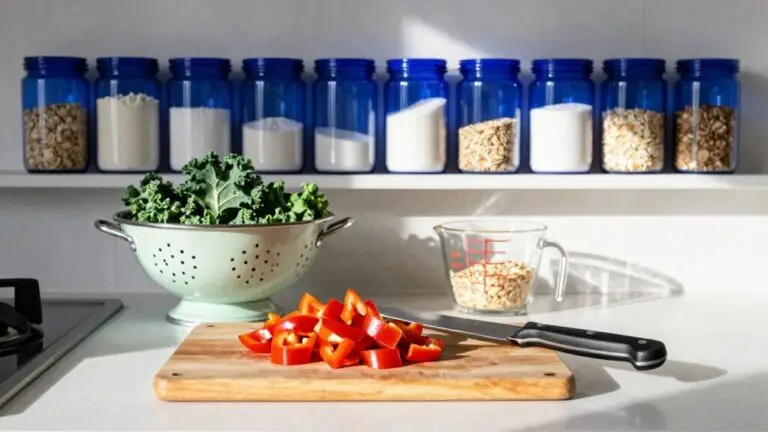
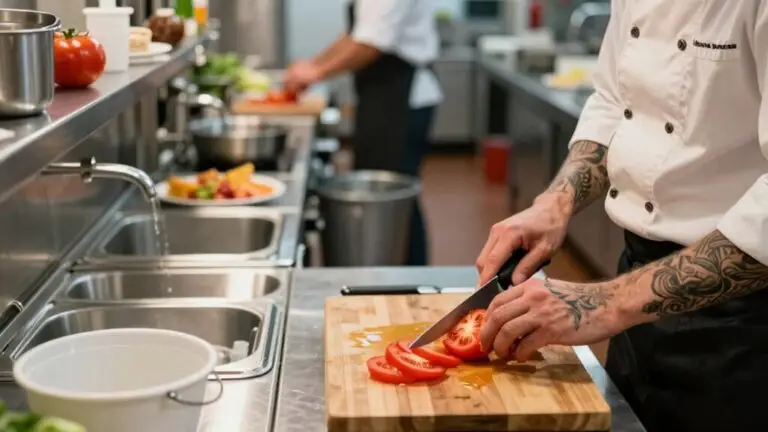
You’ll want to start with your prep zone necessities: keep your knives, cutting boards, and mixing bowls right at your main counter. That way, when you’re chopping veggies or measuring spices, everything’s within arm’s reach, and you’re not running back and forth.
Then, for your cooking zone must-haves, stash your pots, pans, and spatulas near the stove. This way, you can whip up meals without losing momentum. In fact, skipping this kind of organization can lead to multiple last-minute pantry trips that cost you 5–15 minutes per dish.
Prep Zone Essentials
Before you even turn on the stove, the Prep Zone earns its keep as your mise en place station. It’s the heart of your food prep, so you need everything within arm’s reach to chop, measure, and season without crossing the kitchen. This Cooking zone connects naturally to your stove and sink, cutting down steps and keeping you in flow.
- Knives and cutting boards – Store them in a drawer near your prep zone for quick access. No more hunting for a sharp blade mid-recipe.
- Measuring cups, spoons, and a scale – Keep these right where you work, so you’re not rummaging for a teaspoon mid-mix.
- Key ingredients – Oils, salt, pepper, and spices stay close to your prep zone. Seasoning feels effortless when everything you need sits within arm’s reach.
Less walking, more cooking. Mounting a magnetic rail for knives along the side of your prep station keeps blades off the counter and within instant reach without blocking your workflow.
Cooking Zone Must-Haves
When you’re standing at the stove, the last thing you want is to run across the kitchen for a spatula or a splash of oil. That’s why your cooking zone must live right around the oven and hob. Keep your most-used cooking utensils, tongs, spatulas, a fish turner, stored within easy reach.
Stash your go-to pots, pans, and a wok nearby, plus the oils and spices you grab daily. This saves you steps and keeps your focus on the food, not the hunt.
Don’t forget the cleaning zone either. Place it near the sink with dish soap, sponges, and trash bags ready.
You’ll scrub while sauces simmer, turning downtime into productivity.
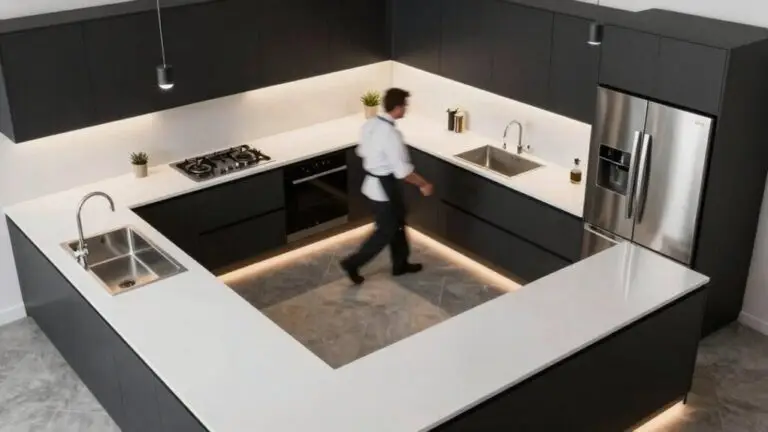
When you zone your kitchen smartly, everything flows—no frantic dashes, just easy, happy cooking. Anchoring your zones around the refrigerator, sink, and stove follows the kitchen work triangle principle, which recommends keeping each leg between 4 and 9 feet to minimize wasted movement.
How Kitchen Zones Outperform the Old Work Triangle
While the old work triangle got the job done back in the 1940s, kitchen zones totally rewrite the rules for how you actually cook today. Instead of just connecting three points, zones work by grouping everything you need for specific tasks, so you’re not running laps across your kitchen during meal prep.
Your prep zone keeps all knives, cutting boards, and veggie scraps within arm’s reach. This way, you stop hunting for a peeler mid-recipe.
The cooking zone stashes spices, oils, and utensils near the stove. This cuts your steps in half when you’re stirring that simmering sauce.
The cleaning zone groups your dish soap, sponge, and drying rack together. This ensures you’re not spinning in circles while scrubbing.
Mapping your typical path between zones — like the route from the refrigerator to the prep zone and from the stove to the sink — helps you spot bottlenecks before they slow you down during a busy meal.
4 Must-Have Tools for Your Kitchen Prep Zone
You’ll want a solid set of knives and cutting tools right in your prep zone, so chopping vegetables and opening cans feels easy. Pair those with measuring cups, spoons, and a kitchen scale to keep your baking and repeat recipes spot-on every time.
Don’t forget a few prep bowls and containers nearby to hold all your prepped ingredients, making cleanup and cooking flow much better. A digital kitchen scale removes the inconsistency of packed flour and sugar, giving you more reliable results every time you bake.
Knife & Cutting Tools
Group your tools by function: cut, open, peel, grate, zest—in one drawer so you grab the right tool in a single motion during mise en place.
Your prep zone becomes a fluid, efficient space. A magnetic knife strip mounted on the wall keeps your blades off the counter and within immediate reach of the cutting surface.
Measuring & Containment Gear
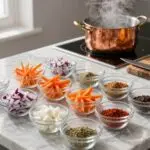
Ready your recipes and prep bowls, because measuring and containment gear is what turns a chaotic pile of ingredients into a calm, organized mise en place.
Keep your measuring cups and a kitchen scale together, so you’re not dividing the kitchen just to measure a teaspoon of salt. It’s a simple trick, but it saves you those frantic dashes.
Now, grab your mixing bowls, prep bowls, and resealable bags—they’re your best friends. Use them to hold your chopped onions and pre-portioned spices, then stage everything near the cooking zone.
This organized space means you’ll actually enjoy cooking, not just survive it.
And don’t forget a few clips or wrap for covering—they’re small, but they keep your prepped goods fresh and ready to go. When using your kitchen scale, press the tare button before each new ingredient addition so the scale resets to zero without requiring you to do any mental math.
Where Should Your Cooking Zone Live in the Layout?
Since your cooking zone revolves around the stove, it makes sense to store pots, pans, and utensils right where you’ll use them. That way, you’re not wandering across the kitchen while a pan is smoking hot.
In smaller kitchens, keep your cooking zone snug against your prep area, so you can slide ingredients straight to the hob. For larger layouts, use a sheet pan as a trusty “transfer” shuttle. It saves steps and keeps things tidy.
Here’s how to nail the placement:
- Tuck pans and spatulas in drawers or cabinets within arm’s reach of the cooktop, so you’re not bending or stretching mid-cooking.
- Position your cooking zone near the sink and dishwasher for quick cleanup, as those dedicated areas make life easier.
- Tie it into your main workflow by keeping it close to the fridge, even if your exact zones shift. The classic kitchen work triangle connects your stove, sink, and refrigerator into an invisible three-point path, with each leg ideally measuring between four and nine feet for efficient movement.
Give the Cleaning Zone Its Own Dedicated Spot
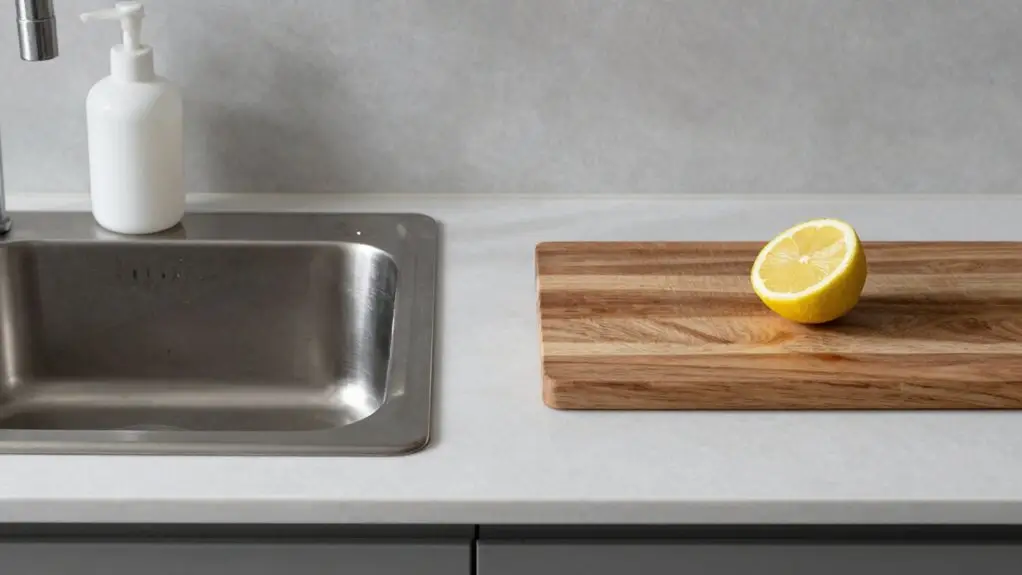
Now, give the cleaning zone its own dedicated spot, and you’ll save yourself a world of hassle. Position it right around your sink and dishwasher, the central hub where you rinse food off cookware and clear up mid-cook.
Give your cleaning zone its own dedicated spot around the sink and dishwasher to save hassle.
Tuck dish soap, sponges, and trash bags in drawers or under-sink cabinets, minimizing those extra kitchen miles.
With the sink close by, you can wash dishes while waiting for boiling or simmering, cutting down end-of-cooking cleanup. Store drying cloths and rinsing tools near the drainer so dishes flow easily without interrupting your other zones.
Keep this kitchen zone non-food focused—stock it with cleaning essentials, not random detergents.
That way, you move effortlessly from cooking to cleaning, keeping your workflow steady and your meal prep uninterrupted. Just as this zone benefits from intentional placement, your fridge works the same way—wiping shelves down before restocking takes five minutes and keeps things hygienic, making it a smart habit to build into your cleaning routine.
Build a Flexible Food Storage Zone That Fits Your Kitchen
Start by categorizing everything by food type so you’re not hunting for canned tomatoes next to the cereal.
Prioritize daily accessibility by placing your most-used staples at eye level, because who wants to play kitchen gymnastics every time you need olive oil?
Finally, optimize for order picking by grouping similar items together. This way, you can quickly grab what you need without pulling half the pantry onto the floor.
Categorize by Food Type
When you group foods by type, like storing all your dry goods together or keeping baking staples in one spot, you’ll build a Food Storage Zone that actually works with how you cook.
Categorize by food type to stop rummaging through chaos.
- Baking Zone: Keep flour, sugar, and vanilla in one area. You’ll grab pancake fixings faster than burning breakfast.
- Dry Goods Hub: Stack rice, pasta, and beans together. Adjustable shelves let you shift categories as your cravings change.
- Frequently Used Shelf: Position oils, spices, and daily staples at eye level, reducing constant searches. You’ll thank yourself at 6 PM.
Use stackable bins or labeled containers so your zone flexes with meal plans.
Store specialty flours as sub-buckets for cleaner workflows, avoiding cross-zone chaos.
It’s organized cooking without the guilt.
Prioritize Accessibility Daily
Since you’re the one doing the cooking, your kitchen layout should revolve around how you actually move, not some Pinterest dream. To prioritize accessibility daily, stash your most-used everyday items where your hands naturally go. That means spices, oils, and baking necessary items live right near your prep zone, not hidden in a far cabinet.
You’ll make your kitchen work effortless when everything’s easier to access, cutting down those unnecessary steps. Group pantry goods by how often you reach for them—keep grab-and-go staples upfront and bulk stuff higher up.
This flexible food storage zone adapts as your routine shifts, so you’re not wrestling with clutter mid-meal.
Think pull-out shelves or near-counter staging for quick grabs. Less wandering means you can focus on cooking, not hunting.
Optimize for Order Picking
You’ll often find yourself grabbing the same handful of ingredients every time you cook, so build a Flexible Food Storage zone right near your prep area to cut down on those extra steps. This keeps your common kitchen items close and ready.
- Apply order-picking logic: Store your most-used spices, oils, and flours at eye level and within arm’s reach. Bulk goods go higher or farther back, so you grab exactly the items you need mid-recipe without digging.
- Group similar categories together: Keep dry goods, baking staples, and cans in their own sections. That way, you spend less time searching and more time cooking.
- Make it adjustable: Let this zone overlap with your cooking area. Salt and pepper stay near the stove. Watch your movement for a few days, then shift shelves or containers to match your routine. No need for a full overhaul.
Extra Zones for Daily Life (Beverage, Breakfast, Baking)
Before you finalize your main prep, cooking, and cleanup zones, think about the extra areas that make your kitchen truly yours: beverage, breakfast, and baking zones.
A beverage zone keeps coffee, tea, or smoothie supplies together. No more darting across the room for your morning cup or after-work wine.
Your breakfast zone becomes a central spot for grab-and-go routines. Stash the toaster, cereal, and bowls nearby to speed up hectic mornings.
For baking, group flour, sugar, measuring cups, and mixers near a dedicated countertop so everything’s ready for mise en place before you start.
These extra zones thrive on prime real estate, near daily traffic paths, because your most-used items benefit from consistent, nearby storage. They match how your household actually lives, turning your kitchen into a personalized, efficient hub.
Prioritize Kitchen Zones for Your Lifestyle
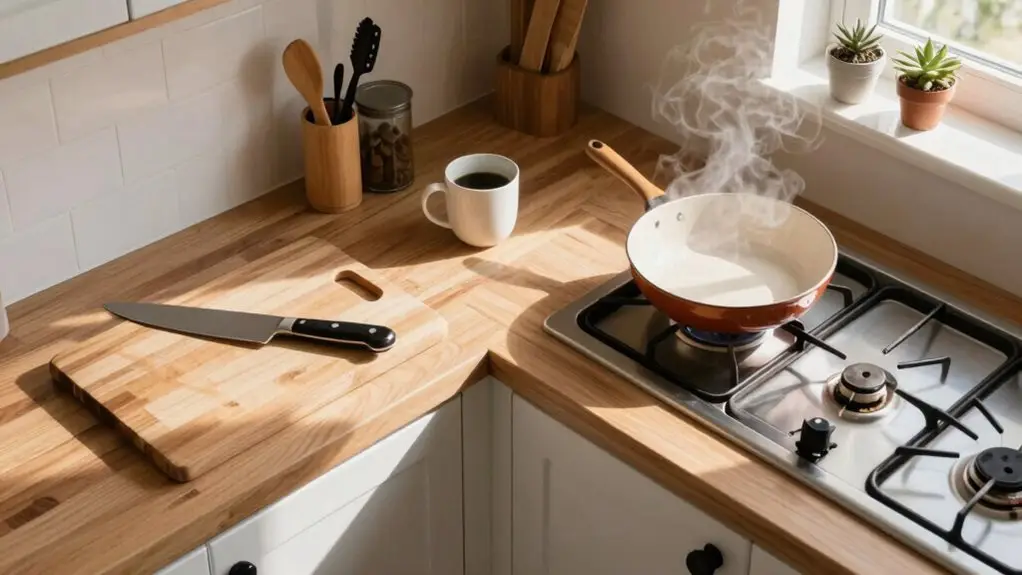
3. Entertaining or allergy needs. For frequent gatherings, prioritize a serving-adjacent zone for plates and drinks.
If allergies are a worry, give that prep area its own counter space to avoid mix-ups.
Simple Steps to Start Kitchen Zone Mapping Today
Once you’ve spotted your kitchen’s natural traffic patterns after a couple of days of observation, you’re ready to map out zones. Pick 4–6 main areas: prep, cooking, cleaning, storage, and give every tool a “home.”
Once you spot your kitchen’s natural traffic patterns, map out zones and give every tool a home.
You’ll need that coffee maker near the sink, not across the room.
Empty one drawer at a time, then move spices closer to the stove; you use them every time you cook. Create easy handoffs, like keeping cutting boards beside the cooktop so prepped veggies slide right over.
This will make your kitchen work flow steadier, and after a week, adjust based on cleaner counters and fewer steps.
You’re not overhauling everything—just tweaking.
Soon, you’ll wonder why you didn’t start sooner.
Final Thoughts
So, you’ve mapped your kitchen zones. Sounds fancy, but it’s really just about making your space work for you, not the other way around. You’ll stop hunting for the spatula mid-flip or tripping over the trash can.
Start small: claim your prep zone today. This isn’t a full renovation, buddy. It’s a simple shift in thinking. Your kitchen will feel bigger, calmer, and way more efficient.
Now go cook something without losing your mind.