The Best Fluffy Pancakes recipe you will fall in love with. Full of tips and tricks to help you make the best pancakes.


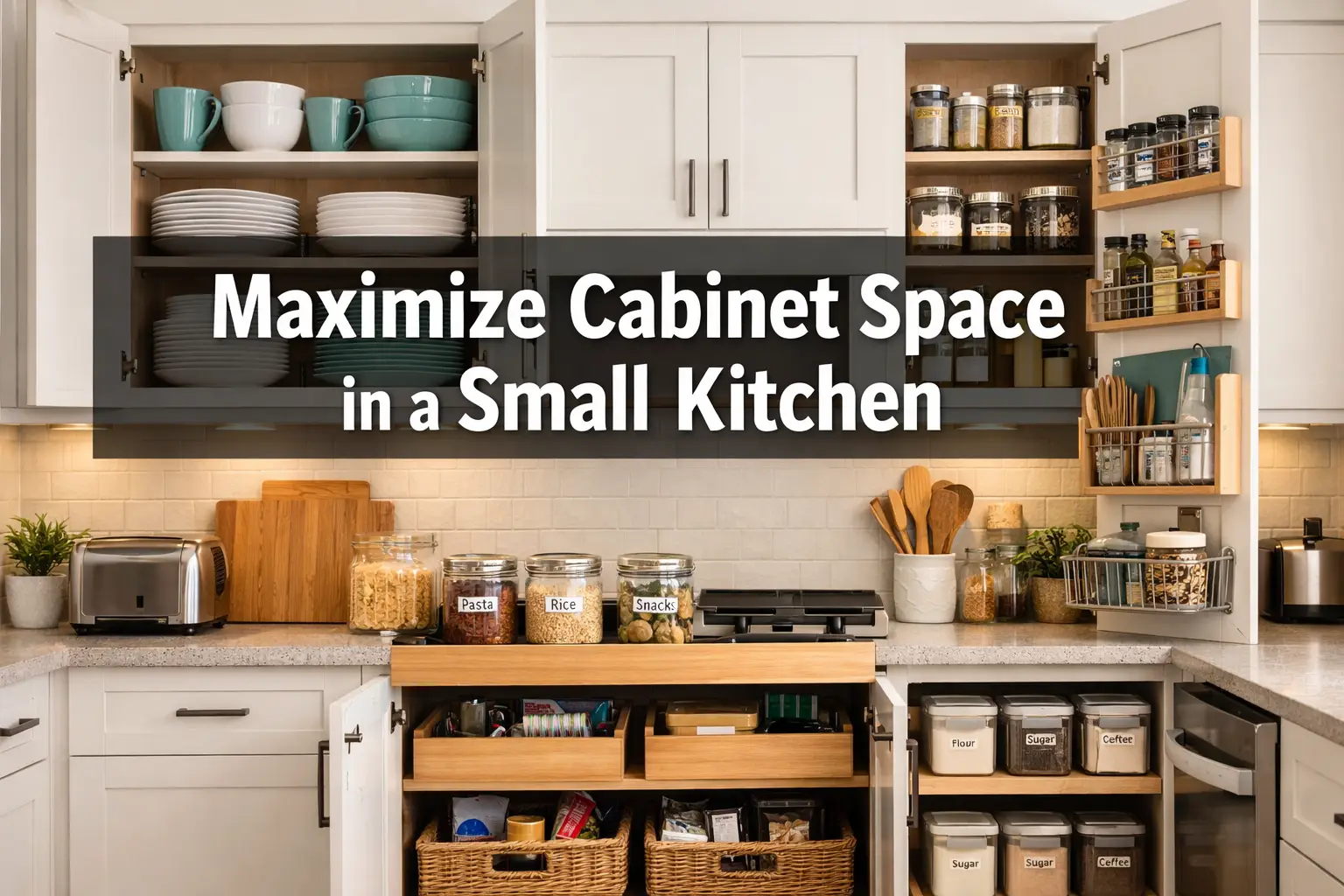
Quick Answer: To maximize cabinet space in a small kitchen, use vertical storage, door-mounted organizers, pull-out shelves, and stackable containers. The goal is to use every inch — including the backs of doors and the space above shelves — so nothing gets wasted. Most kitchens gain significant usable storage without a single renovation.
Key Takeaways
- Use the full height of each cabinet by adding extra shelves or risers.
- Door-mounted racks are one of the easiest quick wins for spice and lid storage.
- Pull-out organizers make deep cabinets far more usable — no more digging to the back.
- Stackable and nestable items (containers, pots, bowls) free up a surprising amount of shelf space.
- Declutter first. Organizing items you don’t need wastes time and space.
- Lazy Susans work well in corner cabinets and deep lower shelves.
- Drawer dividers keep utensils and small tools from becoming a jumbled mess.
- Vertical dividers for baking sheets and cutting boards save shelf space and reduce frustration.
- A few targeted product purchases can make life easier without a full kitchen remodel.
- Consistent habits — putting things back in their place — make any system last.
Why Small Kitchen Cabinet Space Feels Impossible (And How to Fix It)
Most small kitchens don’t actually lack storage — they lack organized storage. Cabinets fill up fast when items are stacked randomly, deep shelves hide things at the back, and doors go completely unused.
The fix isn’t always buying more furniture or doing a renovation. It’s about rethinking how every shelf, door, and corner gets used.
Common reasons small kitchen cabinets feel full:
- Shelves are too far apart, wasting vertical space between items
- Deep cabinets store things that never get reached
- Cabinet doors are left completely bare
- Duplicate or unused items take up prime real estate
- Nothing is grouped logically, so items pile up wherever they fit
The first step is always a declutter. Pull everything out of one cabinet at a time. Toss expired food, donate duplicates, and set aside anything that belongs in another room. Only then does organizing make sense.
🍳 Kitchen Cabinet Space Finder
Answer 3 quick questions and get personalized storage recommendations for your small kitchen.
✅ Your Personalized Recommendations
How to Maximize Cabinet Space in a Small Kitchen With Vertical Storage
Vertical space is the most underused resource in a small kitchen. Most standard cabinets have 12–18 inches between shelves, but most items only need 6–8 inches of clearance.
Add shelf risers or extra shelves to split that gap and double your usable layers. This works especially well for:
- Plates and bowls (stack by size)
- Mugs and glasses
- Canned goods and pantry items
- Small appliances stored on upper shelves
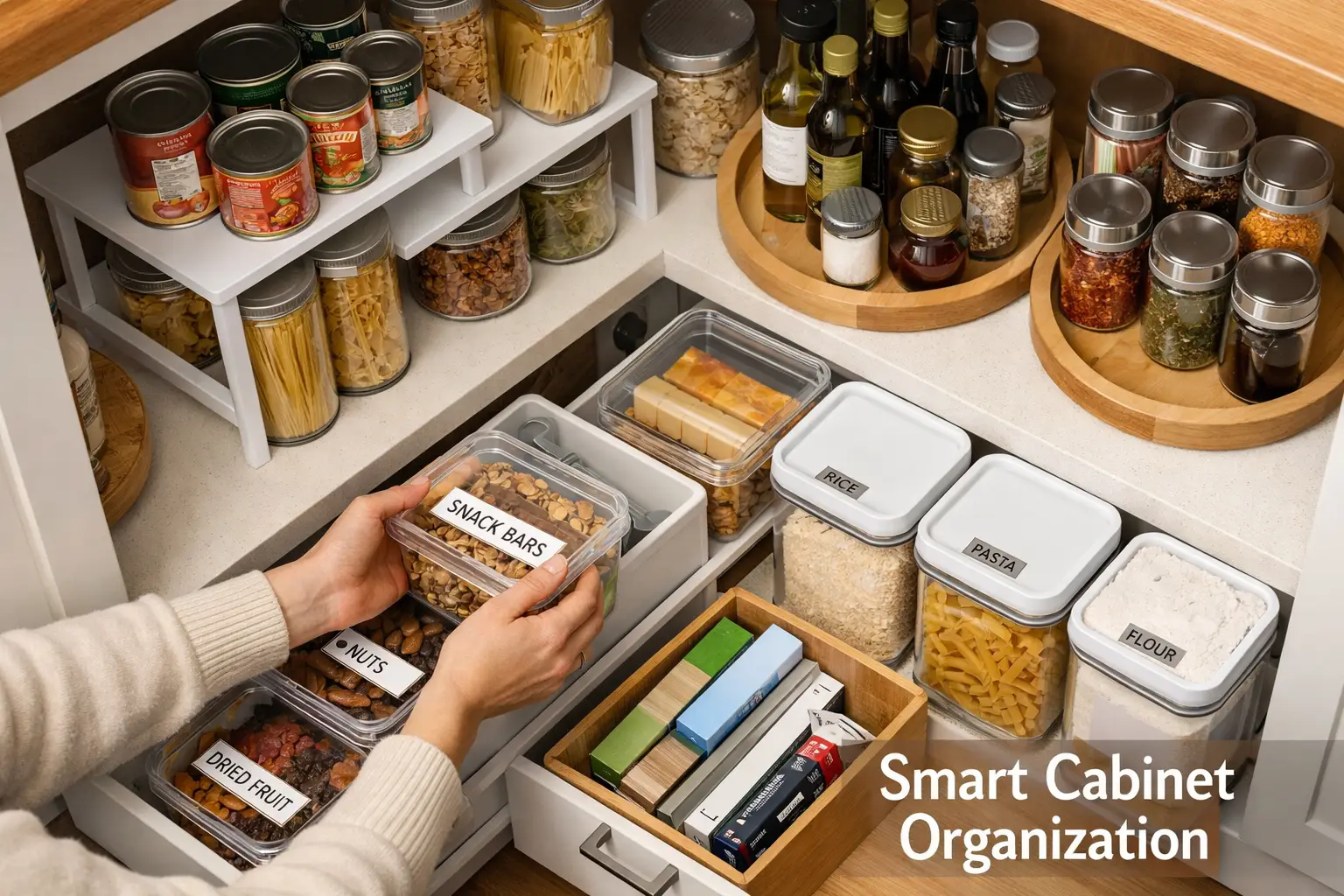
Stackable shelf inserts (sometimes called cabinet risers) cost between $10–$25 and are one of the best-value purchases for small kitchen storage. They require no tools and take about five minutes to set up.
💡 Quick win: Add a single shelf riser to your most cluttered cabinet this week. It’s one of the fastest ways to double usable space without spending much.
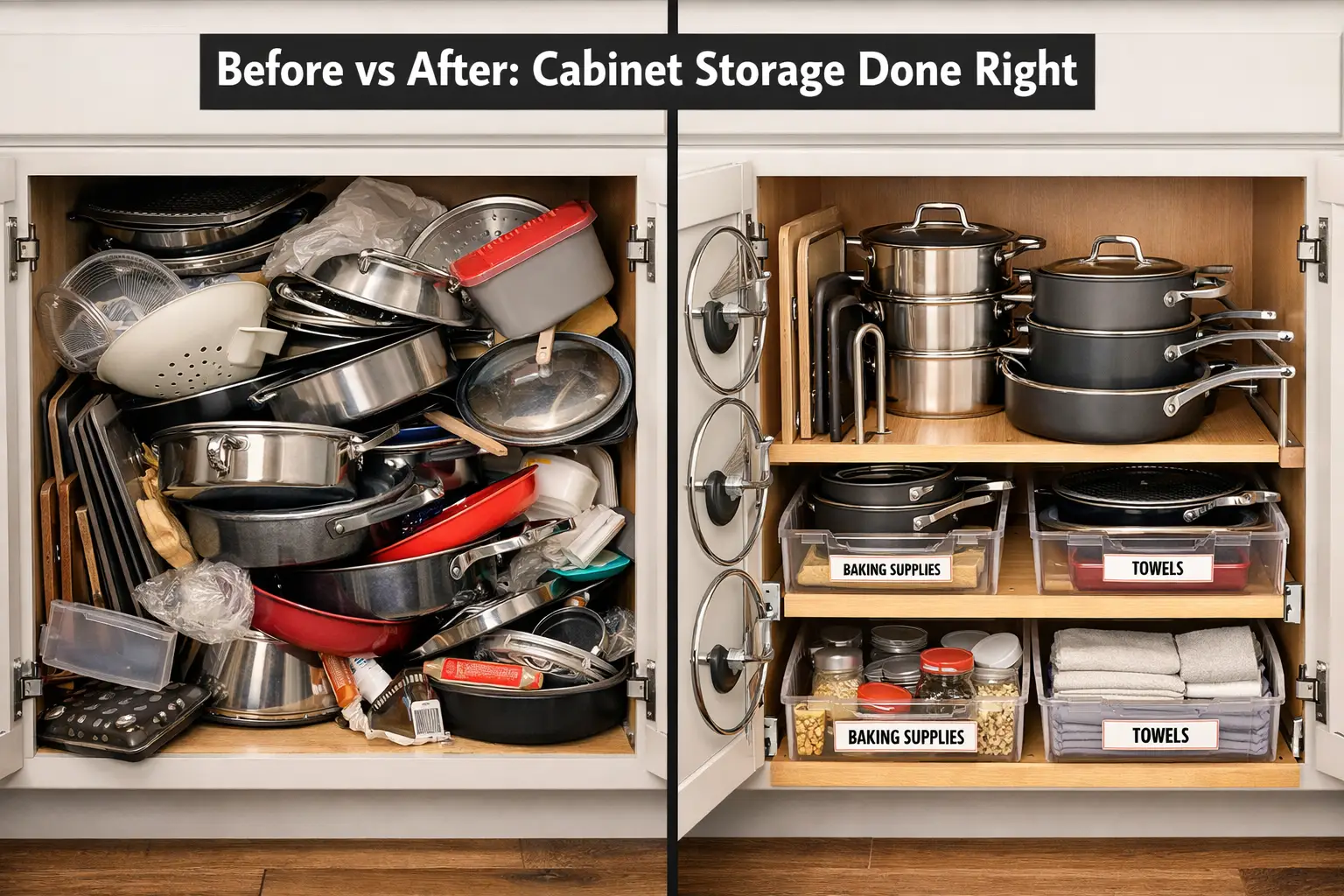
Vertical dividers are equally useful for flat items. Baking sheets, cutting boards, muffin tins, and pot lids can stand upright instead of being stacked flat — which means no more pulling out the whole pile to reach the one at the bottom.
What Are the Best Organizers for Small Kitchen Cabinets?
The right organizer depends on the cabinet type and what you’re storing. Here’s a practical breakdown:
| Cabinet Type | Best Organizer | Estimated Cost |
|---|---|---|
| Upper cabinet (dishes) | Shelf risers / plate racks | $10–$30 |
| Upper cabinet (spices) | Tiered spice rack or door mount | $15–$40 |
| Lower cabinet (pots) | Pull-out shelf or pot organizer | $25–$80 |
| Corner cabinet | Lazy Susan (rotating tray) | $20–$60 |
| Deep lower cabinet | Pull-out drawer insert | $30–$100 |
| Cabinet door (any) | Over-door rack or mounted hooks | $10–$35 |
Choose pull-out shelves if your lower cabinets are deep and items get lost at the back. These slide out like a drawer, giving full access to everything stored inside. They’re especially worth buying for under-sink storage and base cabinets near the stove.
Choose a lazy Susan for corner cabinets or any shelf where you’re constantly moving things to reach what’s behind them. A two-tier rotating tray makes every item reachable without digging.
How to Use Cabinet Doors to Gain Extra Storage
Cabinet doors are essentially free storage that most people ignore. A single door can hold spices, lids, foil and wrap, cleaning supplies, or small tools — all without taking up any shelf space.
Door-mounted options worth considering:
- Over-door spice racks — hold 12–20 spice jars flat against the door
- Lid organizers — keep pot and pan lids upright and accessible
- Tension rod holders — hang spray bottles or cleaning supplies inside lower cabinet doors
- Mounted hooks — great for measuring spoons, oven mitts, or small utensils
Most door-mounted organizers attach with screws or adhesive strips. Check the door clearance before buying — some deep racks won’t clear the shelf inside when the door closes.
How to Maximize Cabinet Space in a Small Kitchen on a Budget
Maximizing cabinet space doesn’t require expensive custom cabinetry. Most of the best solutions cost under $30 and take less than an hour to set up.
Budget-friendly approach (under $50 total):
- Declutter first — free, and often the highest-impact step
- Add shelf risers ($10–$20) to upper cabinets
- Install one over-door rack ($10–$25) for spices or lids
- Use tension rods vertically ($5–$10) to create dividers for baking sheets
- Swap mismatched containers for a set of stackable ones ($15–$30)
Where to skip spending: Fancy drawer organizers for cabinets you rarely open, or premium lazy Susans for cabinets that already work fine. Put money where the daily friction is highest.
Should You Reorganize Cabinets by Zone or by Item Type?
Zone-based organization wins for everyday cooking. It keeps your kitchen workflow smooth because everything you need for a task is in one place.
Zone approach:
- Cooking zone (near stove): pots, pans, oils, spices, utensils
- Prep zone (near counter): cutting boards, mixing bowls, measuring tools
- Baking zone (if applicable): baking sheets, muffin tins, measuring cups, baking ingredients
- Storage zone (pantry cabinet): dry goods, canned items, snacks
Item-type approach (grouping all pots together, all baking items together) works well in larger kitchens but creates extra steps in small ones where the stove and prep area are close together.
For most small kitchens, a loose zone system — keeping frequently used items closest to where they’re used — saves time and reduces clutter better than any strict organizational method.
Common Mistakes That Waste Cabinet Space
Even with the right products, a few habits can undo all the effort.
Mistakes to avoid:
- Storing rarely used items in prime spots. The holiday roasting pan shouldn’t live at eye level. Move it to a high shelf or another room.
- Ignoring the backs of deep shelves. If you can’t see it, you won’t use it. Pull-out organizers or lazy Susans solve this.
- Mixing categories. Storing random items together means nothing has a clear home, and clutter creeps back fast.
- Buying organizers before decluttering. Organizing clutter just makes it neater clutter.
- Skipping labels. Even simple masking-tape labels help everyone in the household put things back correctly.
FAQ: How to Maximize Cabinet Space in a Small Kitchen
Q: How do I add more shelves to existing cabinets? Most kitchen cabinets have pre-drilled holes for adjustable shelf pins. Buy matching shelf pins and a cut-to-size shelf board from a hardware store. No major carpentry needed.
Q: What’s the best way to store pots and pans in a small cabinet? Stack pots by size with lids stored separately (upright in a lid organizer or on a door rack). A pull-out cabinet shelf makes the whole stack accessible without lifting everything out.
Q: Are pull-out cabinet shelves hard to install? Most slide-out shelves designed for existing cabinets install in 15–30 minutes with a screwdriver. No special tools required. Measure the interior cabinet width carefully before buying.
Q: How do I organize a deep corner cabinet? A two-tier lazy Susan or a pull-out corner organizer (sometimes called a “magic corner” unit) makes deep corner cabinets genuinely usable. Without one, items at the back are essentially lost.
Q: Can I organize kitchen cabinets without buying anything? Yes. Decluttering, regrouping items by zone, and moving rarely used things to higher or harder-to-reach shelves can improve cabinet space significantly at no cost.
Q: What’s the fastest single improvement for a cramped kitchen cabinet? Adding a shelf riser or an over-door rack. Both take under 10 minutes, cost under $25, and immediately create more usable space.
Q: How often should kitchen cabinets be reorganized? A quick check every 3–6 months keeps things from slipping back into chaos. A full reorganization once a year (or after a big grocery haul) is usually enough.
Q: Is it worth hiring a professional organizer for a small kitchen? For most people, no. The strategies are straightforward and the products are affordable. A professional organizer makes more sense for whole-home projects or if decision fatigue is a real barrier.
Conclusion
Learning how to maximize cabinet space in a small kitchen comes down to three things: declutter what you don’t need, use every inch of the space you have (including doors and vertical space), and keep frequently used items easy to reach.
Actionable next steps:
- Pick one cabinet today and pull everything out.
- Toss or donate anything unused, expired, or duplicated.
- Add one shelf riser or door-mounted rack to immediately create more room.
- Group what’s left by cooking zone, not just category.
- Revisit in three months and adjust based on what’s actually working.
Small changes add up fast. A better-organized kitchen saves time every single day — and makes everyday cooking feel a lot less stressful.
Sources
- National Kitchen and Bath Association (NKBA). Kitchen Planning Guidelines and Access Standards. 2021. https://www.nkba.org
- The Spruce. How to Organize Kitchen Cabinets. 2023. https://www.thespruce.com
- Consumer Reports. Kitchen Storage and Organization Buying Guide. 2022. https://www.consumerreports.org
Tags: small kitchen storage, cabinet organization, kitchen organization tips, maximize cabinet space, kitchen storage ideas, pull-out shelves, kitchen declutter, over-door organizers, kitchen workflow, shelf risers, pantry organization, small kitchen solutions