The Best Fluffy Pancakes recipe you will fall in love with. Full of tips and tricks to help you make the best pancakes.


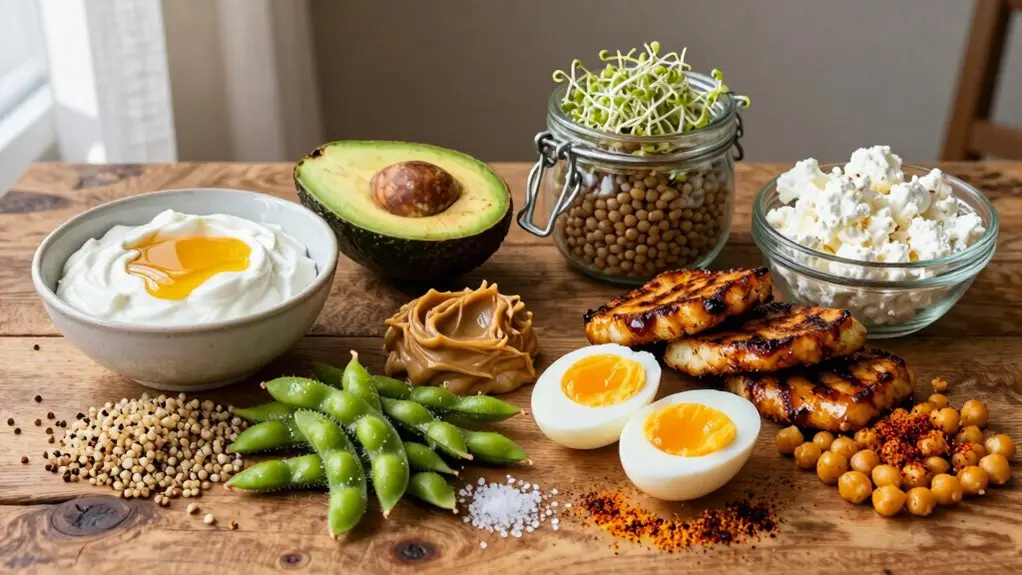
You’re probably getting less protein than you realize without meat, but these powerhouses have you covered. Load up on lentils and chickpeas for fiber-packed fuel. Grab tofu or tempeh for complete soy protein, and don’t sleep on budget-friendly TVP at 35 grams per serving.
Quinoa replaces rice while delivering all nine essential amino acids. Eggs cook up in minutes, and nuts or seeds make perfect portable snacks. Seitan brings that chewy, meaty texture you might be craving.
Mix legumes with whole grains to nail complete nutrition. Your muscles will thank you, and there’s plenty more to discover about making it all taste amazing.
Lentils: High-Fiber Legumes That Pack 18g Protein Per Cup
When you’re hunting for protein that won’t drain your wallet, lentils are about to become your new best friend. These little legumes deliver 18 grams of protein per cup, making them a powerhouse for fueling your day without the meat price tag.
You’ll get a solid fiber boost and iron too, all while keeping your grocery bill happy.
Research shows eating lentils regularly helps fight heart disease by lowering your cholesterol levels. Their slow-digesting carbs and fiber keep your blood sugar steadier than white bread or pasta ever could.
Bonus: Lentils count toward your 5-a-day! Toss them into soups, stews, salads, or serve them warm on the side.
They’re incredibly versatile, ridiculously affordable, and genuinely good for you. What’s not to love? Just as humidity above 70% can prevent proper bonding in adhesive applications, storing dried lentils in a cool, dry environment preserves their quality and nutritional integrity over time.
Chickpeas and Beans: Cheap, Versatile Vegetarian Protein Staples
You don’t need to spend much to fuel your body well, and that’s where chickpeas and beans really shine. With about 14–15 grams of protein per cup, plus loads of fiber and iron, they’re the kind of pantry heroes that keep you full and your blood sugar steady.
Whether you’re roasting chickpeas for a crunchy snack, whipping up hummus, or tossing beans into a hearty stew, you’ve got endless ways to work these budget-friendly staples into meals that actually satisfy. Just as proper substrate preparation separates floors that last decades from those that fail within months, building your meals on a solid nutritional foundation of protein-rich staples sets you up for long-term health rather than short-term fixes.
Budget-Friendly Protein Power
If you’re watching your wallet while trying to eat more protein, pulses like chickpeas and beans are about to become your new best friends. These budget-friendly protein powerhouses deliver serious nutrition without the hefty price tag. You’ll get about 14–15 grams of protein per cup of cooked chickpeas, plus fiber and iron to keep you full and energized.
Among smart vegetarian foods, these affordable protein sources can’t be beat. Three tablespoons of baked beans gives you roughly 6 grams, while the same amount of chickpeas or lentils offers 8–9 grams. Because they’re slow-digesting carbs, chickpeas help steady your blood sugar too.
Stocking up on these humble heroes means you’re building muscle, saving cash, and eating well—no fancy ingredients required. Keeping your pantry organized with a turntable pantry organizer makes it easy to rotate through your stock of canned beans and chickpeas so nothing gets forgotten at the back of the shelf.
Versatile Cooking Applications
Beyond saving money, pulses open up a whole world of easy, tasty meals you’ll actually want to cook.
You can roast chickpeas for a crunchy snack that rivals pumpkin seeds or blend them into creamy hummus for dipping.
Toss beans into grain bowls where quinoa contains complete protein, and you’ve got a filling lunch without breaking a sweat.
Lentils slip seamlessly into soups and chilis, thickening things up while packing about 9g protein per serving.
You’ll find tofu contains similar versatility, but beans win on budget and convenience.
Mash them into burger patties, stir them into pasta sauces, or bake them into hearty sides.
With simple swaps like these, you’re building protein-rich plates that keep your wallet and your taste buds happy.
A dedicated luxury shoe storage cabinet can keep your kitchen organized and free up counter space for all the meal prep these protein-packed recipes demand.
Nutritional Benefits Overview
While you might think meat’s the only way to pack in protein, chickpeas and beans prove that theory wrong without draining your grocery budget. You’ll get 14–15 grams of protein in just one cup of cooked chickpeas, making them one of the easiest foods with more protein to slip into your daily routine.
They’re loaded with fiber too, so your digestive system stays happy and your cholesterol stays in check.
Your heart will thank you later. Thanks to those slow-digesting carbs, you won’t crash an hour after eating.
Plus, they count toward your “5-a-day” and actively help lower your heart-health risks.
Roast them for crunch, blend them into hummus, or toss them in stew. However you prep them, you’re winning on nutrition and your wallet.
Tofu and Tempeh: Complete Soy Proteins for Savory Cooking
Because you’re looking to pack more protein into your meatless meals, tofu and tempeh are about to become your new best friends in the kitchen. These soy-based powerhouses deliver complete protein with all nine essential amino acids your body craves.
Tofu brings around 20g protein per 3.5 oz and soaks up flavors like a culinary sponge, whether you’re sautéing, baking, or pan-frying it into crispy perfection. Tempeh hits just as hard with 20g protein per 100g, plus fermentation perks that your gut will thank you for.
HERE’S WHY YOU’LL ACTUALLY LOVE COOKING WITH THEM:
- They transform from bland blocks into flavor bombs with just soy sauce and garlic.
- Tempeh’s nutty crunch works raw, roasted, or air-fried—your texture, your rules.
- Both slip seamlessly into tacos, stir-fries, and pasta without anyone missing the meat.
- You’re scoring calcium, iron, and B vitamins while you eat.
After a satisfying plant-based meal, you might even find yourself rethinking your whole kitchen setup, from a luxurious entryway storage bench to the tools you reach for every day.
TVP: The Cheapest Vegetarian Protein (35g Per Serving)
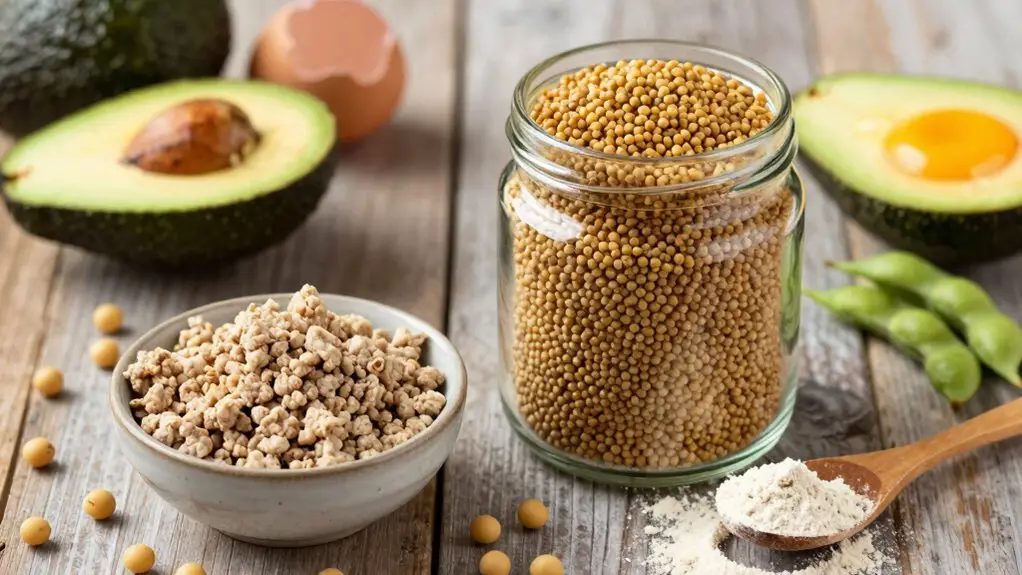
TVP won’t win any beauty contests, and that’s exactly why it’s about to become your secret weapon for budget-friendly, protein-packed meals.
This unassuming soy-based meat substitute rehydrates into ground-meat-like texture, delivering nearly 35g protein and 12g fiber per cup. Talk about bang for your buck.
You’ll love how TVP stretches your grocery dollar. It’s shelf-stable, sold in bulk, and one bag lasts forever.
Plus, it’s high in protein, and a complete protein contains all nine necessary amino acids, so you’re not sacrificing nutrition for savings.
Simply soak it in hot broth for ten minutes, then season aggressively.
Transform it into tacos, chili, or Bolognese that will fool your meatiest friends.
Just as you’d use mild soap and soft cloth to care for quality kitchen hardware, TVP requires minimal maintenance — store it in a cool, dry place and it’ll stay fresh for months.
Your wallet, and your muscles, will thank you.
Quinoa: A Complete Protein That Replaces Rice and Pasta
You’re probably tired of rice and pasta hogging all the glory on your plate, so let’s talk about quinoa, a sneaky little seed that masquerades as a grain but packs a complete protein punch you can’t ignore.
Unlike your usual starches, quinoa dishes out all nine indispensable amino acids your body craves. This makes it a no-brainer for vegetarian meals that actually fill you up.
It cooks in about 15 minutes and swaps effortlessly into bowls and salads.
Suddenly, you’ve got a nutrient-dense base that doesn’t leave you hunting for the meat.
Complete Amino Profile
Although rice and pasta have long held the top spots on your plate, there’s a tiny seed that’s ready to shake things up. Quinoa isn’t actually a grain, but you’ll cook and eat it just like one, making it the ultimate undercover protein agent in your kitchen.
Here’s why you’ll fall hard for this complete protein powerhouse:
- It contains all nine essential amino acids your body can’t make on its own.
- You get a full complete amino profile from a single plant-based serving.
- One cup of cooked quinoa delivers about 8 grams of protein.
- It lets you build muscle without touching a single piece of meat.
Unlike most cereals, this super seed delivers serious plant-based protein that rivals animal sources. You’re basically getting steak-level nutrition from something that grows in a field. If you’re revamping your kitchen space to cook more plant-based meals, consider updating your walls with peel stick wallpaper premium to give the room a fresh, inspiring look without a major renovation.
Easy Grain Substitute
Since you’re already cooking rice or pasta a few times a week, swapping in quinoa takes zero extra effort, and it’s a total game-changer for your protein intake. You’re not actually eating a grain, technically, since quinoa is a seed that just plays the part beautifully.
Here’s the kicker: quinoa delivers a complete protein, meaning you’re getting all nine essential amino acids your body can’t make on its own. That’s pretty rare for a plant-based option, and it makes this little seed a standout high source of protein for vegetarians.
Just five tablespoons of cooked quinoa pack roughly 8 grams of protein.
Use it in Buddha bowls, toss it into salads, or pile your stir-fry right on top. It’s filling, familiar, and suddenly your dinner’s working way harder for you. If you’re planning a kitchen upgrade to better support your cooking habits, a bathroom renovation tile kit can simplify material selection the same way quinoa simplifies your protein goals.
Quick Cooking Seed
If you’ve got fifteen minutes and a pot of boiling water, you’ve got everything you need to turn dinner into a protein powerhouse.
You cook quinoa like a grain, though it’s actually a seed that replaces rice or pasta beautifully. Here’s why you’ll love keeping it handy:
- It packs roughly 8g of protein per serving, seriously solid fuel.
- You’ve got a complete protein with all nine necessary amino acids, rare for plant-based foods.
- You can toss it into bowls, salads, or sides without any complicated prep.
- It soaks up herbs, spices, and sauces exactly like your favorite rice dishes.
UNLIKE MOST CEREALS, QUINOA DELIVERS THAT COMPLETE PROTEIN PUNCH YOU’D NORMALLY HUNT DOWN IN ANIMAL PRODUCTS. YOU’RE BASICALLY UPGRADING YOUR WHOLE PLATE WITHOUT ADDING COOKING STRESS.
Greek Yogurt and Cottage Cheese: 13-25g Protein Per Serving
A creamy spoonful of Greek yogurt or cottage cheese can completely change your protein game, and you won’t even miss the meat. You’ll find Greek yogurt packs about 16–20g of protein in a standard 170g cup, while cottage cheese delivers roughly 13g per 100g serving. That’s a solid protein content range of 13–25g to power your day.
BOTH OPTIONS COME MEAL-READY, SO YOU’RE GRABBING SOMETHING QUICK WITHOUT SACRIFICING NUTRITION. Look for cultured versions—they bring natural probiotics that will keep your gut happy too.
Plus, you’re getting calcium for strong bones while you’re at it. Stir in some berries or drizzle honey, and you’ve got yourself a breakfast that feels indulgent but works hard for your body. For an organized kitchen setup, storing your yogurt-making tools on a professional pegboard cabinet can keep everything accessible and tidy.
Eggs: 6-7g Protein Each, Ready in Minutes
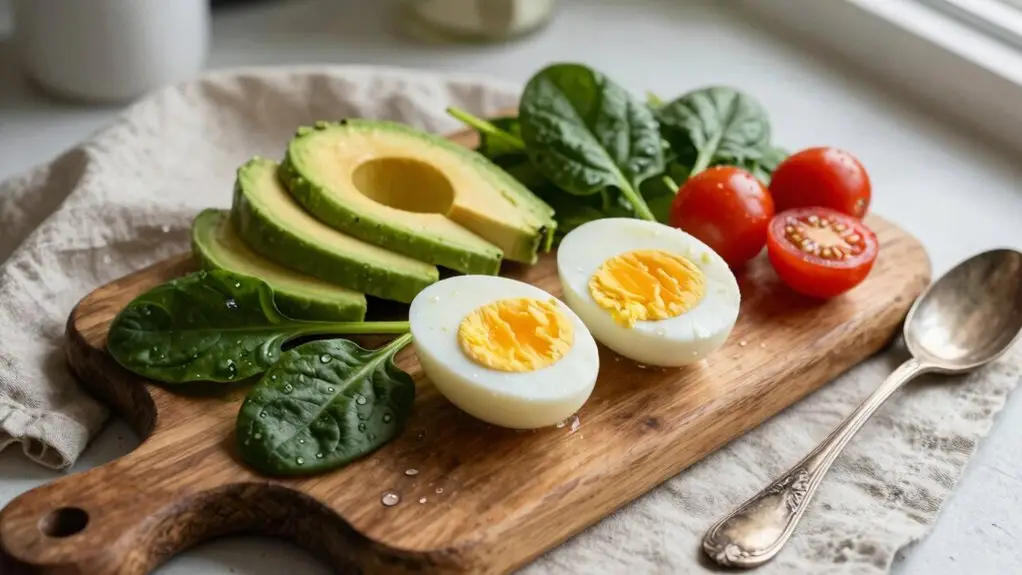
Those creamy dairy options hit the spot, but sometimes you need something even faster, and that’s where eggs slide right into the picture. You’ll get about 6–7 grams of protein per egg, and they’re ready in minutes whether you scramble, fry, or boil them. That’s a solid per serving boost when you’re rushing out the door.
Those creamy dairy options hit the spot, but eggs slide right into the picture when you need something even faster.
WHIP UP A QUICK SCRAMBLE WITH SPINACH FOR A NUTRIENT-PACKED BREAKFAST. Boil a batch on Sunday for grab-and-go snacks all week.
Top your avocado toast with a fried egg for extra staying power. Pair one egg with Greek yogurt to double down on protein.
Eggs also deliver vitamin B12 and vitamin D, supporting your energy and overall health. While they contain cholesterol, saturated fat matters more, so enjoy them without worry.
Nuts and Seeds: Portable Protein for Snacks and Toppings
You’ll love how nuts and seeds pack a serious protein punch without weighing you down.
Just 30g of peanuts gives you around 8g, while pumpkin and sunflower seeds clock in strong too.
They’re crazy simple to toss into your day, whether you’re sprinkling them on yogurt or crunching them straight from your palm.
Keep it to a small handful though since they’re calorie-dense.
You’ve got yourself a fiber-filled, heart-healthy habit that’s anything but boring.
Nutritional Powerhouses
That little bag of almonds stashed in your desk drawer? You’re sitting on a nutritional goldmine. Nuts and seeds rank among the best High-Protein Foods for vegetarians, and they’re ridiculously easy to grab on the run.
Keep peanuts handy: 30g delivers about 8g protein, toss them in your bag and you’re set.
Sprinkle pumpkin seeds: 30g gives you roughly 7g protein intake plus magnesium and zinc.
Grab sunflower seeds: You’ll get about 6g protein in a 30g serving, perfect for crunch.
Mix walnuts or hazelnuts: 30g adds around 4g protein each, keeping things low in saturated fat.
Aim for roughly a handful daily.
They’re calorie-dense but packed with heart-healthy unsaturated fats, fiber, and minerals.
These will keep you fueled without the crash.
Just as kitchen upgrades benefit from durable ceramic cartridges engineered for longevity, your diet benefits most when you consistently choose nutrient-dense options like nuts and seeds that stand the test of daily wear on your body.
Easy Meal Addition
Beyond stashing them in your bag for emergency hunger fixes, nuts and seeds pull double duty as your secret weapon in the kitchen. These bite-sized sources of protein transform ordinary meals into high protein powerhouses with zero fuss.
You’re looking at about 8g protein in 30g peanuts, 7g in pumpkin seeds, and 6g in sunflower seeds—pretty impressive for something that fits in your palm. Sprinkle them on morning oatmeal, lunch salads, or dinner stir-fries for an instant boost.
While they’re calorie-dense, that fat is the heart-healthy kind your body actually loves. The trick? Stick to roughly one handful per day, about 30g, to keep things balanced. No cooking required, no excuses needed—just grab, sprinkle, and enjoy the crunch.
Seitan: Wheat-Based Protein With a Meaty Texture
If you’re looking for a protein source that actually feels like you’re biting into meat, seitan’s about to become your new best friend.
This plant-based wonder packs about 21 grams per 100 grams, making it a serious contender for your plate.
You’ll love how versatile it’s in the kitchen.
Slice it thick and pan-sear for that perfect “chicken” sandwich.
Thick-cut and pan-seared, seitan transforms into the juiciest “chicken” sandwich you’ve ever sunk your teeth into.
Toss strips into your stir-fry for an instant dinner upgrade.
Marinate and grill for smoky, satisfying kebabs.
Shred it into tacos when you’re craving something hearty.
Seitan also brings selenium and iron to the party, though you’ll want to skip it if gluten’s not your friend.
Cook it savory, and you’ll swear you’re eating the real deal.
Build Your Meals: Combining Vegetarian Proteins for Complete Nutrition
You’ve got seitan in your corner now, but one protein source only gets you so far. Let’s talk about building meals that give you complete protein without the headache.
Mix your foods smartly: pair legumes like beans or lentils with whole grains, and you’ll cover all your amino acid bases. Easy, right?
For protein for every meal, lean on soya products like tofu or soya milk, or grab quinoa. These complete protein champs do the heavy lifting solo.
Toss in chickpeas or baked beans for fiber that keeps you full longer.
If you eat dairy or eggs, Greek yogurt and eggs team up beautifully with those plant-based stars.
And don’t sleep on TVP; it’s a protein booster that soaks up flavors in tacos or chili like nobody’s business.
Final Thoughts
You’re now armed with ten awesome protein sources that won’t break the bank or bore your taste buds. Mix and match them throughout your week, and don’t stress about being perfect—just get started.
Your muscles, wallet, and probably your digestive system will thank you. Happy cooking, and may your meals be forever flavorful!