The Best Fluffy Pancakes recipe you will fall in love with. Full of tips and tricks to help you make the best pancakes.


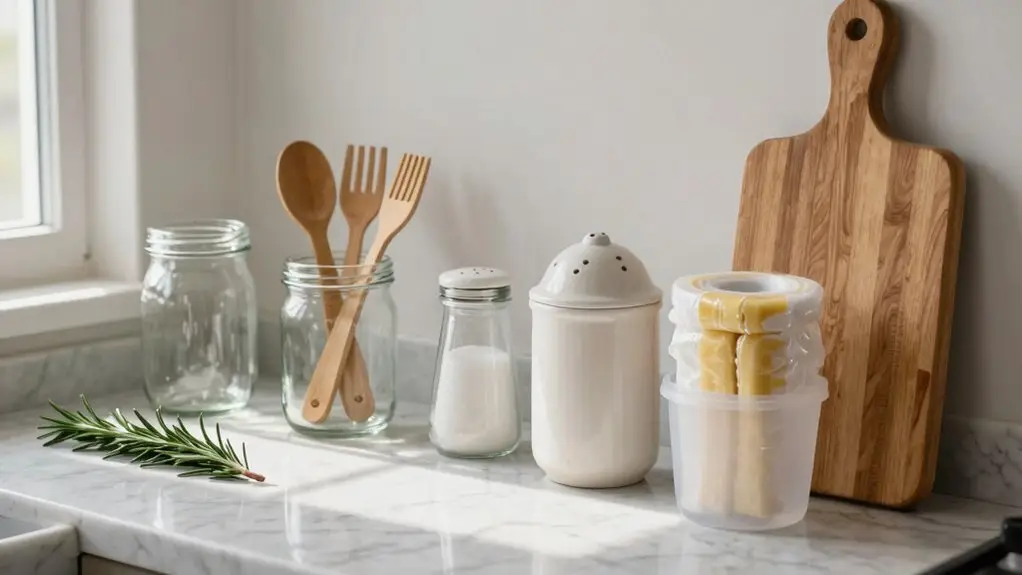
You don’t need to overhaul your entire kitchen to eat safer and feel better. Ditch scratched plastic containers and warped utensils for glass storage and silicone tools. Your leftovers deserve better anyway.
Swap out those chemical-smelling nonstick pans for a trusty cast iron or stainless steel, and you’ll get that perfect sear without the weird fumes. Trade butter for olive oil most days, and try replacing half your meat with beans or lentils in tacos or curry.
These small changes add up fast, and there’s even more clever tricks waiting to make your kitchen work smarter for you.
Which Kitchen Items Actually Leach Chemicals Into Your Food?
When you heat up leftovers or grab a quick stir-fry, you probably aren’t thinking about whether your spatula is secretly seasoning your food with chemicals, but maybe you should be.
Plastics are the biggest troublemakers in your kitchen. When you repeatedly heat them or scratch them up, they start leaking chemicals right into your dinner. That worn cutting board with all those knife marks? It’s basically inviting unwanted guests to the party.
That worn cutting board with all those knife marks? It’s basically inviting unwanted guests to the party.
Even your microwave cover isn’t innocent if it’s seen better days. If you’ve spotted melted plastic in your microwave or you’re using black, recycled-content stuff, that’s your kitchen waving a red flag.
You’re not stuck, though. Swapping to glass storage, stainless steel utensils, and sturdy cutting boards makes a real difference. Building a healthier home doesn’t mean throwing everything out—just choose smarter materials, and you’ll breathe easier at mealtime. It’s also worth knowing that airborne contaminants from cooking can interfere with chemical bonding processes in your home, including tile adhesives in or near the kitchen, so improving ventilation benefits more than just air quality.
Swap Nonstick Pans for Safer High-Heat Cookware
You’ve probably heard the sizzle of a too-hot pan and caught that strange, chemical smell: that’s your non-stick cookware telling you it’s had enough. Those coatings break down under serious heat, potentially releasing stuff you don’t want near your food.
Here’s where smart Kitchen Swaps come in. You’ll reach for olive oil and a properly seasoned cast iron skillet instead. It handles screaming-hot temperatures like a champ, going from stovetop to oven without breaking a sweat.
Stainless steel and quality ceramic-coated pans work great too—just treat ceramic gently. While you’re upgrading, keep that wooden cutting board handy for prep work.
Better food choices start with better tools, and cutting risky chemicals from your cooking routine is one delicious step toward a healthier kitchen. If you’re also tackling other areas of your home, a bathroom renovation tile kit can be a practical way to refresh your space while keeping health and safety in mind.
Replace Plastic Storage and Utensils With Glass and Silicone
Because your leftover lasagna deserves better than a stained, warped plastic container, it’s time to rethink what’s touching your food. These easy swaps protect your meals from chemical leaching and weird plastic tastes.
Start with swaps: trade plastic storage for glass containers, especially for fridge and freezer duty. You’ll spot plant protein leftovers instantly, and cleanup’s a breeze.
Dump those black plastic utensils, often recycled electronics, for silicone-covered or metal options. Grab silicone spatulas and microwave covers too, since plastic melts when things get hot.
When you’re batch cooking with coconut oil or avocado oil, you’ll want heat-safe gear anyway. Choose silicone air fryer liners over single-use plastic.
You deserve lower sodium soups without a plastic aftertaste, right? Investing in glass and silicone means safer food, less waste, and zero warped lids. If you’re also refreshing your kitchen’s look from the ground up, peel-and-stick vinyl tiles offer a water-resistant, washable flooring upgrade that requires no special tools and minimal prep work.
Trade Butter and Cream for Heart-Healthy Cooking Fats
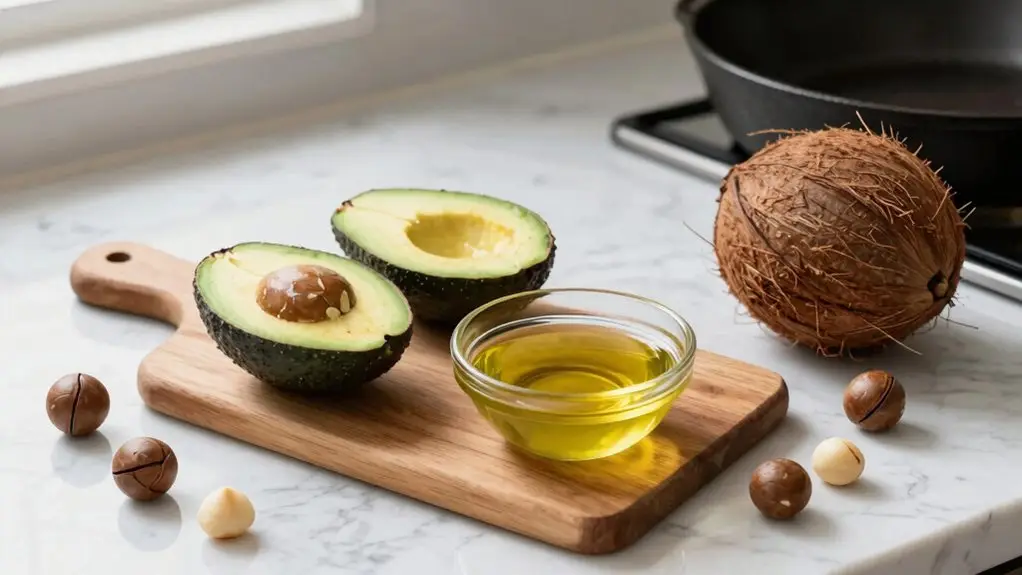
Now that your kitchen’s stocked with safer glass and silicone, let’s talk about what’s going into those containers. You’ve got rid of sketchy plastics, so why stop there?
You need to change what’s sizzling in your pans, too. Butter and heavy cream taste amazing, sure, but your heart health deserves better everyday choices. Swap them for unsaturated fats like olive oil, canola oil, or avocado oil instead.
You’ll still get that gorgeous browning and rich flavor without all the saturated baggage.
Try drizzling olive oil on roasted veggies or sautéing with canola oil. When you crave creaminess, reach for low-fat Greek yogurt rather than sour cream.
Small shifts add up fast, and your heart will thank you for choosing liquid plant-based fats most days. Just like choosing medium to dark grout in high-traffic kitchen areas helps hide everyday stains and spills, choosing the right cooking fats helps your kitchen work smarter for your long-term health.
Swap Half Your Meat for Plant Proteins That Actually Fill You Up
The biggest lie in meal prep is that a plate without meat is just a side dish waiting to happen. YOU’RE REALLY NOT GOING TO MISS THE BULK WHEN YOU START CUTTING BACK STRATEGICALLY.
Replace about half your usual meat with plant proteins like beans, lentils, tofu, and whole grains. They help us stay full longer thanks to fiber that digests slowly. Try meal-center dishes like Spicy Tomato Chickpea Curry or Sweet Potato and Lentil Tacos. They deliver serious flavor and texture without ground beef.
Drop beans straight into chili, soups, and stews you already love. When you want meat, use it as an accent, not the star—think more black beans, less taco meat.
Bonus: plant proteins cost less while packing minerals and vitamins that keep you satisfied. For extra counter space while prepping these meals, a floating bathroom cabinet storage unit can free up room and keep your kitchen organized.
*Required fields are marked. This post may contain affiliate links.*
Final Thoughts
You’ve got this! These swaps aren’t about being perfect; they’re about small wins that add up. Your kitchen doesn’t need a total makeover overnight.
Start with one change—maybe that scratched nonstick pan you’ve been side-eyeing—and build from there. Your future self and your dinner guests will thank you.
Now go cook something tasty, won’t you?