The Best Fluffy Pancakes recipe you will fall in love with. Full of tips and tricks to help you make the best pancakes.


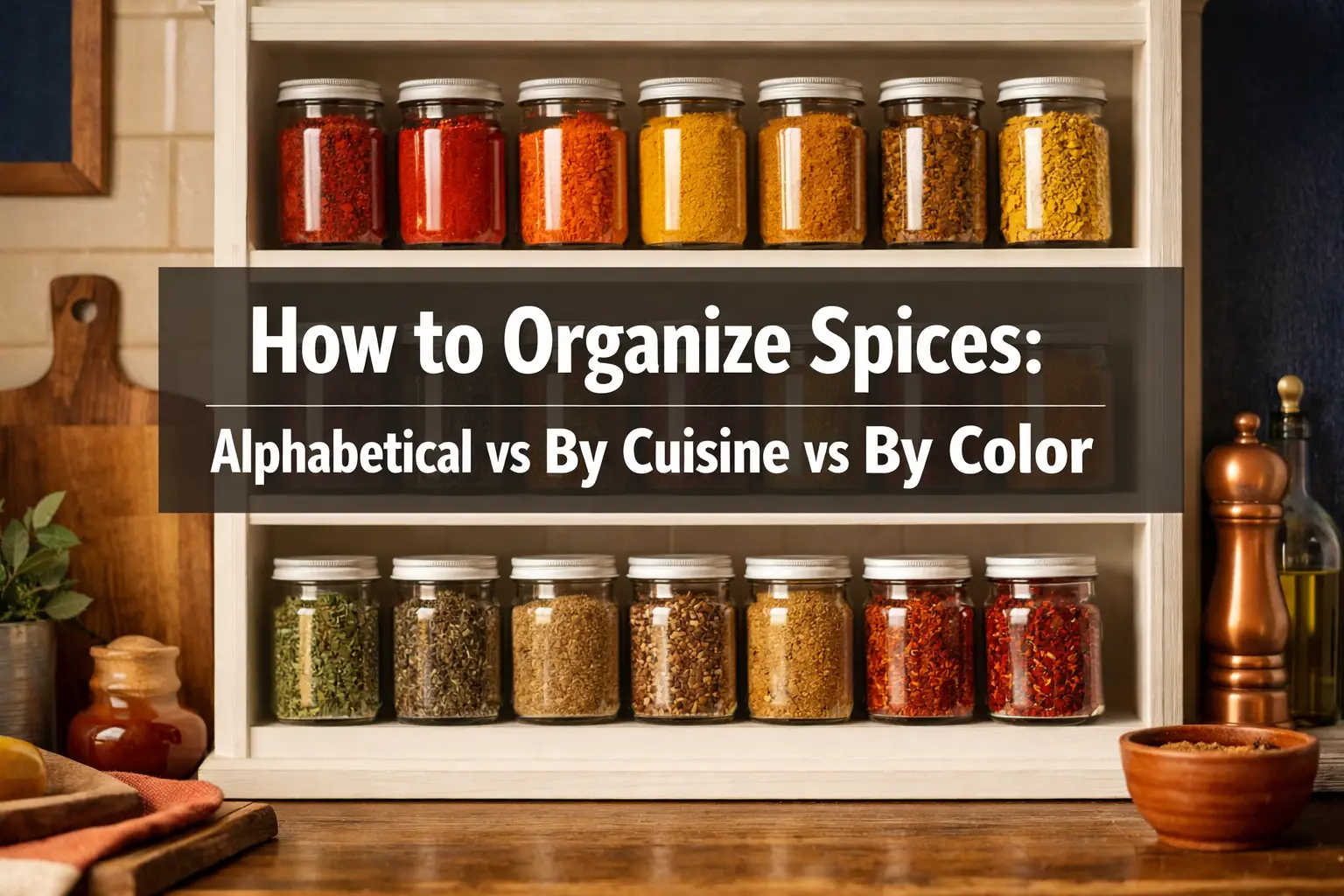
The best way to organize spices depends on how you cook. Alphabetical order works best for large collections and cooks who buy many different spices. By cuisine saves the most time for people who regularly cook specific regional dishes. By color looks great but works better as a secondary system than a primary one. Most home cooks get the best results combining two methods.
Key Takeaways
- Alphabetical organization is the easiest to maintain and scales well as your collection grows.
- Organizing by cuisine cuts down on searching time during active cooking sessions.
- Color-based organization is visually appealing but can slow you down if labels aren’t also visible.
- A hybrid approach (cuisine groups arranged alphabetically within each group) suits most busy home cooks.
- Before choosing a system, purge expired spices first — most households have 20–40% that are past their prime (estimate based on typical pantry audits).
- Consistent jar sizes and labels make any system work better.
- The “right” system is the one you’ll actually maintain week after week.
- Drawer organizers, magnetic tins, and tiered shelf risers are worth buying to support whichever method you choose.

Spice Jar Labels Preprinted Waterproof: You will receive 12 sheets spice labels stickers,432 pcs black round labels,include 378 pcs printed + 54 pcs blank stickers,enough for you

ALL YOU NEED ARE IN ONE PACK: Contains 24 glass square spice jars, 24 shaker lids, 492 labels of 3 different types for identifying, a marker and a collapsible silicone funnel for refilling. All accessories essential are provided in this pack, no need of other purchases.

Complete Spice Label Kit: Includes 201 preprinted spice jar labels with 149 common spice names, 9 blank labels for customization, 36 expiration date labels, and 7 number labels. (Jars not included).
Why Spice Organization Actually Matters for Kitchen Workflow
A disorganized spice collection costs real time. Digging through a jumbled cabinet mid-cook breaks your focus, slows your kitchen workflow, and often means reaching for the wrong jar entirely.
Good spice organization does three things:
- Reduces clutter so counters and cabinets feel manageable.
- Saves time during cooking when every second counts.
- Reduces waste because you can see what you have and stop buying duplicates.
Before picking a system, do a quick audit. Pull everything out, check expiration dates, and consolidate duplicates. This single step is the most underrated quick win in kitchen organization.

How to Organize Spices Alphabetically: Pros, Cons, and Who It’s For
Alphabetical organization is the most universally functional system. It works for any cooking style, scales easily, and takes almost no thought to maintain once it’s set up.

【Sturdy and Durable Spice Organizer】: Our spice rack is made of high quality transparent acrylic material, which is strong and durable, has a long service life. The L-shaped structure can firmly support jars of different weights.

【Heavy 2 mm Thick clear acrylic spice rack】Quality construction in 2 mm acrylic, sturdy and durable, will not warp, rust, stain, break or yellow like plastic, metal or wood organizers, ensuring a long-lasting and crystal-clear display that complements any kitchen decor

Extremely Strong - New and improved Spicy Shelf Premium! 10 times stronger than the original.
How it works
- Standardize your jars (same size and shape makes this much cleaner).
- Label every jar clearly on the front or lid.
- Arrange from A (allspice) to Z (za’atar).
- When you add a new spice, slot it in the right place.
Pros and cons
| Pros | Cons |
|---|---|
| Easy to find any spice instantly | Doesn’t group related spices together |
| Simple to maintain over time | Can feel impersonal for cuisine-focused cooks |
| Works for large collections (30+ jars) | Requires consistent labeling |
| Great for shared kitchens | Less intuitive mid-recipe |
Choose alphabetical if: you have a large, varied collection, you cook across many different cuisines, or multiple people use the kitchen.
Common mistake: Skipping the label step. Without clear labels, alphabetical order falls apart fast.
How to Organize Spices By Cuisine: The Fastest System for Everyday Cooking
Organizing spices by cuisine is the most time-efficient system for cooks who regularly make dishes from specific regional traditions. Instead of scanning an entire rack, you go straight to your “Italian” or “Indian” section and everything you need is already together.
How to set it up
- List the cuisines you cook most often (be honest — most home cooks rely on 3–5 regularly).
- Group your spices by cuisine: Italian, Mexican, Indian, Middle Eastern, etc.
- Create a small “everyday” or “universal” group for spices like salt, black pepper, garlic powder, and onion powder that cross all cuisines.
- Label each section clearly with a small card or divider.
Example groupings
- Italian: Basil, oregano, thyme, rosemary, red pepper flakes
- Indian: Turmeric, cumin, coriander, garam masala, cardamom
- Mexican: Chili powder, smoked paprika, cumin, cayenne, Mexican oregano
- Universal: Salt, black pepper, garlic powder, onion powder
Quick tip: Cumin appears in multiple cuisines. Keep it in the “universal” group or buy two small jars. Don’t let multi-use spices create confusion.
Choose by cuisine if: you cook 3–5 specific regional cuisines regularly and want to grab everything for a dish in one move.
Edge case: If you experiment a lot or follow recipes from cookbooks spanning many traditions, this system can leave you with too many “miscellaneous” spices that don’t fit neatly anywhere.
How to Organize Spices By Color: When It Works and When It Doesn’t
Color-based organization is visually striking but works best as a secondary system, not a primary one. It’s genuinely useful for quickly spotting a spice by appearance, but only if labels are also visible.
When color organization helps
- Small collections (under 15 jars) where visual scanning is fast.
- Open shelving where aesthetics matter.
- Paired with another system (for example, cuisine groups arranged by color within each group).
When it falls short
- Many spices share similar colors (cumin and coriander are nearly identical in color).
- It tells you nothing about flavor or use.
- Restocking and maintaining the system requires more effort.
Choose color if: you have an open kitchen shelf, a small collection, and you prioritize aesthetics alongside function. Don’t rely on it alone for a collection of 20+ jars.
Comparing All Three Systems: Which One Fits Your Kitchen?
Understanding how to organize spices — alphabetical vs by cuisine vs by color — comes down to your cooking habits, collection size, and storage setup.
| System | Best for | Collection size | Maintenance effort |
|---|---|---|---|
| Alphabetical | Varied cooks, shared kitchens | Any size | Low |
| By cuisine | Regular regional cooks | Medium (15–40 jars) | Low-Medium |
| By color | Aesthetic-focused, small collections | Small (under 15) | Medium |
| Hybrid (cuisine + alpha) | Most busy home cooks | Any size | Low-Medium |
The hybrid approach — grouping by cuisine, then alphabetizing within each group — gives most home cooks the best of both worlds. It’s the smart choice for anyone who cooks a few regional cuisines regularly but also has a wide enough collection to need structure within each group.

What Storage Setup Works Best With Each System?
The right storage tool makes any spice organization system easier to use and maintain.
- Alphabetical: Tiered shelf risers or a rotating turntable (lazy Susan) work well. Every jar needs a visible front label.
- By cuisine: Drawer organizers with dividers or small labeled bins on a shelf. Magnetic tins on a fridge or backsplash work great here.
- By color: Open shelving or a display rack where jars are fully visible. Uniform jar sizes are non-negotiable.
Worth buying: Uniform glass jars with chalkboard or printed labels are a one-time investment that pays off for any system. Mismatched containers are the fastest way to make even a well-planned system feel chaotic.
🌿 Spice Organization Method Finder
Answer 3 quick questions to find the best system for your kitchen.
Please answer all three questions before continuing.
Your recommended system
Common Mistakes to Avoid When Organizing Spices
Even a good system fails if these basics are ignored:
- Skipping the purge. Old spices take up space and lose potency. Check dates before organizing.
- Mixing jar sizes. Different heights and widths make any system harder to scan.
- No labels on lids. If spices are stored in a drawer, lid labels are essential.
- Organizing once and never maintaining it. Set a 6-month reminder to re-check the system.
- Storing near heat or steam. Spices degrade faster near the stove or dishwasher. A cool, dry cabinet or drawer is always better.
FAQ
Q: What is the most practical way to organize a spice collection for everyday cooking? A: For most home cooks, organizing by cuisine with alphabetical order within each group saves the most time. It puts related spices together and still makes individual jars easy to find.
Q: How many spices does the average home cook actually need? A: Most everyday cooking requires 20–30 spices. Beyond that, many spices sit unused. A focused, well-organized collection of 25 quality spices outperforms a cluttered cabinet of 60.
Q: Should spices be stored in a drawer or on a shelf? A: Both work. Drawers keep spices away from light and heat, which preserves potency longer. Shelves are easier to scan at a glance. Choose based on your kitchen layout.
Q: How often should spice organization be revisited? A: Every 6 months is a practical schedule. Check expiration dates, consolidate duplicates, and adjust groupings if your cooking habits have changed.
Q: Is color-coding spices actually useful? A: It’s useful as a visual shortcut in small collections, but unreliable as a standalone system because many spices look nearly identical. Use it as a secondary layer, not the main structure.
Q: What’s the best jar type for organized spice storage? A: Uniform glass jars with airtight lids and clear labels are the best choice. They’re easy to clean, keep spices fresh longer, and make any organization system look consistent.
Q: Can you combine alphabetical and cuisine-based organization? A: Yes, and it’s often the best approach. Group by cuisine first, then arrange each group alphabetically. This keeps related spices together while making individual jars quick to find.
Q: How do you handle spices that belong to multiple cuisines? A: Create a small “universal” section for crossover spices like cumin, garlic powder, and black pepper. Alternatively, keep two small jars of high-use crossover spices in the relevant cuisine groups.
Conclusion
Choosing how to organize spices — alphabetical vs by cuisine vs by color — isn’t about finding the perfect system. It’s about finding the one that fits how you actually cook and that you’ll realistically maintain.
Here’s a simple action plan:
- Purge first. Remove expired and duplicate spices before organizing anything.
- Pick your primary system. Cuisine-based works for most home cooks. Alphabetical works best for large or varied collections.
- Standardize your jars and labels. This single step improves any system immediately.
- Set a 6-month maintenance reminder. Good organization is a habit, not a one-time project.
A well-organized spice collection is one of the highest-return quick wins in the kitchen. It saves time every single day, reduces clutter, and makes everyday cooking noticeably smoother. Start small, stay consistent, and adjust as your cooking evolves.
References
- Rao, M. (2019). The Food Lab: Better Home Cooking Through Science. W. W. Norton & Company.
- National Sanitation Foundation. (2013). Germiest spots in the kitchen. NSF International. https://www.nsf.org
- University of Illinois Extension. (2021). Storing herbs and spices. University of Illinois. https://extension.illinois.edu

Perfect for Storage of Coffee, Tea, Herbs/Spices, Candies and More! | Each airtight jar is the perfect product saver with its new and improved child-resistant lid, giving you a piece of mind. The sealed design preserves the flavor and smell and aroma of its contents.

UV‑Resistant Frosted Glass: Borosilicate frosted glass helps block visible light and maintain freshness with airtight seal.

Versatile Plastic Salt and Pepper Shakers Set – This reusable set includes 4 clear plastic spice jars with color-coded lids and 20 pre-printed labels, perfect for kitchen organization, camping, travel, and picnic use.