The Best Fluffy Pancakes recipe you will fall in love with. Full of tips and tricks to help you make the best pancakes.

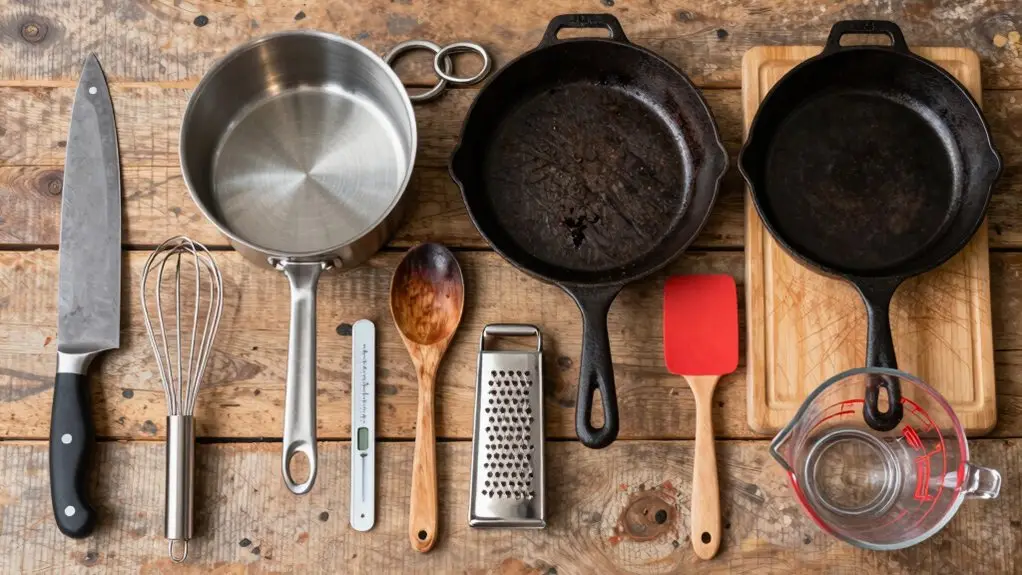
You’ll want a sharp chef’s knife, a serrated bread knife, and a small paring knife for daily cutting tasks. Grab a cutting board that fits your lifestyle—plastic if you love easy cleanup, wood if you don’t mind some upkeep.
A kitchen scale saves your baking from guesswork, while a fish spatula, locking tongs, and colander handle everything from flipping pancakes to draining pasta. One solid pan—cast iron, stainless, or nonstick—covers most stovetop jobs.
Add a heavy Dutch oven, sturdy sheet pans, and a quick thermometer, and you’ve got a setup that will carry you through countless dinners without the gadget clutter. There’s plenty more to explore about making each piece work harder for you.
The Best Chef’s Knife Under $50: Why the Mercer Millennia Wins
When you’re staring down a mountain of vegetables and your old, dull knife just isn’t cutting it, literally, you need something that won’t break the bank or your spirit. The Mercer Culinary 8-Inch Millennia Chef’s Knife lands as one of the best cooking tools under $50, and it’s easy to see why.
Every cook deserves a sharp chef’s knife that actually feels good in their hand, not some flimsy thing that’ll snap mid-chop. This high achiever delivers with full-tang construction. The blade runs straight through the handle as one solid piece, giving you balance and sturdiness when you’re powering through onions or mincing garlic.
Its comfy ergonomics mean your hand won’t cramp during marathon prep sessions. For your kitchen, pair it with quality stainless steel cookware and you’re set. Rounding out your setup with a kitchen faucet built from a SUS304 stainless steel body and a ceramic cartridge rated for 500,000+ cycles ensures the workspace around your prep area holds up just as long as your tools.
A $20 Bread Knife That Slices Through Sourdough Without Tearing
You’ve got your chef’s knife sorted, but that beautiful crusty sourdough you picked up from the bakery? It deserves better than a squashed, torn mess. That’s where a proper bread knife comes in.
Grab the Dexter-Russell Basics 10-inch serrated knife—it’s about $20 and handles crusty sourdough like a champ.
Don’t even think about slicing bread with your chef’s knife; it’ll crush the tender crumb you’re after. A bread knife saws through crust with its jagged teeth, so you get clean slices without tearing.
The 10-inch length gives you room to work with standard loaves, no awkward sawing motions needed.
For around twenty bucks, this tool pays for itself the first time you present perfect toast-worthy slices instead of mangled disappointment. Just as painters rely on high-density foam rollers for a lint-free, smooth finish on delicate surfaces, the right tool always makes the difference between a clean result and a ruined one.
Add a Paring Knife for Citrus, Berries, and Delicate Cuts
You’ll want a paring knife when you need nimble cutting control for the jobs your chef’s knife simply can’t handle.
A 3.25-inch blade gives you the small task versatility to hull strawberries, segment citrus, and tackle other delicate prep without crushing or mangling your ingredients.
It’s the trusty sidekick that makes frustrating, fiddly work feel almost effortless.
This knife also keeps your fingers safely out of harm’s way.
Nimble Cutting Control
A small paring knife is the unsung hero of your kitchen drawer, and once you’ve got one in your hand, you’ll wonder how you ever hull strawberries without it.
You need good quality, and this one knife delivers nimble cutting control that bigger blades simply can’t match.
Grab a durable stainless steel blade, like the 3.25-inch Victorinox, and you’ll feel the difference immediately.
You’re segmenting citrus with surgical precision, hulling strawberries without mangling the fruit, and performing precise trimming that saves every usable bit.
Pair it with your chef’s knife for heavy chopping, but reach for this little powerhouse when control matters.
Keep it sharp: dull edges fight you, while a keen blade follows your lead effortlessly.
Just as the right tool matters in any craft, pairing your knife work with a quality cutting board is much like selecting natural vs synthetic bristles — the material you work with directly shapes your results and how long your equipment lasts.
Small Task Versatility
When you’re wrestling with a thick chef’s knife just to peel a single orange, it’s time to admit you’ve brought the wrong tool to the party. That’s where paring knives earn their keep, delivering small task versatility that big blades simply can’t match.
A 3.25-inch Victorinox with a stainless steel blade transforms how you prep various delicate foods. You’ll find yourself reaching for it constantly because:
- Segmenting citrus becomes effortless, no more mangled membranes.
- Hulling strawberries takes seconds with surgical precision.
- Small, precise cuts feel natural in your hand.
Pair this with your chef’s knife and plastic cutting boards, and you’ve covered your required tools. This combo handles tiny precision jobs and general prep. It speeds up your kitchen work without sacrificing clean cuts on thin-skinned produce. Keeping your paring knife and other blades organized in a premium tool storage cabinet protects edges and ensures every tool stays ready for the next task.
Plastic or Wood? Pick a Cutting Board for Your Maintenance Style
Whether you’re chopping veggies for a weeknight dinner or slicing bread for brunch, your cutting board is the unsung hero of your kitchen. Picking the right one really comes down to how much TLC you’re willing to give it.
If you’re after low-fuss practicality, grab a plastic board. It’s dishwasher-safe, skips the oil and seasoning routine, and lets you hone your knife technique without extra chores. Many beginners love plastic for food safety and affordability. Less maintenance means more time actually cooking.
But if you enjoy a little kitchen ritual, wood rewards your attention. You’ll need regular upkeep, though. You’ll also find clever plastic options with juice grooves for messy tasks.
Ask yourself: do you want easy or traditional? Your answer picks your board. Just as the right cutting board sets the tone for your kitchen workflow, the right window treatments set the tone for your space, and luxury tension curtain rods can elevate any room without requiring permanent installation.
Weigh, Don’t Measure: How a Kitchen Scale Fixes Recipes
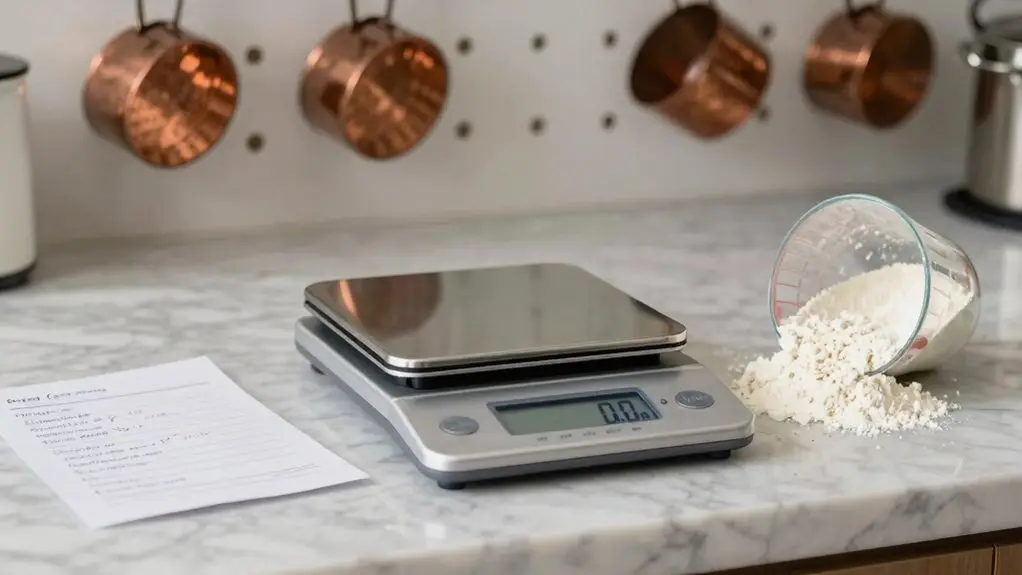
You’ll stop guessing at cup sizes once you start weighing your ingredients, because grams don’t lie the way packed flour or heaping spoons do.
An Escali Primo Digital Food Scale lets you nail the exact same amount every single time, so your sourdough actually rises and your cookies stop playing roulette with texture.
It’s the kind of upgrade that makes you wonder why you ever trusted a measuring cup in the first place. If you’re outfitting your home with other smart upgrades, a smart video doorbell can bring the same kind of precision and reliability to your front door security.
Precision Over Volume
If you’ve ever scratched your head wondering why your cookies spread too thin or your bread turned out dense as a brick, your measuring cups might be the sneaky culprit. You deserve better precision in your cooking, and that’s where a food scale changes everything.
Here’s why weighing wins:
- Flour and sugar pack differently depending on who’s scooping. Your food scale removes that guesswork.
- The Escali Primo waits four minutes before shutting off, so you’ll weigh multiple ingredients without rushing.
- Sourdough bread demands accuracy, and this tool delivers repeatable results every single time.
Your cast iron skillet, knife, and sheet pans matter. However, precision separates good meals from great ones.
You’re not abandoning measuring tools; you’re upgrading them. Think of it as perfect for making your kitchen adventures way more reliable, with lighter cleanup too. Just as a backsplash project benefits from adding a 10–15% waste allowance when calculating materials, smart cooking means accounting for variables before they become mistakes.
Consistent Recipe Results
Three batches of the same chocolate chip cookies—one cracked and dry, one flat as a pancake, and one just right. You’ve been there, right? It stings.
You need one simple fix among your cook tools: a food scale.
It’s crucial, especially for baking where volume measuring plays roulette with your results. You need one that won’t ghost you mid-recipe.
The Escali Primo Digital Food Scale waits four minutes before auto-shutoff, so you won’t lose your place while grabbing eggs.
You’ll get precise measurements every time, whether you’re crafting sourdough with perfect hydration or nailing that dinner roll texture.
Ditch cups for grams, tare your bowl, and watch consistency become your new normal.
Your Instant Pot can’t solve everything, but this scale sure helps. For those who enjoy hands-on kitchen projects like DIY cabinet installation, a professional drill bit set gives you the precision control that sloppy toolkits simply can’t match.
Three Daily Drivers: A Peeler, Can Opener, and Wooden Spoon
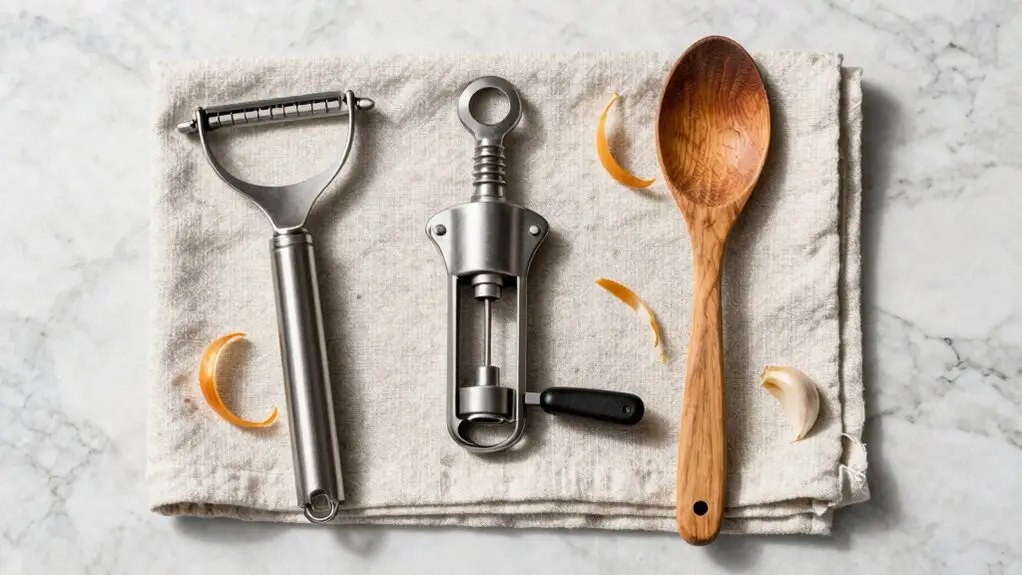
While fancy gadgets come and go, it’s the no-nonsense workhorses that earn their spot in your hand day after day. When you need necessary Kitchen Tools that won’t let you down, these three humble heroes deliver every time.
- Vegetable peeler: Grab the Kuhn Rikon Original Swiss Peeler. It’s not costly, yet works like a pro, peeling fast and even making pretty veggie ribbons.
- Manual can opener: Pick the OXO Good Grips with its comfy wide knob. You’ll skip the rust and latch headaches cheap ones give you.
- Wooden spoon: A flat-edged scraping style won’t scratch your hot cookware. It lasts ages.
Good tools make you a better cook. These three keep you moving from prep to pan without any fuss. For those who enjoy working with their hands beyond the kitchen, a professional woodworking router set can bring that same satisfaction of using well-crafted tools to shape and create with precision.
Fish Spatula, Tongs, and Colander for Cooking and Draining
Once you’ve got your daily drivers down, it’s time to grab the tools that’ll handle the heavy lifting and the gentle stuff too.
You’ll reach for a fish spatula when flipping delicate pancakes or sliding salmon from your Dutch oven without tearing it apart. Just remember to avoid metal utensils on nonstick cookware, or you’ll ruin that coating fast.
Tongs with grippy cutting action become your hands’ extension. Locking tongs can lift a whole chicken without bending, saving your fingers from hot splatters.
When dinner’s done, grab your colander for draining. You’ll drain pasta, rinse berries, or handle things that require pressure cooker liquid removal. That sturdy stainless steel colander won’t quit on you, meal after messy meal.
If you’re also refreshing your kitchen walls, peel-and-stick backsplash tiles offer a grout-free, renter-friendly upgrade that adheres to surfaces like painted drywall, existing ceramic tile, and even glass without special tools.
Cast Iron, Stainless, or Nonstick? Start With One Versatile Pan
You’re probably staring at a wall of pans right now, wondering which one’s actually worth your money, right?
If you’re only buying one, you’ll want to pick the material that matches how you actually cook, not the fancy stuff you’ll use twice a year.
Let’s break down what you’re really getting with stainless, cast iron, and nonstick, so you don’t end up with a pan that sits in the back of your cabinet collecting dust and judgment.
Versatility First Choice
When you’re just starting out, you don’t need a cabinet full of pans—you need one workhorse that won’t let you down. Picking one thing can feel overwhelming, but here’s how you choose the most versatile option for your cooking surfaces.
You’ll want to take into account your daily habits before committing. Ask yourself:
- Do you crave golden-brown crusts? Grab cast iron; it’s unbeatable for searing, and Dutch ovens handle braises beautifully too.
- Are you all about easy eggs without the scrubbing? A nonstick pan becomes your breakfast hero.
- Want one handy tool that does it all? Stainless steel tackles everything from sauces to steaks with zero fuss.
No matter which you pick, you’ve got a solid foundation. Build from there as your skills grow!
Material Tradeoffs Explained
Picking one pan means weighing what you’ll actually cook against how much fuss you’re willing to tolerate. You’ve got three solid paths here, and each has its own personality.
A Cast Iron Dutch oven holds heat like a dream for braising, though you’ll baby it to avoid chips.
A skillet made of cast iron builds natural nonstick powers over time, perfect for intense browning, but demands seasoning commitment.
Stainless steel won’t fight you on maintenance and rewards proper preheating with versatile browning power.
Simmering sauces or sautéing vegetables works beautifully once you nail the technique.
Nonstick coating forgives your early morning scrambled eggs and pancakes, though you’ll swap spatulas to protect the surface.
Pick what matches your cooking style now. Any of these handles crucial cooking and can last a lifetime as you expand your collection.
The 6-Quart Dutch Oven for Roasts, Braises, and No-Knead Bread
Though you’d never guess it from its sturdy, old-school looks, a 6-quart enameled cast-iron Dutch oven might just become your kitchen’s hardest worker.
You’ll reach for this beauty when braises, roasts, and no-knead bread are on the menu. The tight-fitting lid locks in steam, giving you even heating and excellent moisture retention that turns tough cuts fork-tender.
Bread fans love how it traps heat for that crackly crust you’ve been chasing.
Here’s why you’ll actually use it:
- It skips the seasoning hassle, enameled cast iron is ready right out of the box.
- That 6-quart size holds enough for company without hogging your stove.
- You’ll get years of service if you baby it a little, chipping happens, so no banging around.
It’s basically kitchen insurance.
Sheet Pans, a Salad Spinner, and a Thermometer for Precision
Your Dutch oven handles the heavy lifting, but some of your most reliable wins come from smaller, smarter moves and a few humble tools that don’t cost much. Start with a heavy-gauge Nordic Ware Naturals half sheet pan, whose rolled edges keep food from sliding off while you’re roasting vegetables or baking cookies.
Grab quarter-sheet pans too, so you’re not wasting oven space on tiny batches.
A salad spinner—OXO Good Grips makes a solid one—rinses greens fast and spins them dry so dressing actually clings instead of sliding into a puddle. Its serving-bowl design means you can carry it straight to the table for a better workflow.
Finally, snag an instant-read thermometer like the ThermoPop 2. You’ll nail meat, bread, and sweets in one to two seconds flat. Precision feels pretty great, doesn’t it?
Final Thoughts
You’ve got your list, and now it’s time to get cooking. Don’t stress about buying everything at once—start with what you’ll actually use, and build from there.
A sharp knife and solid pan will take you further than a cluttered gadget drawer ever could. Happy cooking, and may your bread always rise.