The Best Fluffy Pancakes recipe you will fall in love with. Full of tips and tricks to help you make the best pancakes.


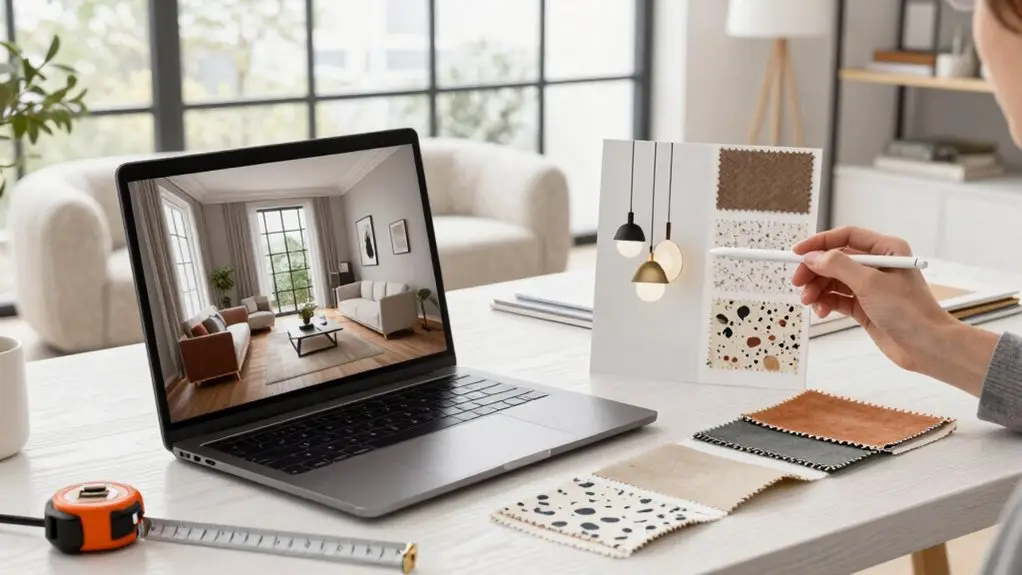
Online interior design is a virtual service where you work with a designer remotely to transform your space without showroom visits or sky-high fees. You’ll start with a video call or questionnaire about your style and budget. Then, snap photos and measure your room so your designer can build mood boards, floor plans, and photorealistic 3D renderings.
Within about two weeks, you’ll receive a complete design package with shopping links and discounts, plus a round or two of revisions to get everything just right. It’s perfect if you’re comfortable handling the actual purchasing and setup yourself. You’ll discover exactly how to nail the prep work and pick the right designer as you explore further.
How Online Interior Design Works: The Complete Process
Before you get started into your redesign, you’ll want to understand exactly how this whole online thing actually works: it’s way more straightforward than you might expect.
Online interior design services kick off with an initial consultation, where you’ll chat about your style, needs, and budget through video, phone, or a questionnaire.
Kick off your redesign with a simple consultation—share your vision, needs, and budget from wherever you are.
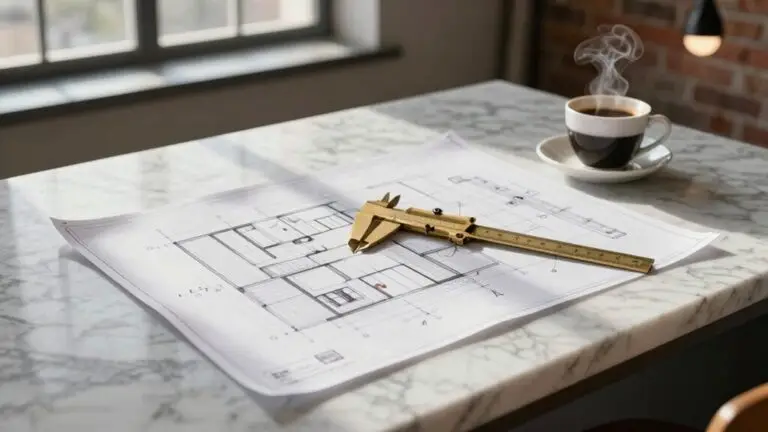
You’ll snap some photos, grab your tape measure, and share room dimensions.
Then your designer gets to work on your Virtual Interior Design.
Within about two weeks, you’ll receive a design proposal packed with mood boards, color palettes, and layout ideas.
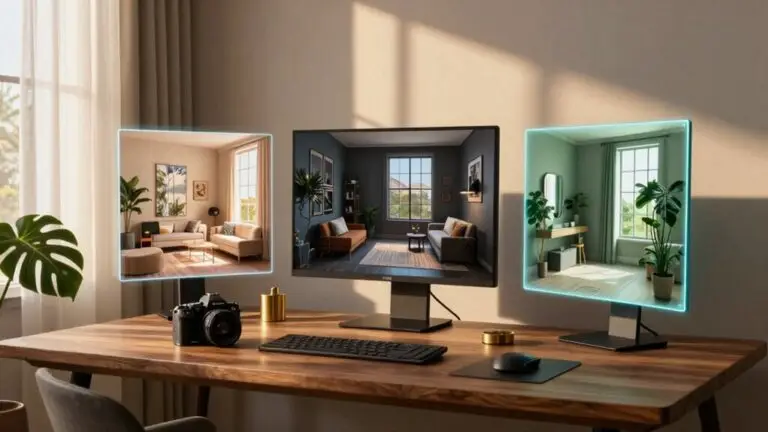
Your virtual design comes alive through photorealistic 3D renderings and 360-degree tours: you’ll actually see your future room!
After a revision or two, you’ll get your shopping list with links, prices, and even discounts.
Once you’re ready to bring everything together, having a professional tool set kit on hand makes assembling and installing your new furniture and fixtures a whole lot easier.
No showroom marathons, no pushy salespeople, just good design delivered straight to your inbox.
What Online Interior Design Costs: Pricing Tiers and Budget Planning
You’ll want to wrap your head around how online interior design pricing actually breaks down before you start dreaming about that Pinterest-perfect living room.
Most services offer flat-rate packages running anywhere from $99 to $1,300 per room, so you’re not stuck with scary hourly fees ticking away while you waffle over paint colors.
Smart budget planning means remembering you’re paying for the creative heavy lifting: those gorgeous 3D renderings and shopping lists—not the actual couch that’ll eventually show up at your door.
Some designers even use learning management system software to deliver structured onboarding materials that help clients understand exactly what to expect throughout the design process.
Flat-Rate Package Options
When you’re staring down a room that feels more “meh” than “magazine cover,” flat-rate packages can feel like a lifeline that won’t sink your budget.
Online flat-rate packages typically run $99 to $1,300, with most single rooms hovering around $600—way less than traditional services that will cost you thousands.
You’ll usually get mood boards, 3D renderings, and floor plans to visualize your space before buying anything.
Shopping lists with purchase links and exclusive discounts come standard.
Plus, revision rounds allow you to tweak things until they feel right.
Single rooms wrap up in about two weeks, while whole-home projects, often priced around $2 per square foot, take closer to four weeks.
You handle the buying and setup, but hey, that’s where the real fun begins anyway.
For hands-on installation projects, bundling your tools through power tool combo kits can help cut costs when you’re furnishing and setting up your newly designed space.
Budget Planning Tips
Knowing your numbers upfront always saves you from nasty surprises later, so let’s break down what you’ll actually spend before you fall in love with a velvet sofa that’s way out of reach.
Much does online interior design cost? Less than you’d think. Online interior design offers flat-rate tiers from $99 to $1,300, with many providers charging around $600 per room for 3D renderings, floor plans, and curated shopping lists with trade discounts.
Whole-home projects run about $2 per square foot, delivered in roughly four weeks. Meanwhile, single room designs wrap up in two weeks with revision rounds.
These budget planning tips keep your wallet happy. You’re paying for creative planning and digital visuals, not in-person visits. That’s why you’ll spend far less than traditional interior services, which often hit $2,000 to $12,000 or more. Even lighting upgrades can be handled affordably on your own, since dimmer switch installations typically take around 15 minutes and cost far less than hiring a professional for minor electrical work.
Is Virtual Design Right for You? Pros, Cons, and Red Flags
If you’re tackling a refresh you can handle yourself—like picking paint, arranging furniture, or buying decor—you’ll probably love how virtual design skips the hefty price tag and gives you pro tools like 3D renderings right at home.
Just know you’ll need to roll up your sleeves a bit. Since nailing the measurements and photos falls on you, nobody’s there to babysit the installation when the sofa finally arrives.
Before you click “buy,” peek at their past work and ask pointed questions about revisions and hidden fees.
You might end up with a pretty picture and a headache instead of your dream room. For those who want to stay organized throughout the process, a professional label maker system can help you track fabric swatches, paint samples, and material specs with ease.
Who Benefits Most
Three key questions can help you figure out if virtual design‘s your match.
First, are you comfortable taking measurements and photographs of your space? E-design thrives when you can document your room accurately.
Second, do you enjoy shopping from a curated list? You’ll handle purchasing yourself, often with sweet trade discounts.
Third, can you manage installation without daily hand-holding? Virtual services work best for furniture-focused rooms like living rooms, bedrooms, and home offices.
Who benefits most? People seeking a budget-friendly refresh in 2–4 weeks without site visit fees.
Designers tailor their services through a collaborative process—you discuss your design goals, and they deliver mood boards, layouts, and 3D visuals.
E-design lets you visualize decisions before buying, saving you from expensive mistakes.
Beyond furniture, virtual designers can also recommend functional storage solutions, such as a pantry organization system cabinet, to maximize every corner of your home.
Potential Drawbacks
Picture this: you’re staring at your living room, imagining a total gut renovation with new wiring, custom built-ins, and maybe knocking down a wall or two. Virtual services won’t cut it here—you need traditional interior design services with boots on the ground.
Before the process begins, get a detailed breakdown of what’s actually included.
Anyone looking at online options should know: garbage in, garbage out. Sloppy measurements or blurry photos mean mismatched furniture headaches later.
Timelines stretch when you drag your feet on feedback. Nobody’s coming to hang those curtains for you.
Skip the revision rounds, and you’ll cry into your “almost right” rug. Review deliverables carefully—creative work isn’t project management, and you can’t blame travel expenses for what you signed up for. If your renovation plans include tiling, keep in mind that incorrect adhesive selection for your tile material or location can lead to costly failures down the line.
Preparing Your Space: Photos, Measurements, and Style Goals
Before your designer can work magic on your space, you’ll need to roll up your sleeves and become a bit of a detective in your own home. Since virtual services rely on digital collaboration, you’ll capture photos and measurements that let designers see what they’re working with. Snap wide shots of each room, add close-ups of tricky corners, and record a quick video walkthrough if you can. It feels a bit like being a real estate agent, but it works.
Interior design provides amazing results when you share your style goals upfront. Gather inspiration images, note colors you love (and hate), and list must-haves. Measure your walls, windows, and any furniture you’re keeping. For the most accurate wall and floor measurements, consider using a professional laser level kit to ensure your dimensions are precise and reliable. The more details you provide, the better your designer can craft a plan that actually fits your life.
The Virtual Design Process: From Consultation to Completion
A typical online interior design trip kicks off with a personal consultation. You’ll spend an hour or two chatting with your designer by phone, video, or even email to nail down what makes you tick.
Virtual interior design offers a seamless, flexible process that fits your life, not the other way around.
You will snap photos, shoot videos, and share exact measurements.
Some online services even include a quick “trade day” video walkthrough to capture every detail.
Then the magic happens.
Your Design Concept arrives as digital mood boards, curated colors, and photorealistic 3D visuals you can actually walk through.
You will provide feedback, tweak things, and watch it evolve.
Once the design is finalized, usually within two weeks for single rooms, you’re ready to bring it to life.
Pairing your finished design with a smart home automation system can elevate the experience further, allowing you to control lighting, temperature, and ambiance with ease.
Your Design Deliverables: 3D Renderings, Floor Plans, Shopping Lists
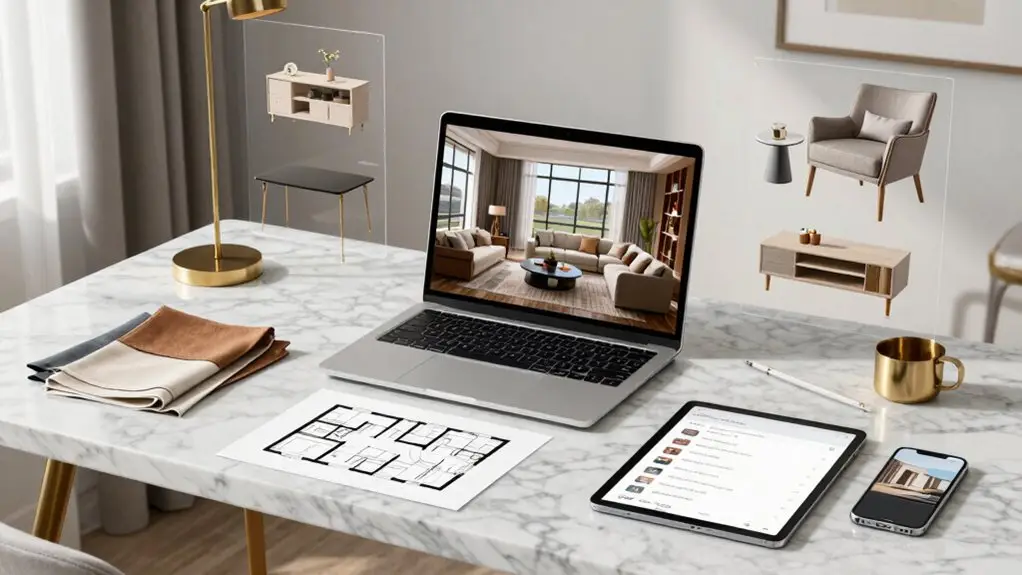
Once your designer has worked their magic, you’ll get a complete package that brings your new space to life on screen. Your photorealistic 3D renderings let you preview exactly how your finished room will look—even before you buy a single throw pillow. These 3D renderings come from your precise measurements, so what you see is what you’ll get.
You’ll also receive detailed floor plans showing furniture placement, traffic flow, and cozy conversation zones. Some digital tools even whip up 360-degree virtual tours, letting you “walk” through your redesigned space from your couch.
Your shopping list arrives complete with curated items and direct purchase links, sometimes with sweet trade discounts too. Most packages include revision rounds, so you can tweak colors, layouts, or furniture until everything feels just right. For the most accurate measurements to share with your designer, professional laser measuring tools can capture room dimensions with far greater precision than a traditional tape measure.
Virtual vs. Traditional Design: Which Service Fits Your Project?
Certainly! Here’s the modified text according to your rules:
She was the first person in her family to use the “Virtual Interior Design Consultations” service to reimagine her living space. Transforming her outdated home office into a light-filled, efficient workspace without ever leaving her apartment.
Avoiding Pitfalls in Virtual Design Projects
Even though virtual design can transform your space from anywhere, a few missteps can turn your dream room into a headache you didn’t sign up for.
Start avoiding pitfalls in virtual design projects by capturing photos from every angle—wide shots and close-ups of finishes matter more than you’d think.
You’ll need to provide detailed measurements too, including door swings and radiator placements.
Guessing leads to furniture that doesn’t fit through the door, and we’ve all been there.
Before you begin, enable JavaScript on your browser so interactive tools and detailed guides load properly.
Confirm revision limits upfront during video calls, and use 2D plans and 3D renderings as your reality check before buying.
Choosing Your Virtual Interior Designer: 6 Criteria for Quality and Fit
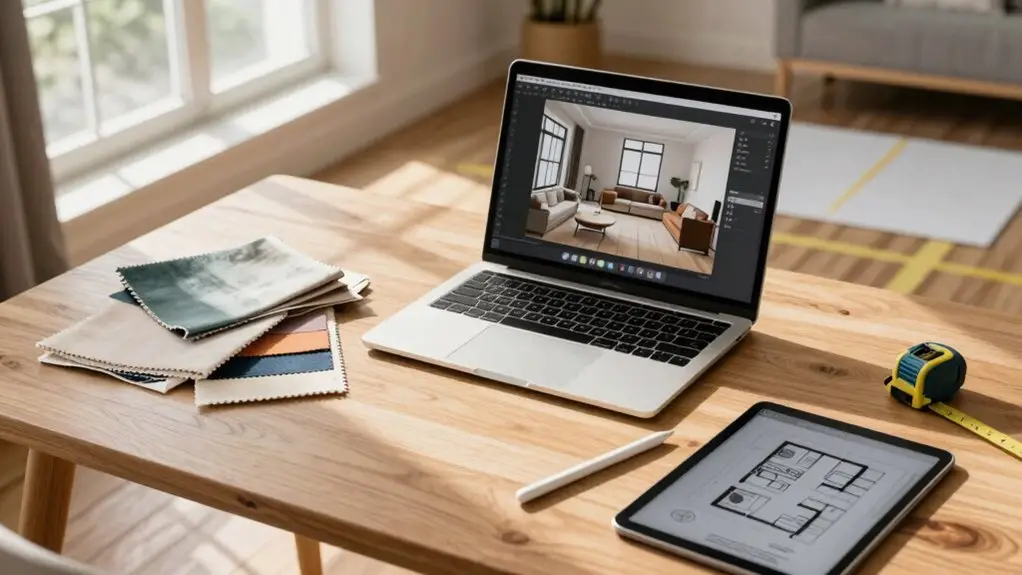
Now that you’ve dodged the common virtual design headaches, it’s time to find someone who’ll actually bring your space to life without the stress.
Start by demanding clear dimension-based outputs. Interior designers worth your money deliver floor plans, 3D/photorealistic renderings, and even 360-degree tours so you can walk through your room before spending a dime.
Look for a structured process with documented revision rounds built right in. Virtual interior design thrives on back-and-forth tweaks to layouts, colors, and furniture picks.
Check they can work from your photos, measurements, and budget—no wizardry needed, just solid skills.
Compare flat-rate packages, roughly $99–$1,300, often around $600 per room, and timelines.
Finally, confirm you’ll get shoppable links and ongoing support during setup.
How to Book Your First Virtual Design Consultation
To kick things off, you’ll start by sharing your project goals, style preferences, budget range, and those must-keep pieces you can’t live without. Hop on an online video call, shoot an email, or ring them up—whatever feels easiest.
Next, you’ll upload clear photos and videos from every angle, plus any measurements you’ve got. (Don’t stress if they’re rough; your phone’s fine.)
This kicks off your space assessment, where the designer gets familiar with your layout. Sometimes they’ll do a virtual tour for tricky spots.
Your virtual design consultation includes a detailed questionnaire and maybe a quick look at your Pinterest board. Using advanced software and technology, they craft a mood board and 3D concepts so you can actually see the vision.
Then comes revision rounds before you lock in that final shopping list.
Final Thoughts
You’ve got all the tools you need to start your virtual design venture, and it’s pretty exciting stuff. Whether you’re reviving a tired living room or tackling a full home makeover, online interior design puts professional help right at your fingertips.
Take your time choosing the right designer, prep your space thoughtfully, and don’t be afraid to speak up about what you love. Your dream space is closer than you think, so go ahead and book that first consultation.