The Best Fluffy Pancakes recipe you will fall in love with. Full of tips and tricks to help you make the best pancakes.


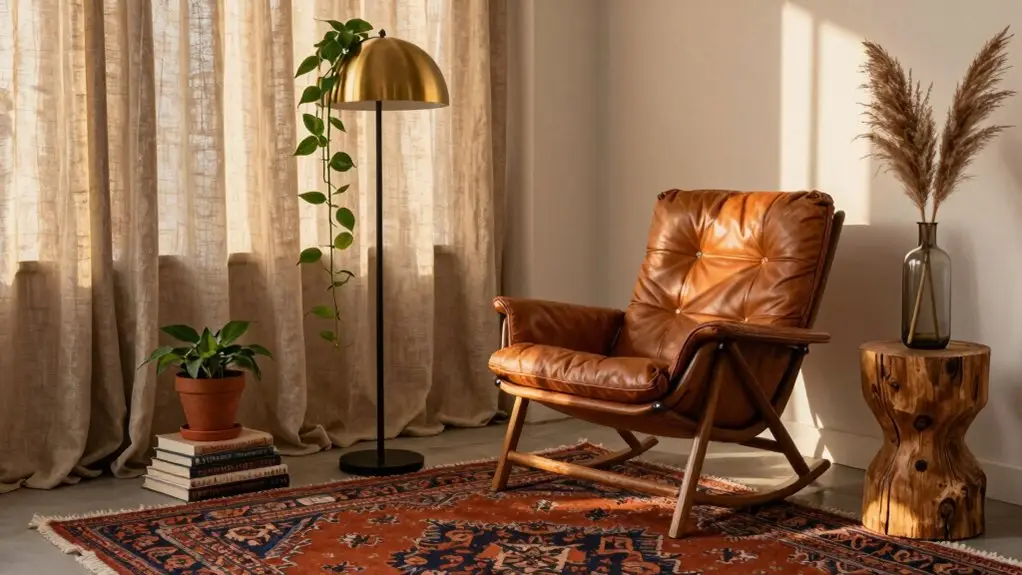
You don’t need a massive renovation to make your home feel completely transformed. Start by shopping your home for one color to repeat throughout your space, creating instant cohesion without spending a dime.
Pull furniture away from walls and float seating to form cozy conversation zones that actually invite people to sit down. Layer textures like velvet against linen and mix patterns in different scales to add depth that catches the eye.
Hang a large mirror opposite your brightest window to bounce daylight into dark corners like magic. Finally, size your rug properly so furniture legs rest on it comfortably. You’ll be shocked how this one fix grounds the whole room.
These simple shifts work together beautifully, and there’s plenty more where that came from.
Shop Your Home by Color for Instant Cohesion
Before you spend a dime on new décor, take a walk through your own home—you’ve got more style resources than you think.
Choose one color you’ve already got, maybe that gray-blue vase or cream throw pillow. Repeat it in every room, even if it’s just a tiny accent. You’ll build a through line tone that makes your whole place feel connected, like it was planned that way all along.
Shade relationships determine how colors work together, so when you repeat your chosen color from room to room, you create natural harmony that feels easy on the eye.
Balance warmth and coolness by sticking to colors in the same temperature family. If you’ve got warm beige curtains, don’t toss in icy blue pillows—they’ll clash. Instead, pull that beige into your next room with a wooden bowl or tan artwork.
See? You’ve shopped your house, and suddenly everything clicks.
Rearrange Furniture to Fix Layout Mistakes
Since you’re already rethinking your space, let’s talk about the furniture you’ve got and why it might be working against you.
Pushing everything against walls feels safe, but it actually flattens your room and kills conversation. Instead, try floating seating: pull sofas and chairs inward, even just a few inches, to create cozy pockets perfect for lingering chats. Floating furniture helps define zones and makes the space feel more like a living room than a waiting area.
Resist the wall-hug instinct. Even a few inches of breathing room transforms dead space into conversation chemistry.
Start with circulation mapping. You’ll need 30-36 inches for main walkways and 24 inches between seats so nobody’s doing that awkward shuffle.
Next, tackle room zoning by anchoring areas with properly sized rugs—ones that extend under furniture front legs, not tiny islands floating nowhere.
Finally, accept focal point planning. Identify what matters most: fireplace, view, or your fabulous art, and arrange seating to face it.
Your room’s suddenly breathing again, right?
Layer Found Textures and Patterns for Depth
Your room might look “fine” on the surface, but fine isn’t exactly the goal, is it? You want depth, character, and spaces that feel lived-in and layered. Start with textured wall finishes: grasscloth adds warmth, while faux brick brings rustic edge.
Then build through tactile textile layering: velvet cushions against linen, chunky knits draped over leather. You’ll feel the difference immediately.
Don’t stop there. Try pattern scale mixing—one bold stripe, one subtle geo—to keep eyes moving without chaos. Textured walls create natural variation that shifts with morning sun versus evening lamplight, giving your space an ever-changing personality.
This isn’t about throwing everything together. You need balanced contrast styling: rough with polished, matte with sheen, so elements talk to each other, not compete.
When you mix intentionally, you create rooms with soul. It’s approachable, it’s warm, and honestly? It’s way more interesting than “fine.”
Hang Mirrors to Double Your Natural Light
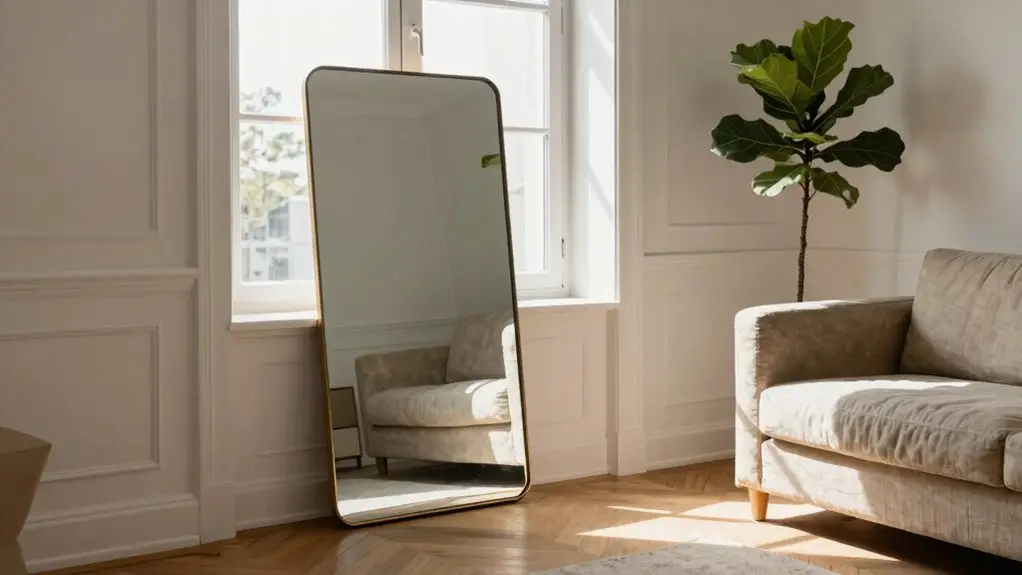
If you’re tired of switching on lamps at noon, mirrors might be your new best friend. Light placement makes all the difference—hang a large mirror directly opposite your window and you’ll double your daylight instantly.
It creates this cool illusion of a second window, bouncing sunshine deep into corners that usually stay gloomy. This technique is especially effective for living rooms and bedrooms where you want to enhance the natural light and create a brighter, more open feel.
For glare control, angle mirrors slightly or choose matte frames that soften harsh reflections. You’ll want to avoid positioning them where they’ll blind you during breakfast, right?
Try perpendicular walls too—they grab those sneaky side rays and spread them around.
Above sofas or fireplaces, mirrors draw the eye upward while catching chandelier glow.
Even narrow hallways come alive with floor-length pieces at the end.
Just remember: reflect calm spaces, not your laundry pile. Smart mirror tricks transform dark rooms into airy, welcoming spaces without touching a light switch.
Size Your Rug Correctly (Most People Don’t)
On a blank floor, a rug that’s too small looks like a sad postage stamp, floating there, disconnected, like it gave up before it even started. You’ve seen it. You’ve probably lived with it. Let’s fix that.
A sad postage stamp floating there, disconnected, like it gave up before it even started—you’ve seen it. Let’s fix that.
First, measure room proportions so your rug actually fits both length and width.
Then check door clearance, especially in bedrooms, or you’ll be shoving doors against soft fibers every morning.
When you place furniture legs, aim for front legs on, back legs off—it’s the sweet spot for visual balance.
And don’t forget to make sure proper spacing: leave 18 to 24 inches of bare floor around the edges so your room can breathe.
Picture your sofa’s front legs resting confidently on a plush 8′ x 10′ foundation.
Imagine an 18-inch frame of hardwood hugging your bedroom’s 9′ x 12′ centerpiece.
Visualize your dining chairs sliding back without catching rug edges.
See walkways staying clear, with 30 to 36 inches of breathing room between pieces.
Remember that rug pads are recommended to prevent slipping, extend your rug’s life, and add cushioning underfoot.
Final Thoughts
You’ve got everything you need to make your space feel brand new without spending a fortune. Start small, trust your instincts, and don’t stress if it isn’t perfect overnight.
Remember, great design is about how a room makes you feel, not following rigid rules. So go ahead, move that sofa, hang that mirror, and enjoy the home you’re creating.